Why Should You Choose a Trapezoidal Screw for Reliable Linear Motion?
Article Summary
A Trapezoidal Screw is widely used in machinery because it offers dependable thrust transmission, stable motion, and a practical balance between performance and budget. In this article, we explain what a Trapezoidal Screw is, where it performs best, how to select the right dimensions and material, what common failure points to avoid, and how to work with a manufacturer for customized production. We also include a comparison table, a selection checklist, and a FAQ section to help you make faster and safer purchasing decisions.
Table of Contents
- What problems does a Trapezoidal Screw solve in real equipment
- What is a Trapezoidal Screw and how does it work
- When should you choose it instead of other drive options
- How to select size, lead, material, and nut type
- What mistakes cause wear, noise, or early failure
- How to evaluate a supplier before placing an order
- Frequently asked questions
Outline
- Application scenarios and customer pain points
- Working principle and key structural features
- Practical selection logic for engineers and buyers
- Maintenance guidance to reduce downtime
- Supplier assessment and customization communication tips
What Problems Does a Trapezoidal Screw Solve in Real Equipment?
Many buyers do not start with a part name. They start with a problem: the platform does not lift smoothly, the actuator wears out too quickly, the mechanism cannot hold position safely after power-off, or the overall solution is too expensive for the project budget. This is exactly where a Trapezoidal Screw becomes a smart choice.
In practical machinery design, you often need controlled linear motion instead of free rolling movement. You may also need strong load-bearing capacity and predictable operation in environments where dust, vibration, and frequent start-stop cycles are common. A Trapezoidal Screw is commonly selected because its thread profile is designed for power transmission, not just fastening. It converts rotary motion into linear motion in a stable and repeatable way.
Another common customer pain point is holding force. In many vertical or inclined systems, back-driving is a serious concern. Compared with some high-efficiency rolling systems, a properly chosen Trapezoidal Screw can offer better self-locking behavior under certain conditions, which helps improve safety and simplify system design.
Typical buyer concern: “I do not need extreme speed and micron-level positioning, but I do need durability, stable force transmission, and a sensible budget.” That is a very common use case for a trapezoidal thread solution.
What Is a Trapezoidal Screw and How Does It Work?

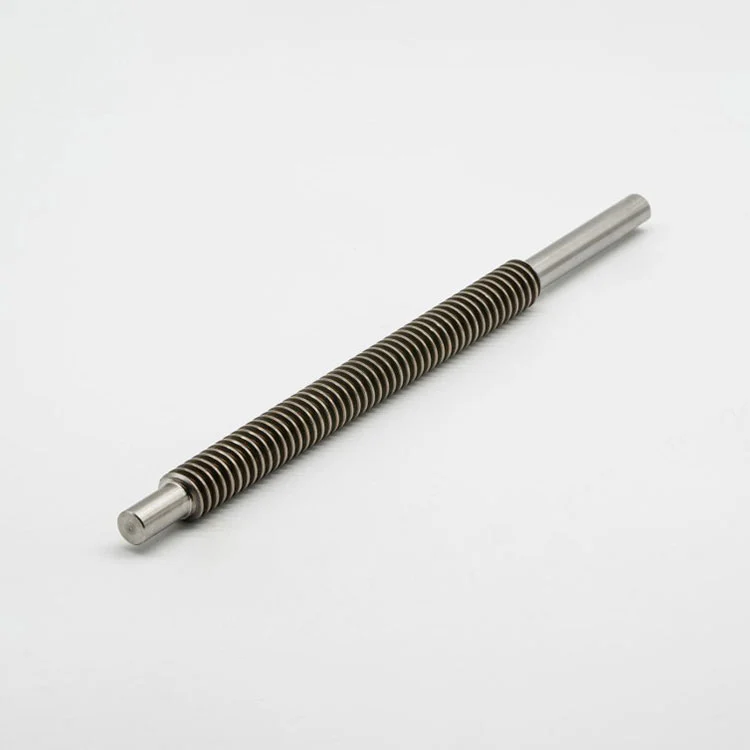
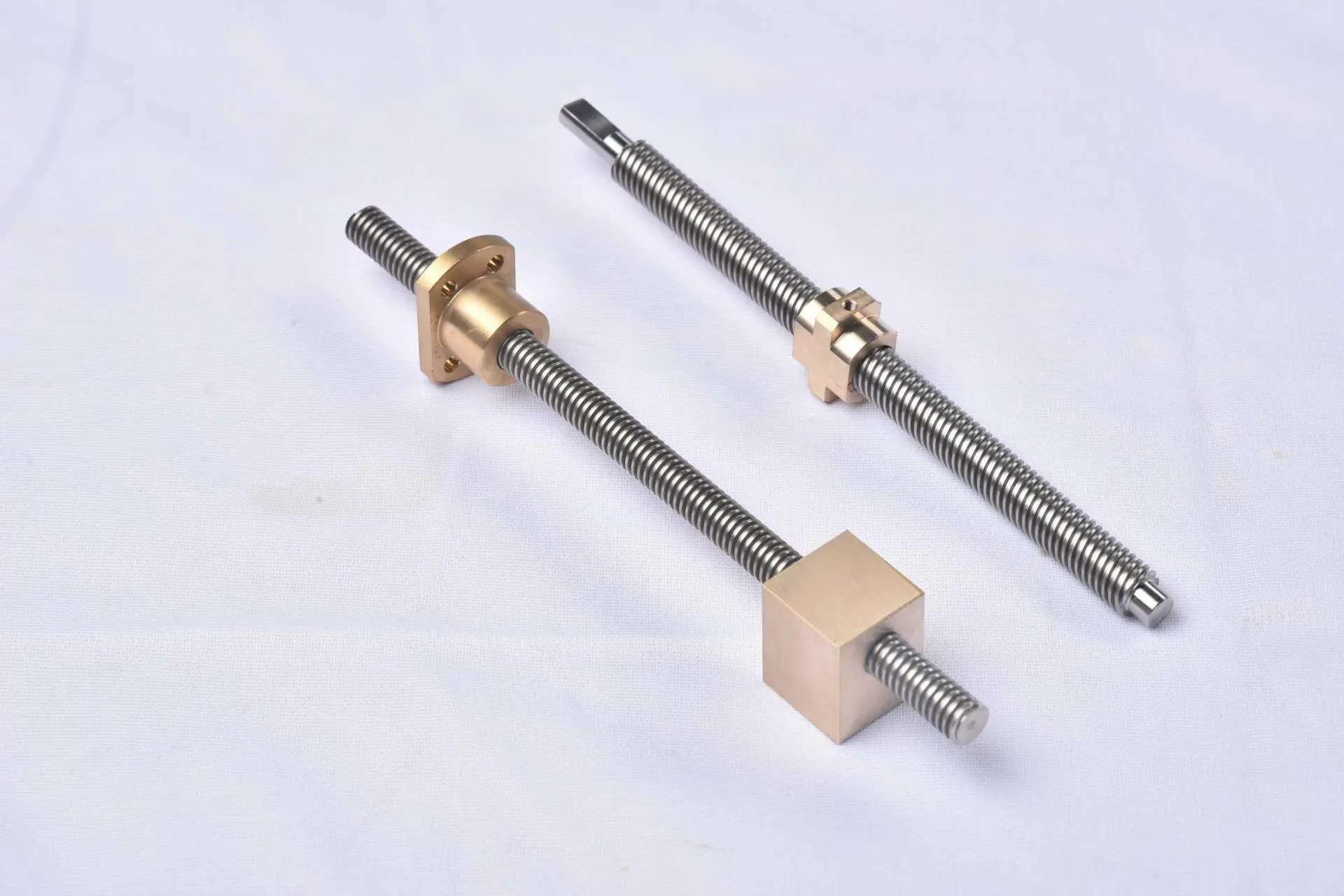
A Trapezoidal Screw is a lead screw with a trapezoid-shaped thread form designed to transmit motion and force. When the screw rotates, the mating nut moves linearly along the axis (or the opposite arrangement is used, depending on the machine structure). The geometry of the thread allows the system to carry axial loads while maintaining controlled movement.
Its performance depends on multiple design variables, including diameter, pitch, lead, thread accuracy, material, surface treatment, lubrication conditions, and nut material. These variables directly affect friction, service life, noise level, efficiency, and positioning repeatability.
For engineering teams, this means the best Trapezoidal Screw is not just “the strongest one” or “the cheapest one.” It is the one that matches the real working conditions of your machine. Overspecifying the component can increase cost without improving reliability. Underspecifying it can lead to vibration, backlash growth, or premature thread wear.
| Feature | Trapezoidal Screw | Why It Matters to Buyers |
|---|---|---|
| Thread Function | Power transmission and linear motion | Suitable for lifting, pressing, feeding, and positioning mechanisms |
| Load Handling | Good axial load capacity in many industrial applications | Useful for heavy-duty or repeated motion tasks |
| Self-locking Potential | Possible under suitable design and friction conditions | Helps with safety and position holding in some systems |
| Cost Structure | Usually more cost-effective than high-end rolling alternatives | Better fit for budget-sensitive projects and standard machinery |
| Maintenance Needs | Requires lubrication and wear monitoring | Easy planning reduces downtime and extends service life |
When Should You Choose a Trapezoidal Screw Instead of Other Options?
A Trapezoidal Screw is not the answer to every linear motion task, but it is a highly practical answer to many of them. It is especially suitable when the machine requires robust force transmission, moderate speed, and good cost control. It is also frequently selected when system simplicity and reliable operation are more important than achieving maximum efficiency.
Here are situations where buyers often prefer this solution:
- Manual or motorized lifting platforms
- Packaging machinery adjustment mechanisms
- Woodworking and light industrial feed devices
- Valve actuation and gate positioning systems
- Medical or laboratory equipment with stable controlled movement
- Custom automation devices that need a balance of cost and performance
If your application demands extremely high speed, very low friction, or ultra-high precision for continuous high-frequency operation, you may compare with other transmission methods. However, for many OEM projects, a Trapezoidal Screw remains a dependable and economically sound option.
How Do You Select the Right Trapezoidal Screw for Your Project?
This is the section most buyers care about, because wrong selection creates hidden costs later. To choose the right Trapezoidal Screw, start from the application, not the catalog page. Your operating load, duty cycle, motion speed, environment, and installation space should lead the decision.
A practical selection workflow looks like this:
- Confirm axial load including peak load, continuous load, and shock load.
- Define travel distance and speed to estimate lead and rotation requirements.
- Check installation space for screw diameter, support structure, and alignment tolerance.
- Evaluate working environment such as dust, humidity, temperature, and contamination risk.
- Choose material and surface treatment based on corrosion resistance and wear needs.
- Select nut material considering friction, noise, lubrication, and service life expectations.
- Plan lubrication and maintenance intervals before finalizing the purchase.
One more important point: backlash and wear should be discussed early. Some buyers only focus on initial dimensions and forget long-term motion quality. If your machine performs repeated positioning, ask about thread accuracy, nut fit, and possible anti-backlash solutions during the design phase.
| Selection Factor | What to Ask Internally | What to Ask the Supplier |
|---|---|---|
| Load | What is the maximum axial force and duty cycle? | What load range is recommended for this size and material? |
| Speed | How fast does the mechanism need to move? | What lead options are available and how do they affect heat and wear? |
| Accuracy | Is this for rough positioning or repeatable adjustment? | What thread tolerance and machining accuracy can you provide? |
| Environment | Will dust, moisture, or chemicals be present? | What materials or coatings are suitable for this environment? |
| Customization | Do we need end machining or special nut dimensions? | Can you produce custom drawings and small-batch prototypes? |
What Mistakes Cause Wear, Noise, or Early Failure?

Even a high-quality Trapezoidal Screw can perform poorly if the installation and usage conditions are ignored. In many cases, the root cause is not the product itself but system mismatch or insufficient maintenance planning.
Common causes of problems include:
- Misalignment between screw, nut, and guide structure, causing uneven contact and rapid wear
- Incorrect lubrication or irregular lubrication intervals, leading to friction increase and heat buildup
- Overloading beyond design limits, especially under shock loads or emergency stops
- Improper material pairing between screw and nut for the real duty cycle or environment
- Ignoring contamination such as dust or chips entering the thread interface
- Choosing by price only without checking thread quality and processing consistency
The best prevention strategy is simple: match the screw to the application, install it with proper alignment, and maintain it on a fixed schedule. This reduces downtime, protects the drive motor, and keeps the overall machine performance stable.
How Can You Evaluate a Trapezoidal Screw Supplier Before Ordering?
A good supplier does more than quote a price. They help you avoid design mistakes, confirm technical details, and deliver consistent machining quality. When sourcing a Trapezoidal Screw, especially for OEM projects, look for a manufacturer that can support both standard products and customization.
Suzhou Maitu Screw Rod Manufacturing Co., Ltd. is a manufacturer name you can include in your sourcing list when you need a supplier focused on screw rod solutions. For procurement and engineering teams, the key value is not only product availability but also whether the supplier can communicate clearly about thread parameters, machining requirements, materials, and production consistency.
Before placing a mass order, ask for the following:
- Available standard sizes and custom production capability
- Thread processing methods and quality control checkpoints
- Material options and recommended application ranges
- End machining services based on drawings
- Lead time for samples and bulk orders
- Packing method for export protection
- Technical communication support during project matching
A reliable supplier relationship saves time in future projects. Once your team confirms a proven Trapezoidal Screw specification, repeat orders become faster, more predictable, and less risky.
FAQ
Q1 What is the main advantage of a Trapezoidal Screw in industrial machinery?
The main advantage is dependable linear motion with good load transmission at a practical cost. A Trapezoidal Screw is often chosen when buyers need stable performance, robust construction, and easier cost control for mechanical drive systems.
Q2 Can a Trapezoidal Screw be customized for OEM equipment?
Yes. Many manufacturers can provide customized length, diameter, lead, thread specifications, and end machining. If your project requires mounting features, coupler interfaces, or special nut dimensions, send a drawing early so the supplier can review manufacturability.
Q3 Is a Trapezoidal Screw suitable for heavy loads?
It can be suitable for many heavy-load applications, but selection depends on the actual axial load, duty cycle, and installation conditions. Always confirm load requirements and safety margins before finalizing the specification.
Q4 How often should a Trapezoidal Screw be lubricated?
Lubrication frequency depends on speed, load, environment, and operating hours. Dusty or high-duty applications usually require more frequent maintenance. A scheduled lubrication plan is one of the easiest ways to extend service life.
Q5 What information should I prepare before asking for a quotation?
Prepare load data, travel distance, target speed, installation dimensions, working environment details, and whether you need standard or custom machining. The more complete your information is, the faster the supplier can recommend the right Trapezoidal Screw solution.
Where Can You Get a Trapezoidal Screw That Fits Your Exact Machine Design?
If you are selecting a Trapezoidal Screw for a new project or replacing an unreliable component, now is the right time to match your load, speed, and service-life targets with a supplier that understands industrial applications. Suzhou Maitu Screw Rod Manufacturing Co., Ltd. can be considered for standard and customized screw rod requirements based on your drawings and project needs.
Ready to reduce sourcing risk and improve motion stability in your equipment? Share your application details, dimensions, or drawings and contact us to discuss the right solution for your project.
Related News
- Can PEEK Trapezoidal Screw Nuts Withstand Regular Disinfection in Pharmaceutical Cleanrooms?
- How To Maintain PEEK Trapezoidal Screw Nuts On Textile Production Equipment?
- How Does PEEK Trapezoidal Screw Nut Reduce Textile Machine Downtime?
- How Can a C7 Large Lead Ball Screw for Material Handling Improve Speed, Precision, and Heavy-Duty Performance
- How Can Ultra Precision Linear Guides Improve Accuracy, Stability, and Reliability in Modern Motion Systems
- Why Is the C7 High Speed Large Lead Rolled Ball Screw for Robots a Smart Choice for Fast and Reliable Automation
Leave me a message