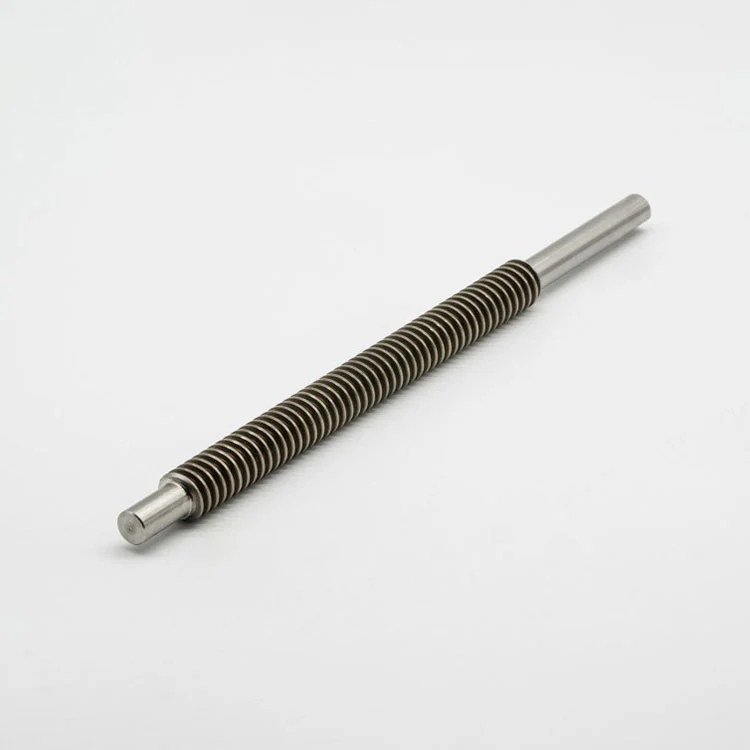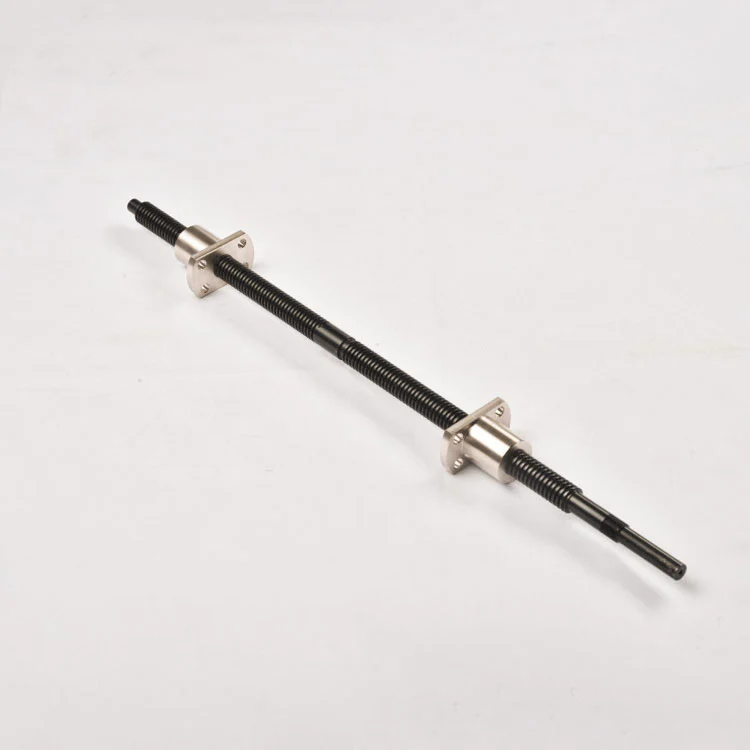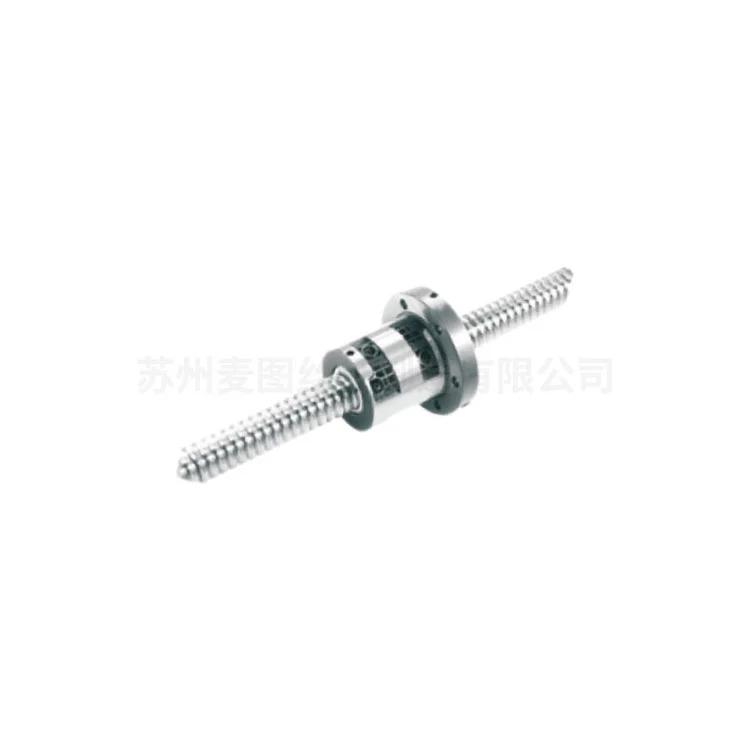
Why Is the C7 High Speed Large Lead Rolled Ball Screw for Robots a Smart Choice for Fast and Reliable Automation
Article Summary: The C7 High Speed Large Lead Rolled Ball Screw for Robots is designed to provide efficient, stable, and cost-conscious linear transmission for industrial robotic systems. Manufactured by Maitu, this large-lead rolled ball screw combines C7 precision, high transmission efficiency, optimized rolling technology, and flexible customization to support demanding applications such as robotic handling, palletizing, assembly, sorting, and automated positioning.
Table of Contents
- What Is a C7 High Speed Large Lead Rolled Ball Screw for Robots?
- Why Is a Large Lead Important for Robotic Motion?
- What Are the Key Features of the C7 Ball Screw?
- What Are the Main Product Parameters?
- How Can It Improve Robot Performance?
- Where Can This Ball Screw Be Used?
- How Should You Select the Right Ball Screw?
- How Can You Extend Ball Screw Service Life?
- Why Choose Maitu as a China Ball Screw Supplier?
- Frequently Asked Questions
- Conclusion
What Is a C7 High Speed Large Lead Rolled Ball Screw for Robots?
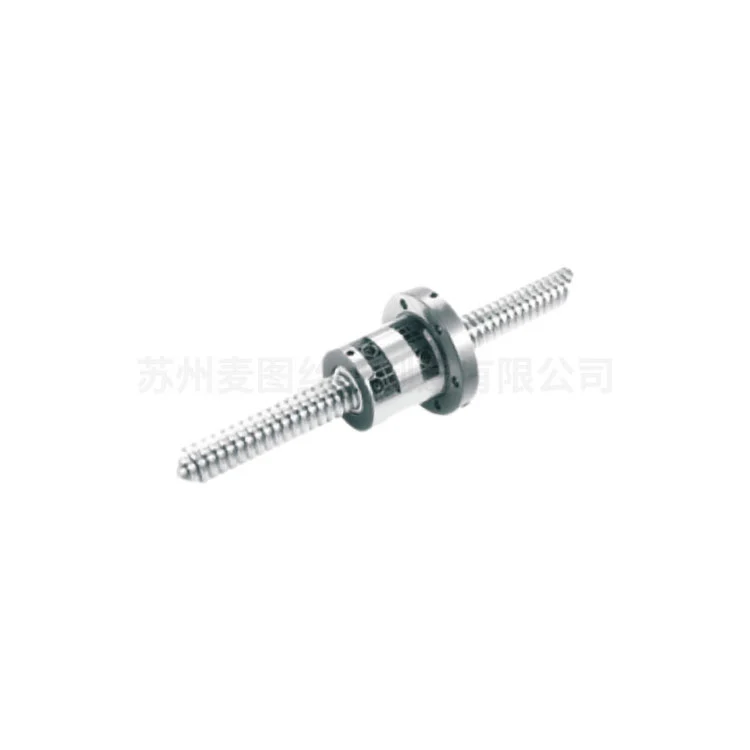
A C7 High Speed Large Lead Rolled Ball Screw for Robots is a mechanical transmission component that converts rotary motor motion into controlled linear movement. It uses recirculating balls between the screw shaft and nut to reduce sliding friction and improve transmission efficiency. This structure makes ball screws particularly suitable for automation equipment that performs repeated, precise, and relatively fast linear movements.
For robotic systems, the C7 configuration provides a practical balance between positioning performance, speed, manufacturing efficiency, and overall equipment cost. Instead of pursuing the highest possible precision regardless of cost, C7 ball screws are well suited to general industrial automation where reliable movement and repeatability are more important than ultra-fine positioning.
The large-lead configuration is especially valuable when a robot needs to move a relatively long distance within a short period. Because a larger lead allows the nut to travel farther during each screw revolution, the transmission system can achieve higher linear movement without requiring the motor to operate at unnecessarily high rotational speeds.
Why Is a Large Lead Important for Robotic Motion?
Lead is the linear distance that a ball screw nut travels during one complete revolution of the screw. Therefore, lead has a direct influence on the relationship between motor speed and linear speed.
For example, if two ball screws operate at the same rotational speed but one has a larger lead, the larger-lead screw will produce greater linear displacement per revolution. This characteristic is valuable for robots that frequently perform rapid forward-and-backward movements.
A large-lead design can provide several practical benefits:
- Faster linear travel: More distance can be covered with each motor revolution.
- Reduced rotational demand: The motor may achieve the required linear speed at a lower RPM.
- Shorter cycle times: Faster movement can increase productivity in repetitive automation.
- Efficient long-stroke movement: Large leads are suitable for mechanisms requiring considerable linear displacement.
- Improved system efficiency: Reduced unnecessary motor rotation can help optimize the overall transmission system.
However, selecting a larger lead is not automatically better. Engineers must also consider load capacity, acceleration, motor torque, positioning accuracy, stroke length, screw diameter, critical speed, and installation conditions. The correct configuration should always be selected according to the complete robot mechanism.
What Are the Key Features of the C7 Ball Screw?
C7 Precision for General Industrial Automation
C7 precision is a practical option for robotic applications that require dependable positioning without the higher cost associated with ultra-high-precision transmission components. It is particularly suitable for handling, conveying, sorting, palletizing, and other general automation processes.
Large-Lead Transmission
The large-lead design is optimized for fast linear movement. Maitu can provide large-lead configurations for applications where rapid positioning and high travel efficiency are important design objectives.
Cold-Rolled Manufacturing Technology
Rolled ball screws are manufactured by forming the thread profile through a controlled rolling process. Compared with precision grinding, rolling can provide an efficient manufacturing route for applications where C7-level performance is sufficient. This makes rolled ball screws attractive for automation projects that need to balance performance with procurement cost.
Efficient Ball Recirculation
The rolling contact between the balls, screw raceway, and nut reduces friction compared with conventional sliding screw mechanisms. Proper ball circulation contributes to smooth movement, efficient power transmission, and consistent operation.
Flexible Customization
Different robot structures require different shaft diameters, lead values, effective lengths, nut configurations, end machining, and preload conditions. Maitu supports customized ball screw solutions according to equipment design and application requirements.
Suitable for High-Frequency Motion
Industrial robots can perform thousands of repeated movements during continuous production. A properly selected rolled ball screw can provide the mechanical stability required for frequent reciprocating operation while helping manufacturers control the cost of automation components.
What Are the Main Product Parameters?
The following table provides representative configuration information for C7 large-lead rolled ball screws used in robotic and automation applications. Exact specifications should be confirmed according to the required design and working conditions.
| Parameter | Typical Configuration | Application Consideration |
|---|---|---|
| Precision Grade | C7 | Suitable for general-purpose robotic automation |
| Product Type | Rolled Ball Screw | Balances manufacturing efficiency, performance, and cost |
| Lead | Large-lead configuration | Selected according to required linear speed and motor characteristics |
| Ball Screw Diameter | Customized according to load | Should match load capacity and installation requirements |
| Nut Type | Standard, flange, double nut, or customized | Selected according to mounting space and preload requirements |
| End Machining | Customized | Matched to bearings, couplings, and robot structure |
| Application | Robots and automation systems | Suitable for handling, assembly, sorting, palletizing, and positioning |
When ordering a ball screw, buyers should provide the required stroke, load, linear speed, acceleration, motor speed, installation dimensions, working environment, and expected service conditions. These parameters allow the supplier to recommend a configuration that is technically appropriate rather than simply selecting a screw based on diameter or lead.
How Can It Improve Robot Performance?
A robot's overall productivity is strongly influenced by the efficiency of its motion system. A properly selected large-lead ball screw can contribute to faster and more consistent linear movement while maintaining an economical mechanical design.
- Higher movement efficiency: Large lead values allow more linear displacement per revolution.
- Faster positioning: Rapid linear travel can reduce unnecessary waiting between robotic operations.
- Stable repetitive movement: Ball recirculation supports smooth movement during repeated cycles.
- Cost-effective automation: C7 rolled technology can be more economical than using higher-precision components when C5-level precision is unnecessary.
- Flexible system integration: Different screw diameters, leads, nut types, and end configurations can be adapted to specific equipment.
- Potentially lower motor RPM: A large lead can achieve a required linear velocity with fewer screw revolutions.
These characteristics make the product especially relevant to manufacturers developing robotic systems where throughput, reliability, and total cost of ownership must be considered together.
Where Can This Ball Screw Be Used?
Industrial Handling Robots
Handling robots frequently move products between conveyors, workstations, storage areas, and processing equipment. A large-lead ball screw can support rapid linear movement where fast transfer is required.
Palletizing Robots
Palletizing operations involve repetitive positioning and lifting movements. Reliable linear transmission can help maintain consistent cycles during continuous production.
Automated Assembly Equipment
Assembly systems often require repeatable movement between multiple stations. C7 ball screws can provide an appropriate transmission solution where extreme micron-level accuracy is not necessary.
Sorting Systems
High-speed sorting equipment benefits from rapid reciprocating movement. A large-lead configuration can help reduce the time required for repeated linear travel.
Material Handling Systems
Automated material handling equipment may require long-stroke movement combined with substantial load capacity. The ball screw diameter, lead, nut configuration, and support structure can be selected according to the actual load and travel requirements.
General Automation Machinery
Beyond robots, large-lead rolled ball screws can also be considered for automated platforms, transfer modules, packaging equipment, linear actuators, and other machinery requiring efficient rotary-to-linear transmission.
How Should You Select the Right Ball Screw?
Choosing the correct ball screw requires more than comparing product prices. A reliable selection process should begin with the mechanical requirements of the complete application.
- Determine the required stroke: Identify the actual linear travel distance and available installation space.
- Calculate the working load: Include payload, moving components, acceleration forces, and external loads.
- Define the target speed: Match the desired linear speed with the available motor RPM and selected lead.
- Check acceleration and deceleration: Robotic start-stop cycles can generate significant dynamic forces.
- Confirm precision requirements: Determine whether C7 precision is adequate for the robot's positioning task.
- Select the nut configuration: Consider standard nuts, flange nuts, double nuts, preload, and available mounting space.
- Evaluate the environment: Dust, moisture, temperature, chemicals, and contamination may influence sealing and surface treatment.
- Confirm installation alignment: Proper coaxiality and support are essential for stable ball screw operation.
For OEM projects, providing complete technical drawings and operating parameters to a China ball screw manufacturer can make the selection process more efficient and reduce the risk of mismatched components.
How Can You Extend Ball Screw Service Life?
Even a high-quality ball screw requires proper installation and maintenance. The following practices can help maintain stable performance throughout its operating life:
- Use an appropriate lubricant and maintain a suitable lubrication schedule.
- Keep the screw and nut assembly free from excessive dust, chips, and contaminants.
- Inspect protective seals regularly for wear or damage.
- Check shaft alignment and mounting conditions during routine maintenance.
- Avoid exceeding the rated load, speed, or acceleration conditions.
- Monitor unusual vibration, noise, temperature rise, or changes in positioning behavior.
- Inspect connected bearings, couplings, and support structures together with the ball screw.
Correct installation is particularly important for robotic systems because frequent acceleration and deceleration can amplify the effects of misalignment or insufficient support. Preventive maintenance can also help identify wear before it affects production quality.
Why Choose Maitu as a China Ball Screw Supplier?
Maitu specializes in ball screw manufacturing and linear motion solutions, with experience covering rolled ball screws, precision ball screws, customized nuts, and application-specific configurations. The company provides solutions for automation, CNC machinery, robotics, and other linear motion applications.
For buyers sourcing a C7 High Speed Large Lead Rolled Ball Screw for Robots, Maitu's value extends beyond supplying a standard mechanical component. The company can support customers with specification selection, nut configuration, lead customization, end machining, preload adjustment, assembly, testing, packaging, and delivery.
Maitu's manufacturing process covers key stages such as material preparation, rolling, heat treatment, machining, assembly, inspection, and final testing. This integrated approach can help customers maintain greater consistency between customized specifications and finished products.
The company also provides different ball screw precision classes and configurations for different application requirements. For robot manufacturers and automation integrators, this flexibility can be particularly useful when a standard catalog component does not precisely match the available installation space or motion requirements.
By working directly with a specialized China manufacturer and supplier, OEM customers can discuss technical parameters before production and develop a ball screw configuration around the actual robot architecture instead of adapting the machine to a generic component.
Frequently Asked Questions
What is the main advantage of a large-lead ball screw for robots?
The primary advantage is greater linear travel per screw revolution. This makes large-lead ball screws useful for robotic systems that prioritize fast linear movement and short operating cycles.
Is C7 precision suitable for industrial robots?
Yes. C7 precision can be suitable for general-purpose industrial robots, handling systems, sorting equipment, palletizing machinery, and automated positioning applications where ultra-high positioning precision is not required.
What is the difference between a rolled and ground ball screw?
A rolled ball screw is produced by forming the thread profile through a rolling process, while a ground ball screw uses precision grinding. Rolled ball screws are often selected when manufacturers need an effective balance between precision, production efficiency, durability, and cost.
Can Maitu customize the C7 large-lead ball screw?
Yes. Customization can include lead, shaft diameter, effective length, nut type, preload, end machining, and other mechanical requirements. Customers should provide technical drawings or detailed operating parameters for engineering evaluation.
What information should I provide when requesting a quotation?
Important information includes screw diameter, lead, effective stroke, total length, load, required linear speed, acceleration, motor speed, mounting method, nut type, precision requirement, working environment, and quantity. A technical drawing is helpful for customized orders.
Can a C7 ball screw be used for high-speed reciprocating movement?
Yes, provided that the selected diameter, lead, support structure, lubrication, motor, and operating conditions are appropriate. High-speed applications should be evaluated as a complete transmission system rather than based on the ball screw alone.
Conclusion
The C7 High Speed Large Lead Rolled Ball Screw for Robots provides a practical combination of efficient transmission, large-lead movement, C7 precision, flexible customization, and cost-conscious manufacturing for industrial automation. It can be an effective choice for handling robots, palletizing systems, sorting equipment, assembly machinery, material transfer systems, and other applications where rapid and repeatable linear movement is essential.
For OEMs, automation integrators, and industrial equipment manufacturers, the key to achieving reliable performance is selecting the correct combination of lead, diameter, nut configuration, preload, stroke, load capacity, and motor characteristics. If you are developing a new robotic transmission system or looking for a dependable China ball screw supplier for an existing project, contact us to discuss your application requirements and let Maitu help you develop a suitable C7 large-lead rolled ball screw solution.
Related News
- Can PEEK Trapezoidal Screw Nuts Withstand Regular Disinfection in Pharmaceutical Cleanrooms?
- How To Maintain PEEK Trapezoidal Screw Nuts On Textile Production Equipment?
- How Does PEEK Trapezoidal Screw Nut Reduce Textile Machine Downtime?
- How Can a C7 Large Lead Ball Screw for Material Handling Improve Speed, Precision, and Heavy-Duty Performance
- How Can Ultra Precision Linear Guides Improve Accuracy, Stability, and Reliability in Modern Motion Systems
- Why Is Peek Trapezoidal Screw Nut for Textile Machinery a Smarter Choice for High-Speed Textile Production
Leave me a message