Detailed explanation of the difference between trapezoidal screw and ball screw. It is enough to read this article.
In the mechanical transmission system, the screw, as the core transmission component, directly affects the accuracy, efficiency and service life of the equipment. As two mainstream categories, trapezoidal screws and ball screws often cause many buyers and engineers to get entangled in selection: What are the core differences between the two? Which one is more suitable for your own equipment needs? Today's article will give you a comprehensive analysis of the differences between trapezoidal screws and ball screws from key dimensions such as structure, performance, and application, and help you quickly choose the right product!
1. Different core structures: the transmission principle determines the basic differences
The essential difference between trapezoidal screws and ball screws stems from the difference in their core transmission structures, which directly lays the foundation for all subsequent performance differences between the two.
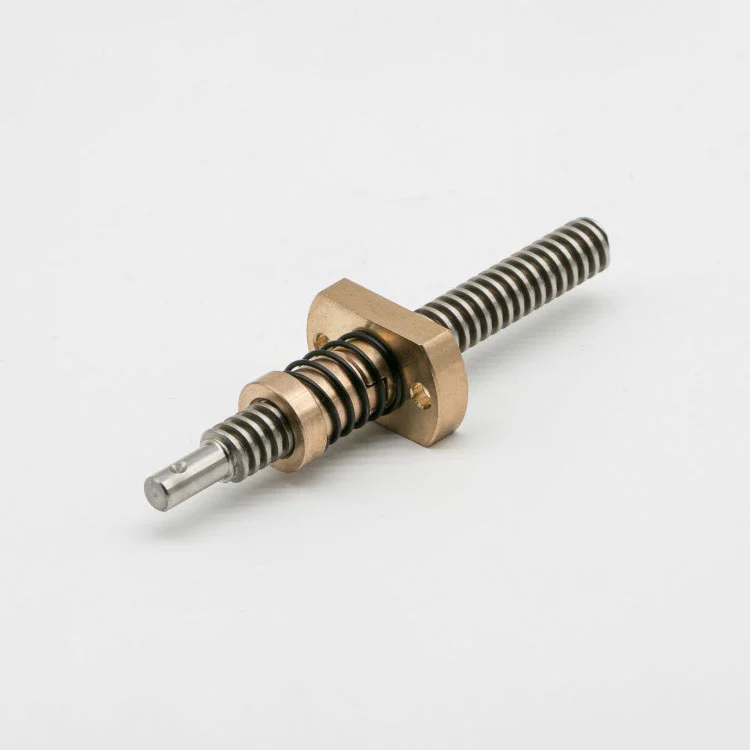
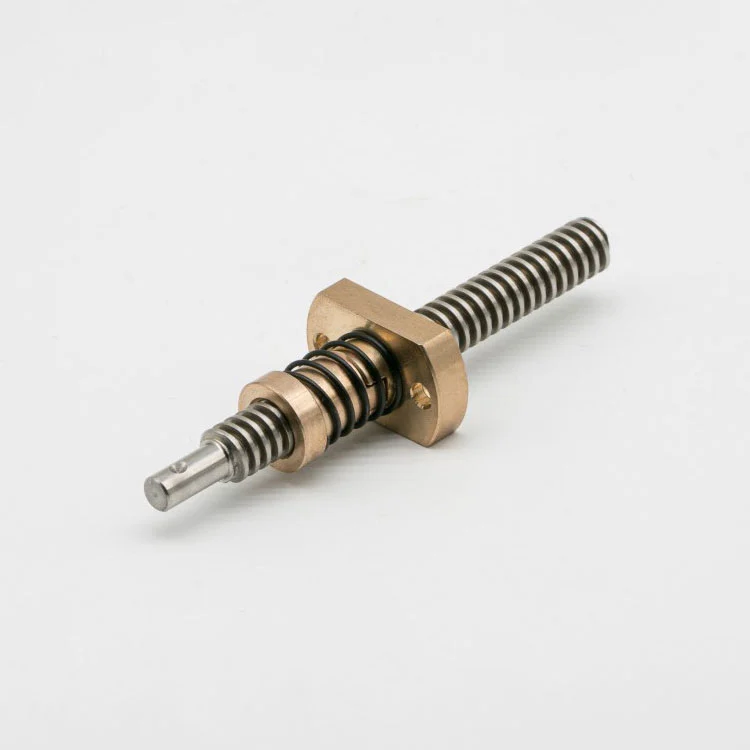
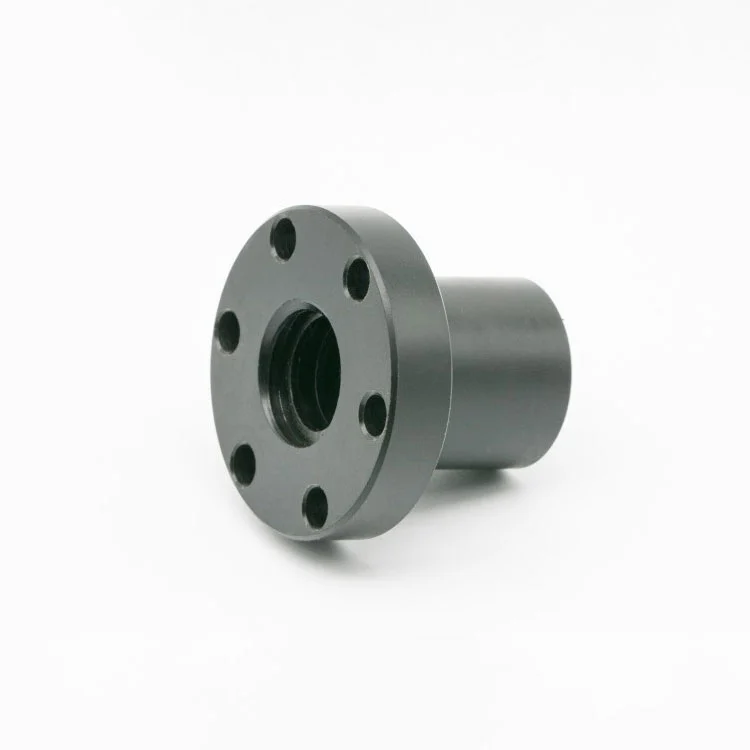
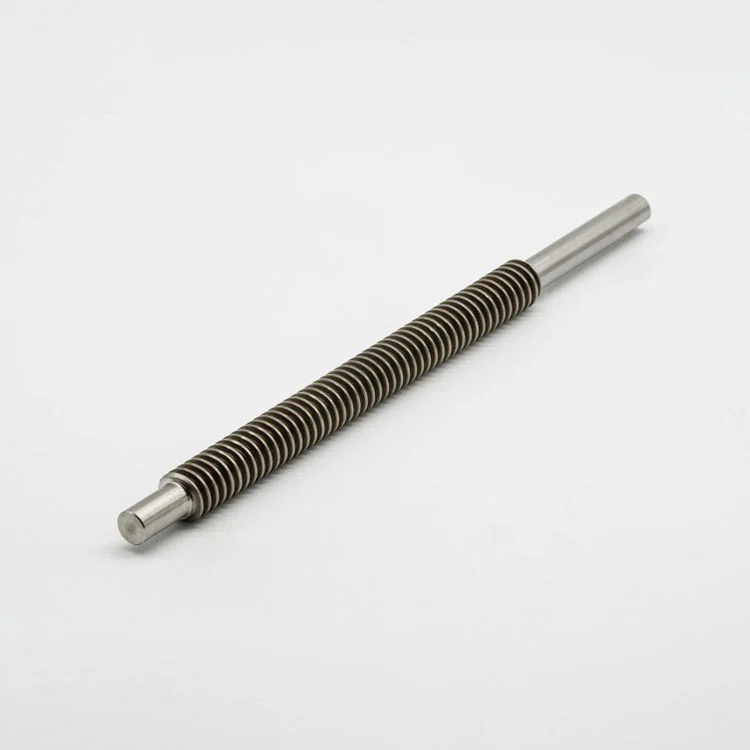
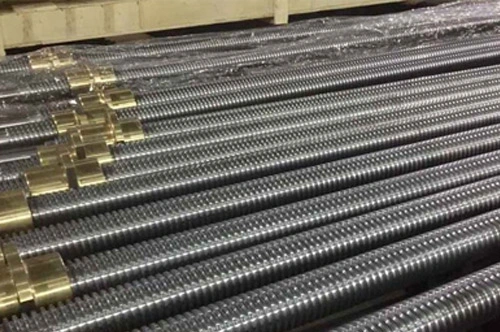
Trapezoidal screw: Using a trapezoidal thread (the tooth profile angle is usually 30° or 29°) for direct transmission, the screw is in direct contact with the thread surface of the nut, and power transmission and linear motion conversion are achieved through the engagement between the threads. The structure is relatively simple, mainly composed of trapezoidal thread screw, nut and necessary lubrication and dust-proof parts, without additional rolling element structure. This direct contact transmission method is the core source of its subsequent "low precision, high friction" and other characteristics.
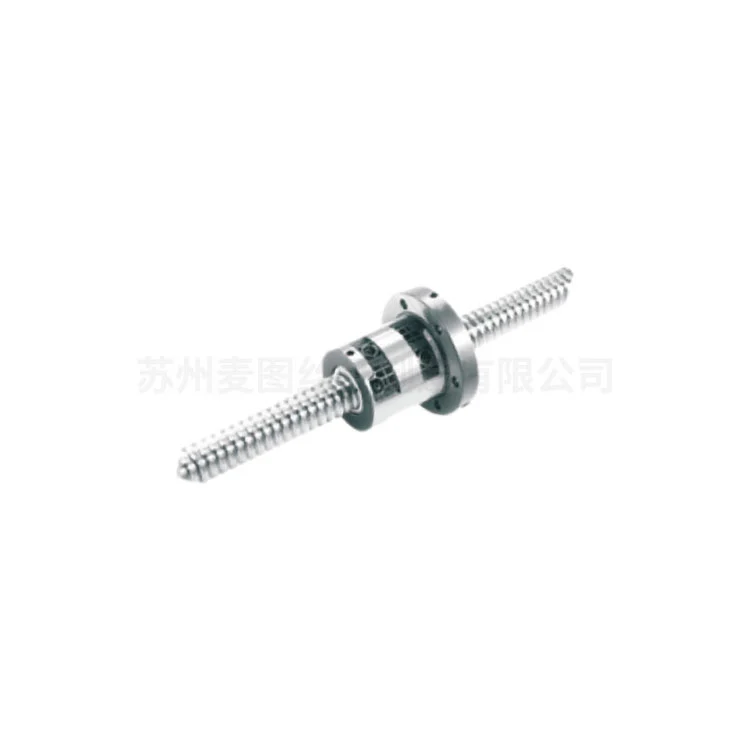
Ball screw: Balls (usually steel balls) are added between the screw and the nut as rolling elements. The internal threads of the screw and the nut are designed as arc-shaped raceways that match the balls. During transmission, the motor drives the screw to rotate, and the balls roll in the raceway. The rolling of the balls realizes the relative movement between the screw and the nut. At the same time, the balls will circulate and reciprocate through the return device to form a continuous transmission. This structural design of "rolling friction instead of sliding friction" allows it to achieve qualitative improvements in terms of accuracy and efficiency.
Core summary: The trapezoidal screw is a "sliding transmission" and the ball screw is a "rolling transmission". The structural difference is the "root" of all differences between the two!
2. Comparison of key performance: see the pros and cons clearly in 5 dimensions
Differences in structure directly translate into differences in performance, and performance is the core basis for selection. The following will help you intuitively feel the difference between the two from the five key dimensions of accuracy, efficiency, load, life, and noise:
1. Accuracy: Ball screw has the advantage of rolling grade, and trapezoidal screw meets basic needs.
Accuracy is one of the core indicators of screw transmission, especially for precision processing and automation equipment.
Because the trapezoidal screw adopts direct sliding contact with the thread surface, the thread surface wears relatively quickly during the transmission process and is prone to "crawling" (uneven movement during low-speed operation), resulting in low positioning accuracy and low repeatability. Generally, the accuracy level of trapezoidal screws is between C7-C10, which can only meet the needs of ordinary transmission scenarios and cannot be adapted to high-precision equipment.
The ball screw relies on the advantages of ball rolling transmission. The friction force during the transmission process is small and uniform, the degree of wear is much lower than that of the trapezoidal screw, and the crawling phenomenon is basically non-existent. Its accuracy level can reach the high-precision level of C3-C5, and some high-end models can even reach C2 level. It can accurately achieve micron-level positioning and is fully suitable for scenes with extremely high accuracy requirements such as CNC machine tools, precision testing equipment, and automated robots.
2. Efficiency: Ball screw has significant energy-saving advantages, while trapezoidal screw has higher energy consumption.
Transmission efficiency is directly related to the energy consumption and operating costs of the equipment, especially for equipment that operates continuously for a long time.
The sliding friction transmission method of the trapezoidal screw has a large friction coefficient (usually between 0.15-0.25), and a large amount of power is consumed in overcoming friction. The transmission efficiency is low, generally only 30%-50%. This means that more than half of the power output by the motor is lost by friction, which not only increases energy consumption, but also causes the screw and nut to easily heat up.
The rolling friction coefficient of the ball screw is extremely small (only 0.003-0.005), and the transmission efficiency can be as high as 90%-95%. The power output by the motor can be converted into transmission power to the maximum extent, which not only reduces the energy consumption of the equipment, but also reduces the heating phenomenon, allowing the equipment to run more stably for a long time.
3.Load: Each has its own advantages. The trapezoidal screw is impact-resistant, and the ball screw is suitable for high load and smooth transmission.
Load capacity needs to be differentiated based on scenarios. Both have their own advantages under different load types.
Due to the larger contact area of the thread surface and the characteristics of sliding transmission, the trapezoidal screw has a stronger ability to withstand impact loads and performs more stably in some scenarios with large instantaneous impacts (such as small pressure equipment, manual lifting mechanisms). However, in high-load continuous transmission scenarios, the friction and heating problem will be exacerbated, resulting in limited load capacity.
The ball screw transmits load through multi-point contact of the balls, performs better in stable and high-load scenarios, and can withstand large axial loads. At the same time, due to its high efficiency and low heat generation, its stability under high-load continuous operation is far better than that of the trapezoidal screw, making it suitable for CNC machine tool feed shafts, heavy-duty automated conveying equipment and other scenarios. However, it should be noted that the ball screw's ability to withstand impact loads is relatively weak, and abuse in strong impact scenarios needs to be avoided.
4. Lifespan: Ball screws are more durable, while trapezoidal screws have high maintenance costs.
The service life is directly related to the maintenance cost and downtime loss of the equipment, and is an important consideration when enterprises select models.
The sliding friction of the trapezoidal screw will cause the thread surface to wear faster and the service life will generally be shorter, usually around a few thousand to 10,000 hours. Frequent lubrication is required during use, otherwise it will aggravate wear and increase maintenance costs and downtime.
The rolling friction and wear of the ball screw is extremely small. As long as it is regularly lubricated and pollution is avoided, the service life can reach tens of thousands or even hundreds of thousands of hours. The return flow device in its structure has a mature design, the ball circulation is stable, and the wear is even, which greatly reduces the maintenance frequency and cost. It is especially suitable for production line scenarios that require high continuous operation of equipment.
5.Noise: The ball screw runs quieter, while the trapezoidal screw has more obvious noise.
In scenarios where noise is required, such as automated production lines and office equipment, the operating noise of the screw is an important indicator.
During the sliding transmission of the trapezoidal screw, the friction between the thread surfaces and the possible crawling phenomenon will produce obvious noise, especially when running at high speed, the noise is even greater, and the general noise value is above 60 decibels.
The ball rolling transmission of the ball screw is more stable and the friction noise is extremely small. With high-precision processing technology, the noise during operation can be controlled below 50 decibels, basically achieving "silent operation" and suitable for low-noise scenarios such as laboratories, medical equipment, and office automation equipment.
3. Comparison of application scenarios: Choosing the right screw = increasing the value of the equipment
Combined with the above performance differences, there is a clear dividing line between the application scenarios of trapezoidal screws and ball screws. Only by accurately matching the scenarios can the best results be achieved:
The core application scenarios of trapezoidal screws: suitable for scenarios where accuracy, efficiency, and noise are not high, budget is limited, or there is a certain impact load, such as: manual lifting platforms, small gate opening and closing mechanisms, transmission mechanisms of ordinary conveying equipment, low-cost household equipment (such as small lifts), simple packaging equipment, etc. Its biggest advantages are low cost, simple structure, low maintenance threshold, and adaptability to "basic transmission" needs.
The core application scenarios of ball screws: suitable for mid-to-high-end equipment scenarios that have high requirements for accuracy, efficiency, life, and noise, such as: CNC machine tools, feed shaft transmissions of machining centers, joint transmissions of automated robots, positioning mechanisms of precision testing instruments, medical equipment (such as CT machines, surgical robots), electronic equipment precision assembly lines, lithium battery pole piece cutting equipment, etc. Although its cost is relatively high, it can greatly improve the performance and stability of the equipment and create higher production value for the enterprise.
4. Selection guide: 3 steps to teach you to choose the right screw
After reading the differences between the two, many people may still not know which one to choose? Teach you 3 steps to quickly lock the adaptation plan:
Clarify the core requirements: first determine the core requirements of your own scenario for accuracy, efficiency, and lifespan - if you need micron-level precision and long-term continuous operation, directly choose the ball screw; if it is just basic transmission and the budget is limited, just choose the trapezoidal screw.
Evaluate the working conditions: Check whether there is an impact load (if there is, priority will be given to the trapezoidal screw), whether there are requirements for noise (choose ball screw for low noise), and whether the running speed is high (choose ball screw for high-speed scenarios).
Calculate the comprehensive cost: Don’t just look at the purchase cost. Although the initial purchase price of the ball screw is high, it has a long life, low maintenance cost, and the long-term comprehensive cost is lower. The trapezoidal screw is cheap initially, but with frequent maintenance and replacement, the long-term cost may be higher.
Still confused about how to choose between trapezoidal screw and ball screw? Feel free to contact us directly! We have 10 years of experience in screw rod R&D and production. We can provide you with free selection consulting services and customize exclusive transmission solutions according to your specific working conditions and equipment parameters. Whether it is a high-precision ball screw or a cost-effective trapezoidal screw, we can meet your needs. Quality assurance and perfect after-sales make your selection worry-free!
Related News
- Can PEEK Trapezoidal Screw Nuts Withstand Regular Disinfection in Pharmaceutical Cleanrooms?
- How To Maintain PEEK Trapezoidal Screw Nuts On Textile Production Equipment?
- How Does PEEK Trapezoidal Screw Nut Reduce Textile Machine Downtime?
- How Can a C7 Large Lead Ball Screw for Material Handling Improve Speed, Precision, and Heavy-Duty Performance
- How Can Ultra Precision Linear Guides Improve Accuracy, Stability, and Reliability in Modern Motion Systems
- Why Is the C7 High Speed Large Lead Rolled Ball Screw for Robots a Smart Choice for Fast and Reliable Automation
Leave me a message
New Products