How Can Ultra Precision Linear Guides Improve Accuracy, Stability, and Reliability in Modern Motion Systems
Article Summary: Ultra Precision Linear Guides are essential for motion systems that require exceptionally accurate positioning, smooth travel, high rigidity, and long-term repeatability. From semiconductor equipment and precision machine tools to robotics and medical devices, the right linear guide can directly influence machining quality, equipment stability, and operating costs. This article explains how ultra-precision guideways work, which specifications matter most, how precision grades compare, and what buyers should consider when selecting a reliable solution from a professional manufacturer such as Maitu.
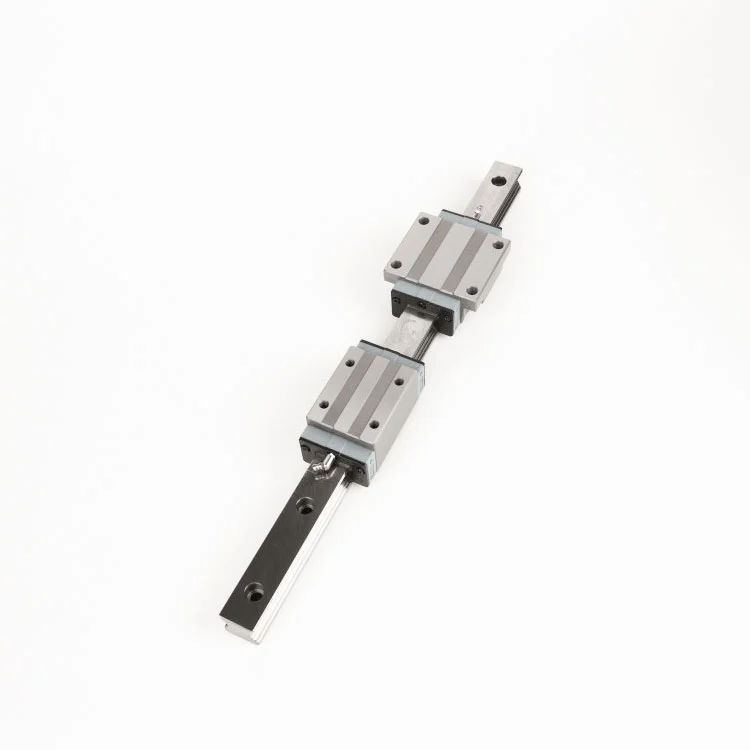
Table of Contents
- Why Are Ultra Precision Linear Guides Important?
- What Technical Features Define a High-Performance Linear Guide?
- How Do Precision Grades and Tolerances Affect Performance?
- Which Materials and Surface Treatments Support Long-Term Accuracy?
- Where Are Ultra-Precision Linear Guides Commonly Used?
- How Should You Select the Right Linear Guide?
- What Quality Control Should Buyers Expect?
- Frequently Asked Questions
- Final Thoughts
Why Are Ultra Precision Linear Guides Important?
In modern automation, linear motion is no longer simply about moving a component from point A to point B. Semiconductor manufacturing, precision inspection, CNC machining, robotics, and medical equipment often require repeatable movement with extremely small deviations. In these applications, even a few micrometers of geometric error can influence product quality, assembly accuracy, or measurement results.
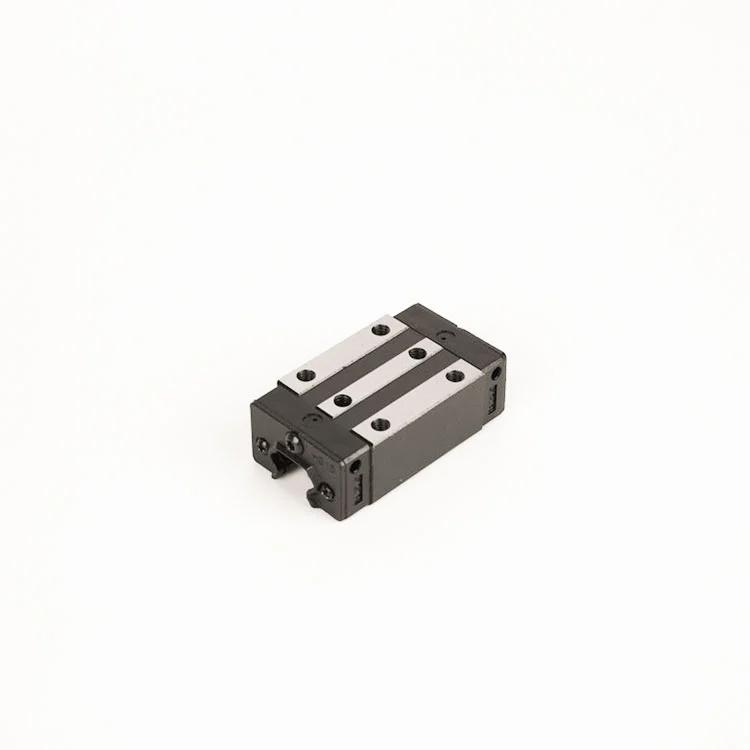
Ultra Precision Linear Guides provide a controlled rolling-motion interface between a guide rail and carriage. Their optimized raceway geometry, carefully ground mounting surfaces, and controlled manufacturing tolerances help minimize unwanted vibration, positional variation, and mechanical play.
Maitu develops linear motion products for demanding industrial applications and has more than 12 years of experience in precision component manufacturing and related solutions. Its ultra-precision guideways are designed around rigidity, dimensional consistency, load performance, and long-term reliability, making them suitable for systems where ordinary linear guides may not provide sufficient accuracy.
The value of an ultra-precision guide is therefore not limited to its dimensional tolerance. It is the combination of geometric accuracy, material properties, preload behavior, installation quality, lubrication, sealing, and quality inspection that determines real-world motion performance.
What Technical Features Define a High-Performance Linear Guide?
A precision linear guide should be evaluated as a complete motion component rather than by a single accuracy number. Several technical characteristics work together to determine its performance.
Four-Point Contact and Load Distribution
An optimized raceway structure can distribute applied loads across multiple contact points. This helps the guide handle radial forces, lateral forces, and moment loads more effectively, particularly in multi-axis equipment.
Precision-Ground Surfaces
Ground raceways and mounting surfaces contribute to smoother carriage travel and improved dimensional consistency. Maitu specifies ground raceways with a surface finish of approximately Ra 0.4–0.8 μm for its ultra-precision series.
High Rigidity
Rigidity becomes especially important when the guide supports heavy tooling, cutting forces, inspection modules, or multi-axis mechanisms. A rigid guideway can help reduce deformation and maintain positional stability under working loads.
Reliable Sealing and Lubrication
Contamination is a major concern in linear motion systems. Integrated multi-labyrinth seals can help prevent contaminants from reaching the rolling elements and raceways. Optional lubrication solutions can further reduce maintenance requirements during extended operation.
- Stable and smooth linear movement
- High load and moment-load capability
- Reduced vibration during travel
- Controlled mounting and running accuracy
- Protection against dust and external contaminants
- Longer maintenance intervals when correctly lubricated
How Do Precision Grades and Tolerances Affect Performance?
Precision grade determines how tightly critical dimensions and geometric characteristics are controlled. For applications involving multiple parallel rails or coordinated axes, consistency between guideways is particularly important because small dimensional differences can accumulate during installation and operation.
For example, Maitu's production data provides several precision grades, including N, H, P, SP, and UP. The UP class represents the highest precision category in the listed range.
| Rail Length | N Grade | H Grade | P Grade | SP Grade | UP Grade |
|---|---|---|---|---|---|
| ≤500 mm | 17 μm | 11 μm | 7 μm | 4 μm | 2 μm |
| >500–1000 mm | 22 μm | 15 μm | 10 μm | 6 μm | 3 μm |
| >1000–1500 mm | 25 μm | 18 μm | 11 μm | 8 μm | 4 μm |
| >1500–2000 mm | 27 μm | 20 μm | 13 μm | 9 μm | 5 μm |
| >2000–2500 mm | 29 μm | 22 μm | 14 μm | 11 μm | 6 μm |
| >2500–3000 mm | 30 μm | 24 μm | 16 μm | 12 μm | 7 μm |
Note: Values shown are production parameters for height and width allowance (△H and △W) and should be evaluated together with the specific guide configuration and application requirements.
For systems that require synchronized movement, selecting a higher precision grade can provide greater dimensional consistency. However, the highest grade is not automatically the best choice for every machine. Buyers should balance required accuracy, load, rail length, installation conditions, operating environment, and total project cost.
Which Materials and Surface Treatments Support Long-Term Accuracy?
Material selection directly affects hardness, wear resistance, dimensional stability, and service life. High-carbon chromium bearing steel, such as SUJ2-equivalent material, is widely used for demanding rolling-contact components because it can achieve high hardness after appropriate heat treatment.
Maitu's ultra-precision linear guide series uses high-carbon chromium bearing steel with a specified hardness of approximately 58–62 HRC. Precision-ground raceways and controlled heat treatment help create a stable contact surface for continuous operation.
Depending on the application environment, surface treatments can also be considered. Black oxide and electroless nickel plating can provide additional surface protection and may be useful when corrosion resistance or environmental durability is an important consideration.
- Base material: High-carbon chromium bearing steel
- Hardness: Approximately 58–62 HRC
- Raceway finish: Approximately Ra 0.4–0.8 μm
- Optional protection: Black oxide or electroless nickel plating
Where Are Ultra-Precision Linear Guides Commonly Used?
The tighter the motion requirements, the greater the potential value of a high-precision guideway. These components are particularly relevant when equipment must maintain repeatable positioning while handling continuous movement or external loads.
Semiconductor Equipment
Wafer handling, inspection, dispensing, and packaging equipment can require highly controlled movement. Stable linear guidance helps positioning systems maintain repeatability and reduce unwanted vibration.
Precision Machine Tools
CNC and other high-accuracy machining equipment depend on rigid motion components to support cutting accuracy and repeatable tool positioning.
Industrial Robotics
Linear axes used with robotic systems may experience changing loads and complex movement patterns. Strong moment-load capacity can help maintain stability in multi-axis configurations.
Precision Measuring Instruments
Measurement equipment is especially sensitive to mechanical deviation. Smooth movement and controlled geometric tolerances can help reduce mechanical sources of measurement error.
Medical Equipment
Medical manufacturing and precision instruments often require dependable positioning, controlled movement, and appropriate surface protection. Guide selection should consider both mechanical performance and environmental requirements.
How Should You Select the Right Linear Guide?
Choosing a guideway based only on its advertised precision class can lead to an unsuitable design. A better approach is to evaluate the complete operating environment and mechanical requirements.
- Determine the required positioning accuracy: Define the target accuracy, repeatability, and allowable geometric deviation.
- Calculate static and dynamic loads: Consider payload, acceleration, cutting force, moment loads, and load distribution.
- Check rail length: Longer rails can have different tolerance requirements, so length and precision grade should be evaluated together.
- Evaluate environmental conditions: Consider dust, humidity, temperature, corrosive substances, and cleanroom requirements.
- Select suitable lubrication: Proper lubrication is essential for reducing friction and supporting consistent rolling performance.
- Confirm installation accuracy: Even a highly precise guide cannot compensate for an incorrectly machined or poorly aligned mounting surface.
- Request inspection documentation: Technical inspection reports provide useful evidence that supplied components meet the agreed specifications.
For projects with demanding requirements, engineers should also consider carriage configuration, preload, mounting method, rail parallelism, drive-system interaction, and expected service cycle before finalizing the specification.
What Quality Control Should Buyers Expect?
Precision components require measurable quality control rather than visual inspection alone. A professional supplier should have processes that cover raw materials, heat treatment, grinding, dimensional verification, running performance, and final inspection.
Maitu states that its manufacturing process uses ERP-based quality traceability from high-carbon chromium bearing steel storage through heat treatment, precision grinding, and final inspection. Its guideways are also subjected to profile projection, noise evaluation, and load verification, with inspection documentation provided for orders.
This approach is important for OEMs and engineering teams because traceable inspection data can support incoming quality control, project documentation, and long-term maintenance decisions.
Maitu also reports more than 16,000 specifications of precision lead screws and linear components developed since its Suzhou operation began, together with experience serving more than 5,000 global customers. Its production resources include facilities in Suzhou and Dongguan, supporting both small-quantity requirements and larger production orders.
Frequently Asked Questions
What are Ultra Precision Linear Guides?
Ultra Precision Linear Guides are high-accuracy linear motion components designed for applications requiring controlled positioning, smooth travel, high rigidity, and consistent geometric tolerances. They are commonly used in semiconductor equipment, precision machine tools, robotics, measuring equipment, and medical manufacturing.
What makes UP-grade linear guides different from standard grades?
UP-grade guideways are manufactured with tighter dimensional allowances than standard grades. For example, Maitu's listed production parameters show a △H and △W allowance of 2 μm for UP-grade rails with lengths up to 500 mm. The actual suitability of a grade depends on the complete machine design and required accuracy.
What material is commonly used for high-precision linear guides?
High-carbon chromium bearing steel is commonly selected for demanding linear motion applications because it can achieve high hardness and wear resistance after heat treatment. Maitu specifies SUJ2-equivalent material with approximately 58–62 HRC hardness for its ultra-precision series.
How can linear guide service life be improved?
Correct installation, appropriate preload, suitable lubrication, contamination control, proper load distribution, and regular inspection all contribute to service life. Sealed guideways and suitable surface treatments can provide additional protection in challenging operating environments.
Are ultra-precision guides suitable for cleanroom or semiconductor applications?
They can be suitable when the guide configuration, lubrication, sealing, surface treatment, and cleanliness requirements are correctly matched to the application. For sensitive environments, buyers should discuss material, coating, lubrication, particle-control, and inspection requirements with the supplier before ordering.
Final Thoughts
Ultra Precision Linear Guides play a critical role in applications where motion accuracy, rigidity, repeatability, and reliability directly influence equipment performance. Selecting the right solution requires more than comparing nominal precision grades. Material quality, raceway finish, load distribution, sealing, lubrication, installation conditions, inspection procedures, and application requirements should all be considered together.
With more than 12 years of experience in precision linear motion technology, a broad product portfolio, detailed production parameters, and traceable quality-control processes, Maitu provides linear guide solutions for demanding industrial applications. If you are evaluating guideways for CNC equipment, semiconductor machinery, robotics, precision measurement, or medical manufacturing, learn more about Ultra Precision Linear Guides and contact us to discuss your accuracy, load, rail length, environmental, and customization requirements.
Related News
- Can PEEK Trapezoidal Screw Nuts Withstand Regular Disinfection in Pharmaceutical Cleanrooms?
- How To Maintain PEEK Trapezoidal Screw Nuts On Textile Production Equipment?
- How Does PEEK Trapezoidal Screw Nut Reduce Textile Machine Downtime?
- How Can a C7 Large Lead Ball Screw for Material Handling Improve Speed, Precision, and Heavy-Duty Performance
- Why Is the C7 High Speed Large Lead Rolled Ball Screw for Robots a Smart Choice for Fast and Reliable Automation
- Why Is Peek Trapezoidal Screw Nut for Textile Machinery a Smarter Choice for High-Speed Textile Production
Leave me a message