Why Are Linear Guides Blocks So Important for Stable and Accurate Motion?
Article Summary
When a machine shakes, binds, drifts, or wears out faster than expected, the problem is often not the motor, controller, or software. In many cases, it starts in the motion support system. Linear Guides Blocks play a central role in keeping movement smooth, repeatable, and properly aligned under real working loads. They influence rigidity, speed, noise, maintenance intervals, and long-term operating cost.
This article explains what buyers, engineers, and equipment builders should really pay attention to when choosing Linear Guides Blocks. It covers common pain points, selection logic, structural differences, maintenance concerns, and application-oriented advice. It also shows how a manufacturer such as Suzhou Maitu Screw Rod Manufacturing Co., Ltd. can support projects that require dependable motion components for industrial use.
Contents
Outline
- Buyer concerns in real production environments
- Core function of Linear Guides Blocks in motion systems
- Differences between profile styles and mounting structures
- Practical criteria for load, rigidity, speed, and accuracy
- Common purchasing errors that raise downtime risk
- Maintenance practices that reduce premature wear
- Value of working with an experienced manufacturing partner
What Problems Do Buyers Usually Face When Choosing Linear Guides Blocks
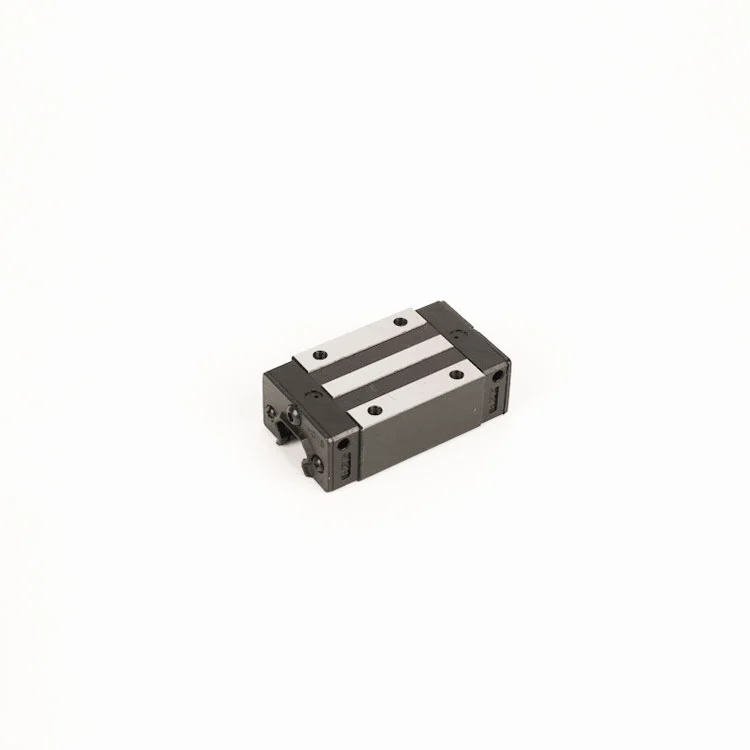
Many buyers do not start by asking for the most advanced component. They start by trying to solve a problem. A packaging machine may be losing repeatability. A cutting platform may develop vibration marks. An automation line may move smoothly at first but become noisy after several months. A machine tool builder may discover that the slide system performs well in testing but deteriorates under continuous duty. These problems often point back to the wrong guide block configuration, poor load matching, or insufficient structural support.
Another common issue is buying by dimensions alone. Some purchasers compare only rail size, installation dimensions, or price per set. That seems efficient at the quotation stage, but it can become expensive later. Motion components should be selected around real working conditions, not just drawings. The actual travel speed, duty cycle, contamination level, mounting accuracy, and shock load all affect whether a guide block will remain stable in service.
A guide block that looks similar on paper can behave very differently once it is exposed to high load, long travel, misalignment, or repeated starts and stops.
This is why Linear Guides Blocks are not simply accessories. They are critical supporting elements in a complete motion path. If they are underspecified, the entire machine can suffer from reduced precision, shorter service life, and more frequent maintenance shutdowns.
What Do Linear Guides Blocks Actually Do in a Machine System
At a basic level, Linear Guides Blocks support guided linear movement along a rail while carrying the working load. In practice, their job is much more demanding. They must help the moving structure travel with low resistance while keeping direction stable, reducing unnecessary deflection, and maintaining accuracy across repeated cycles.
In well-designed systems, the guide block contributes to more than smooth movement. It helps with positioning consistency, mechanical rigidity, vibration control, and wear management. This matters in industries where motion quality directly affects output quality, such as machining, electronics assembly, automated inspection, material handling, and precision manufacturing.
A strong guide block system can help equipment builders achieve several goals at once:
- Keep movement straight and predictable under dynamic load
- Support higher speeds without sacrificing stability
- Reduce friction-related heating and irregular wear
- Preserve alignment over long operating cycles
- Improve machine confidence in demanding duty conditions
That is exactly why manufacturers continue refining guide block options rather than offering only one universal style. Application needs vary, and a one-size-fits-all approach usually creates compromise where the machine can least afford it.
How Should You Choose the Right Linear Guides Blocks for Your Application
Good selection begins with understanding the machine, not the catalog. Before choosing among different Linear Guides Blocks, it is worth reviewing the load direction, mounting space, required stiffness, travel length, and environmental conditions. This is where many projects either become reliable or drift into avoidable rework.
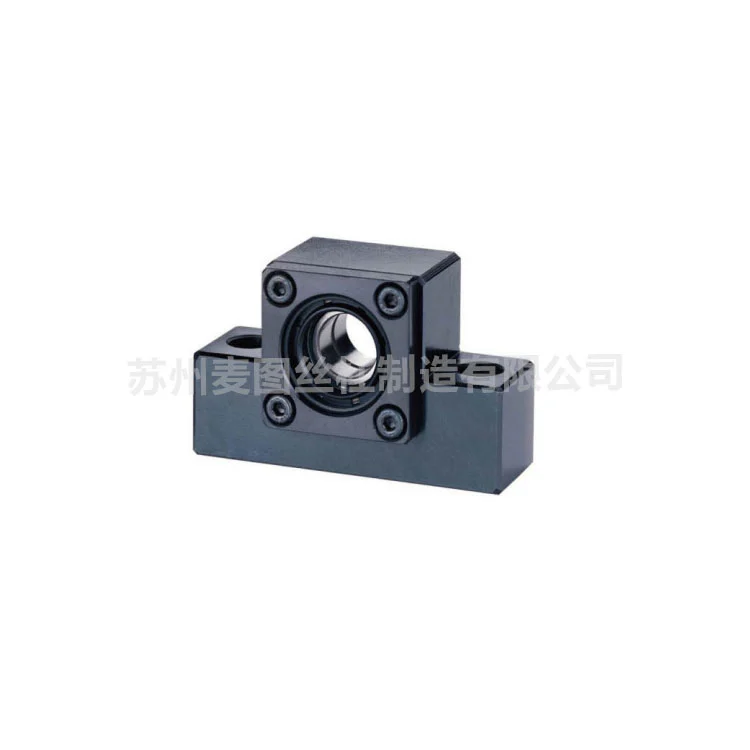
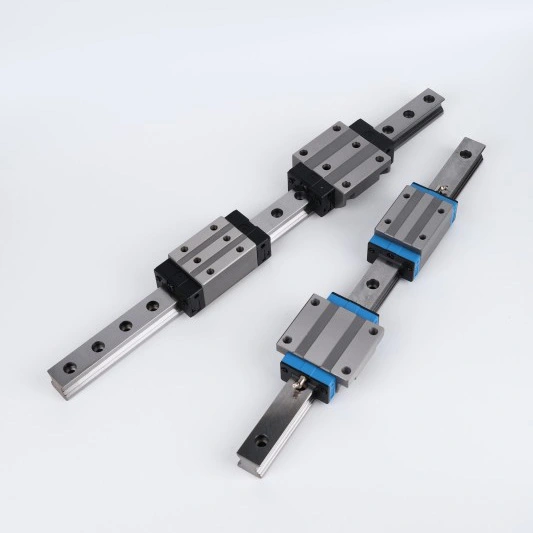
In the market, buyers often compare options such as high profile and low profile structures, as well as flange type and wide type configurations. Each design direction can offer benefits depending on the application. A higher profile may support stronger rigidity in some structures, while a lower profile can help when installation space is limited. A flange-type arrangement may suit specific mounting needs, while a wide-type structure may support better load distribution in another design.
A practical selection process should include the following considerations:
- Load requirement — Determine both static and dynamic loads, including moment load and shock events.
- Accuracy expectation — Consider whether the machine is for general transport, repetitive automation, or precision positioning.
- Structure and footprint — Evaluate available installation space and connection geometry.
- Speed and duty cycle — High-speed and continuous-duty applications require attention to lubrication and wear behavior.
- Environment — Dust, chips, coolant, humidity, and uneven maintenance conditions all change the selection logic.
- Assembly quality — Even a good guide block can underperform if the mounting base lacks flatness or alignment control.
When buyers work with a supplier that understands application matching rather than only part numbers, the chance of later correction drops significantly.
Which Product Features Matter Most When Comparing Options
It is easy to focus on price and overlook the features that affect long-term value. But in motion systems, the most economical choice is often the component that prevents failure, not the one with the lowest initial quotation. When evaluating Linear Guides Blocks, the following factors deserve close attention.
| Feature | Why It Matters | What Buyers Should Watch |
|---|---|---|
| Rigidity | Helps resist deflection and maintain motion stability | Match the block type to real load and structural demands |
| Running smoothness | Affects vibration, noise, and positioning consistency | Look for stable machining quality and dependable tolerance control |
| Service life | Directly influences replacement intervals and downtime cost | Consider material quality, finishing, lubrication path, and inspection standards |
| Installation compatibility | Impacts assembly efficiency and system fit | Confirm dimensions, structure type, and mounting logic early |
| Supply consistency | Important for repeat orders and multi-machine projects | Choose a supplier with stable production and inventory capability |
| Technical support | Reduces wrong selection risk and redesign time | Prioritize suppliers that can help with matching rails and integrated solutions |
Buyers should also think beyond the single component. In many applications, the block and rail must work as a coordinated pair. A supplier that can support the combination of rails and guide blocks as a system often brings more value than one that only ships isolated parts.
What Selection Mistakes Create Hidden Costs Later
One of the biggest mistakes is assuming that all Linear Guides Blocks with similar external dimensions deliver equal performance. They do not. Internal quality, machining control, material consistency, and production inspection all influence how the component behaves after installation.
Another mistake is selecting only for nominal load without considering actual working conditions. Machines rarely operate in ideal conditions. There may be impact, offset loading, uneven installation surfaces, poor lubrication habits, or contamination from dust and debris. If there is no margin in the design, the block may wear sooner than expected.
Buyers also run into trouble when they separate procurement from application engineering. A motion component should not be chosen in isolation from the machine frame, drive system, and use environment. The most reliable results usually come from coordinated evaluation rather than line-item purchasing.
Common Red Flags
- Choosing only by unit price without evaluating total service cost
- Ignoring installation accuracy and base flatness
- Using a low-margin load rating in continuous-duty applications
- Overlooking lubrication planning in dusty or high-speed environments
- Buying from suppliers that cannot maintain stable quality from batch to batch
How Can Proper Maintenance Extend the Life of Linear Guides Blocks
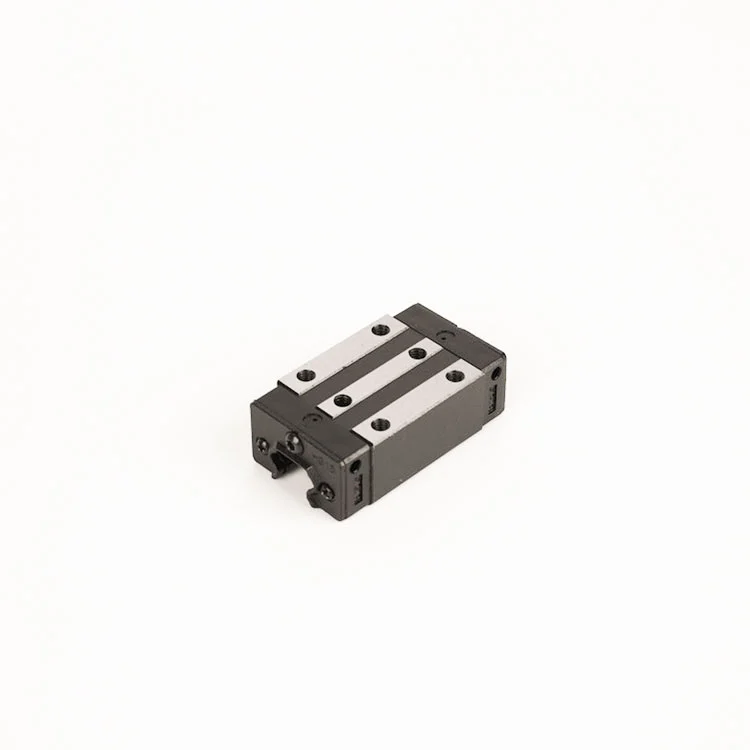
Even high-quality Linear Guides Blocks benefit from disciplined maintenance. Good motion performance is not created by product design alone. It also depends on how the system is installed, lubricated, cleaned, and monitored over time.
Lubrication is one of the most important factors. Inadequate lubrication increases friction, heat, and wear. Excess contamination is another major threat. If the machine operates in an environment with chips, dust, abrasive particles, or process residue, protective measures and regular cleaning should never be treated as optional.
Operators should also watch for early warning signs such as unusual sound, increased running resistance, reduced repeatability, or visible wear patterns. These symptoms often appear before a major failure. Addressing them early can prevent a full shutdown.
A simple maintenance discipline often includes:
- Checking lubrication condition and replenishment intervals
- Keeping rails and block surfaces free from damaging contaminants
- Monitoring noise, temperature, and motion smoothness
- Inspecting mounting points for looseness or shifting
- Reviewing wear trends during scheduled machine service
For buyers managing multiple machines, consistent maintenance practices often deliver more cost savings than constantly replacing components after the damage is already done.
Why Does Supplier Capability Matter as Much as Product Design
In industrial purchasing, product quality is only part of the picture. Supplier capability influences delivery confidence, technical matching, communication efficiency, and repeat-order reliability. A capable manufacturer helps reduce uncertainty before the product even arrives.
Suzhou Maitu Screw Rod Manufacturing Co., Ltd. is positioned not only around component supply, but also around motion solution support. Its product direction in this category includes different structural types of Linear Guides Blocks, and that matters because buyers often need help choosing between configurations rather than simply placing a basic order.
For many projects, the value is not limited to whether a supplier can deliver inventory quickly. The real value is whether that supplier can help align guide block selection with rail choice, machine structure, operating demand, and expected service conditions. This is especially useful for OEM buyers, automation integrators, and equipment builders trying to avoid delays caused by incorrect matching.
When a supplier combines manufacturing experience, inspection discipline, and practical application understanding, customers get more than a catalog item. They get stronger support for stable production outcomes.
FAQ
Can Linear Guides Blocks improve machine accuracy even if the drive system stays the same
Yes. A stable and properly matched guide block can improve the consistency of motion support, reduce unwanted vibration, and help the moving structure track more reliably. That can make a visible difference even when the motor and control system do not change.
Are all Linear Guides Blocks interchangeable if the dimensions look similar
Not necessarily. Similar dimensions do not guarantee the same rigidity, running feel, material quality, load behavior, or service life. Performance differences often show up only after installation and continuous use.
Should buyers choose high profile or low profile structures first
The answer depends on space, load, mounting conditions, and machine goals. A profile decision should be tied to the application rather than treated as a default preference.
Why do some guide block systems wear out earlier than expected
Premature wear is often caused by a combination of factors such as insufficient load margin, poor installation accuracy, contamination, weak lubrication control, or mismatch between the component and the operating environment.
Is technical support really important for a standard-looking motion part
Absolutely. Many failures begin with incorrect selection, not defective material. Technical guidance helps buyers avoid wrong configurations, repeated procurement, and unnecessary downtime.
What Should Buyers Remember Before Making a Final Decision
The right Linear Guides Blocks do much more than allow movement from one point to another. They support alignment, reduce instability, protect precision, and influence how confidently a machine performs over time. For buyers facing issues such as vibration, poor repeatability, early wear, or difficult selection decisions, the answer is usually not to buy faster, but to choose more carefully.
A dependable motion system begins with realistic application analysis and continues with strong manufacturing quality, practical matching support, and ongoing service awareness. That is why working with an experienced supplier matters. If you are evaluating motion components for a new project or replacing an underperforming system, Suzhou Maitu Screw Rod Manufacturing Co., Ltd. can help you explore suitable Linear Guides Blocks options for your operating requirements.
Need a More Reliable Motion Solution
If your equipment needs smoother travel, stronger support, and longer-lasting performance, now is the right time to review your guide system. Tell us your load, structure, speed, and application conditions, and we can help you identify a more suitable solution. Contact us today to discuss your project and get support for the right Linear Guides Blocks configuration.
Related News
- Can PEEK Trapezoidal Screw Nuts Withstand Regular Disinfection in Pharmaceutical Cleanrooms?
- How To Maintain PEEK Trapezoidal Screw Nuts On Textile Production Equipment?
- How Does PEEK Trapezoidal Screw Nut Reduce Textile Machine Downtime?
- How Can a C7 Large Lead Ball Screw for Material Handling Improve Speed, Precision, and Heavy-Duty Performance
- How Can Ultra Precision Linear Guides Improve Accuracy, Stability, and Reliability in Modern Motion Systems
- Why Is the C7 High Speed Large Lead Rolled Ball Screw for Robots a Smart Choice for Fast and Reliable Automation
Leave me a message