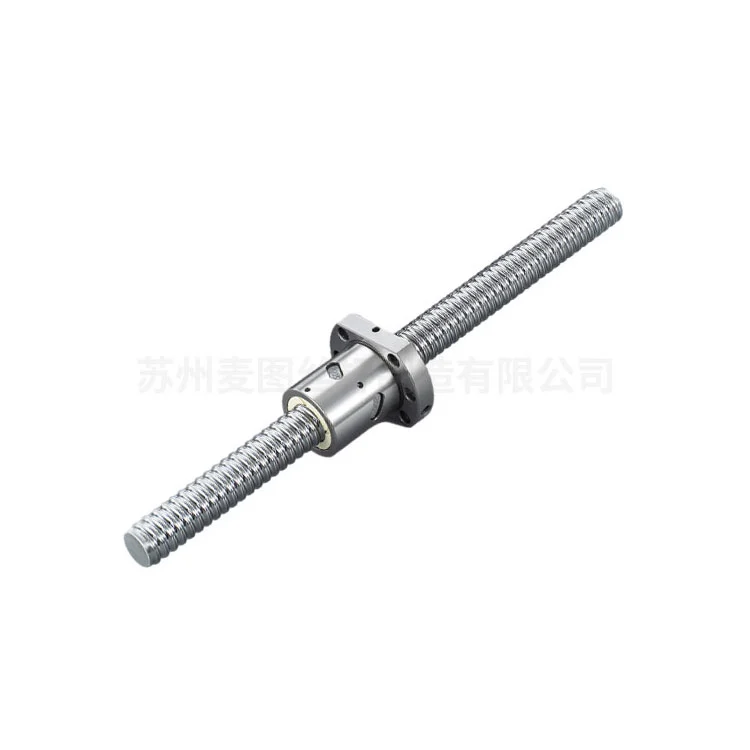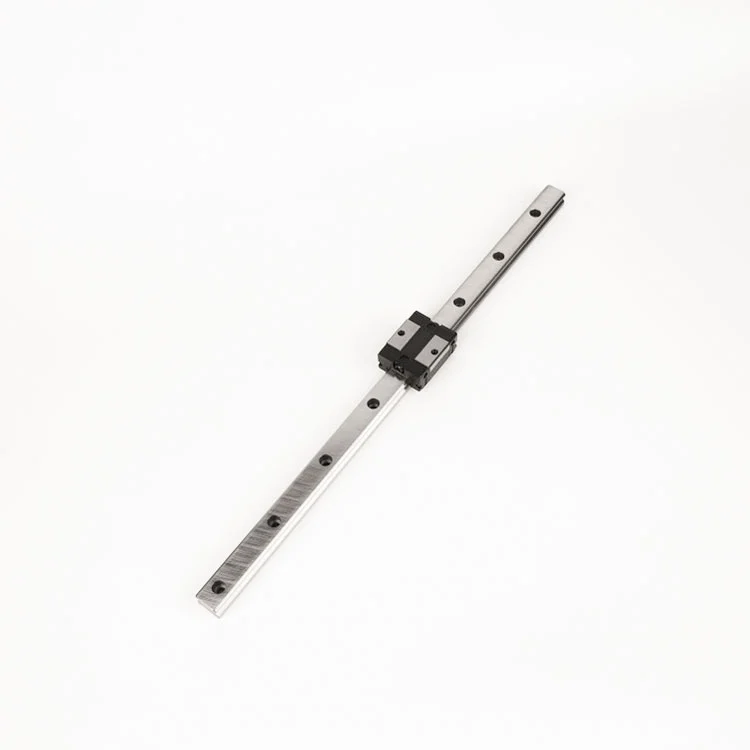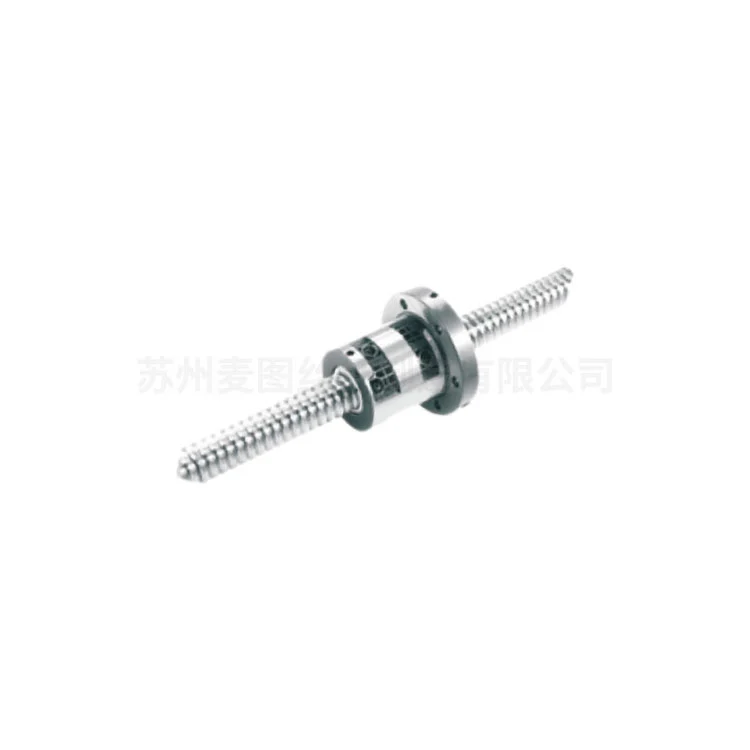
Why Choose a Trapezoidal Lead Screw for Practical, Reliable Linear Motion?
Article Abstract
If you’ve ever dealt with noisy actuators, inconsistent positioning, early wear, or “mystweetspot-is-never-right” maintenance schedules, you already know the hidden cost of choosing the wrong drive mechanism. A Trapezoidal Lead Screw is often the most balanced answer when buyers need predictable performance, controllable cost, and straightforward manufacturing—especially for moderate speeds and loads.
This guide focuses on real buyer pain points: sizing that doesn’t overshoot the budget, minimizing backlash without over-engineering, selecting materials and nut types for long life, and avoiding common installation mistakes that cause binding and premature failure. You’ll also get a simple spec checklist you can hand to a supplier so you receive the right screw and nut the first time.
Most common pain point Backlash and inconsistent repeatability
Most overlooked factor Misalignment and poor nut support
Best use case Cost-effective, durable linear motion
Table of Contents
- Buyer Pain Points and Quick Fixes
- Core Concepts That Drive Performance
- Selection Checklist and Sizing Logic
- Materials, Surface Treatments, and Nut Options
- Backlash, Efficiency, and Positioning Strategies
- Installation and Maintenance That Prevent Failures
- Trapezoidal vs Ball Screw vs Belt
- Practical Specification Template
- FAQ
- Next Steps
Outline
- Define what makes a trapezoidal thread geometry useful in industrial motion systems.
- Translate common buyer complaints into design and selection actions.
- Walk through a step-by-step checklist for screw diameter, lead, and nut pairing.
- Show material and nut choices that match dusty, wet, hot, or high-cycle environments.
- Compare alternatives so you can justify the choice internally and avoid overpaying.
- Provide a clear spec template and a buyer-ready FAQ for faster quoting.
Buyer Pain Points and Quick Fixes
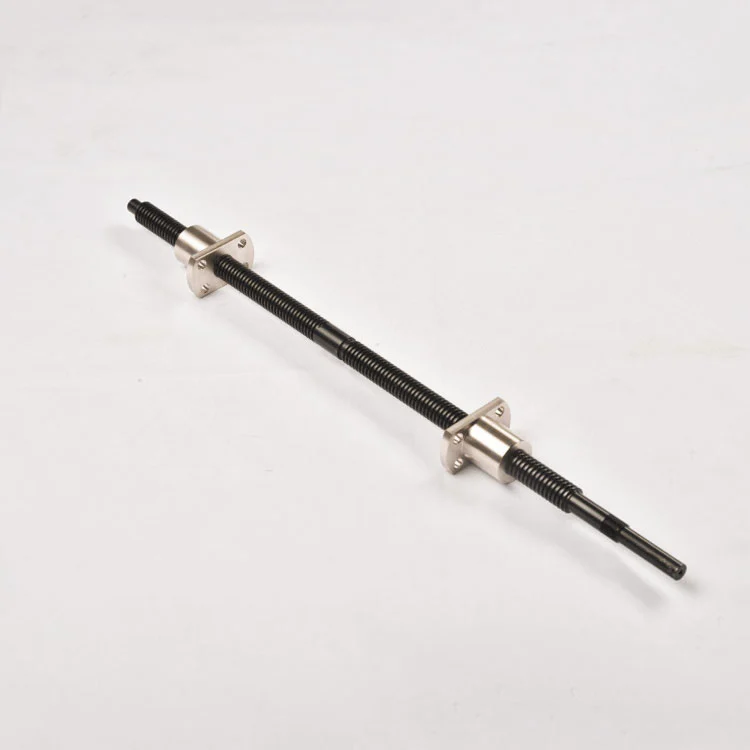
If your current system is failing, it usually fails in predictable ways. Here are the most frequent issues and the first corrective move that actually helps.
- Backlash makes positioning feel “sloppy” → Use an anti-backlash nut, a preloaded dual-nut, or a controlled clearance grade that matches your accuracy target.
- Binding or sudden torque spikes → Check alignment, add proper end supports, and ensure the nut housing isn’t forcing side loads.
- Rapid wear or metal dust → Verify lubrication plan, consider bronze/polymer nuts, and avoid contamination ingress with covers or wipers.
- Noise and vibration → Reduce whip by increasing screw diameter, adding intermediate support, or lowering rotational speed via lead choice.
- Too slow or too much motor load → Revisit lead/pitch, required speed, and efficiency assumptions; trapezoidal systems can be optimized, but not by guessing.
A key advantage of a trapezoidal drive is that it’s forgiving in real-world industrial environments. When dirt, shock loads, or occasional misuse is part of the story, a well-chosen Trapezoidal Lead Screw can stay stable and serviceable with simple maintenance rather than demanding precision upkeep.
Core Concepts That Drive Performance
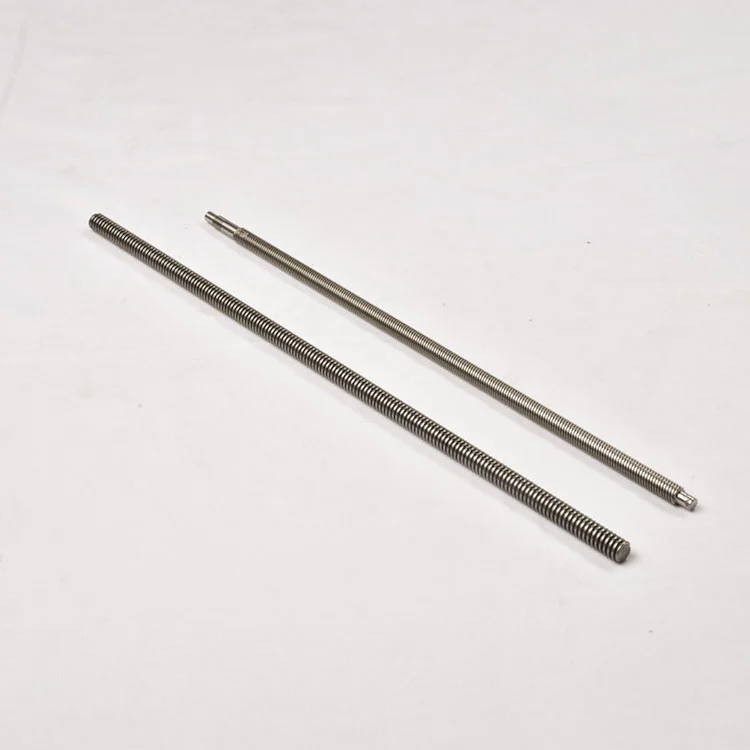
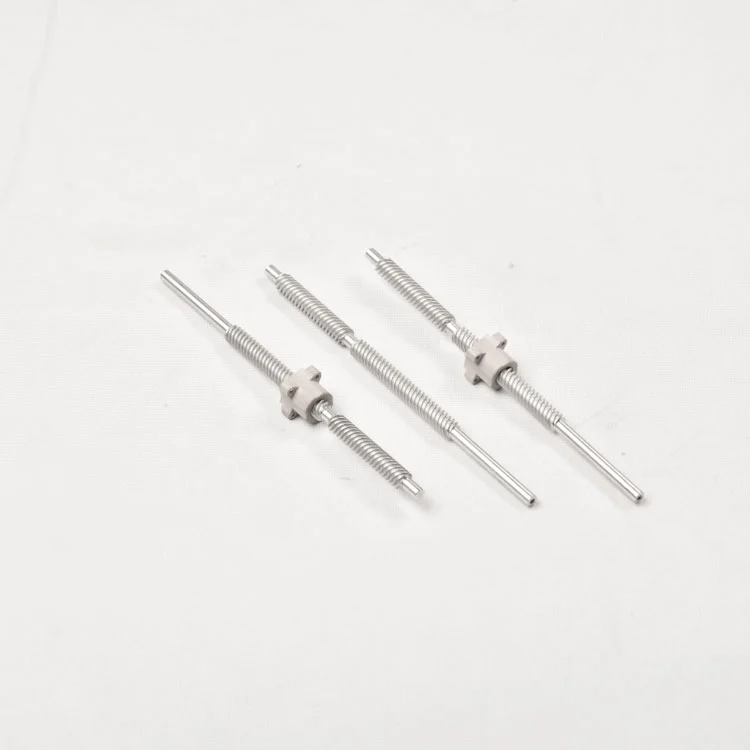
A Trapezoidal Lead Screw uses a trapezoid-shaped thread profile designed for power transmission. The geometry provides strong load-carrying surfaces and a practical compromise between durability, manufacturability, and motion control. For many industrial products—lifts, adjusters, gates, automation fixtures, medical frames, packaging equipment—this thread form remains a go-to choice because it behaves predictably.
- Lead and pitch: Pitch is the distance between thread peaks; lead is the travel per revolution. Multi-start screws increase lead (faster travel) without changing pitch.
- Self-locking tendency: Trapezoidal drives can resist back-driving under certain loads, which is useful for vertical lifting and safety.
- Efficiency: Generally lower than ball screws, but often acceptable for moderate speeds and duty cycles—especially when robustness matters more than peak efficiency.
- Load direction: Many applications are primarily axial load; side loads should be handled by guides, not by the screw/nut interface.
The “best” solution isn’t always the highest efficiency—it’s the one that hits your accuracy, life, noise, cost, and delivery requirements together. That’s exactly why the trapezoidal option keeps showing up on procurement shortlists.
Selection Checklist and Sizing Logic
Most sourcing problems come from missing inputs. Before you request a quote, pin down the essentials below. This reduces redesign loops and helps suppliers recommend the right configuration instead of a generic one.
| Input You Provide | Why It Matters | Common Mistake |
|---|---|---|
| Required travel, speed, and duty cycle | Determines lead choice, heat, wear rate, and motor sizing | Specifying speed without duty cycle, causing overheating later |
| Axial load (static and dynamic) | Sets thread size, nut length, and material pairing | Ignoring shock loads or worst-case vertical load |
| Mounting method and end support | Controls deflection, whip, and alignment stability | Letting the screw “float” and expecting accuracy |
| Environment (dust, water, chemicals, temperature) | Guides material, coating, nut choice, lubrication | Choosing carbon steel in a corrosive enclosure |
| Backlash target and repeatability need | Decides nut type (standard vs anti-backlash vs preload) | Asking for “high precision” without a numeric tolerance |
Practical rule of thumb: if you need very high speed and ultra-low friction, a ball screw may win. If you need a stable workhorse that survives daily use and is easy to service, the Trapezoidal Lead Screw often delivers better total value.
Quick buyer checklist you can copy into your RFQ:
- Thread designation (example: Tr 20×4), length, and effective travel
- Lead requirement (single or multi-start), and target linear speed
- End machining details (bearing seats, keyways, flats, threads)
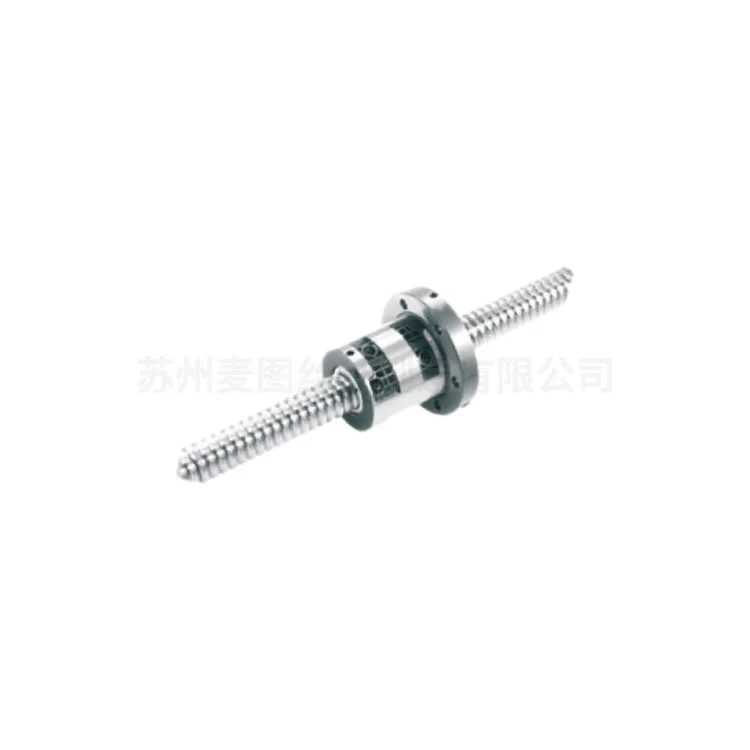
- Nut type (standard, flange, anti-backlash, dual nut) and mounting constraints
- Material and surface requirement (corrosion and wear expectations)
- Backlash/clearance target and repeatability expectation
Materials, Surface Treatments, and Nut Options
Materials are not just “steel vs stainless.” In the field, the wrong pairing turns into noise, galling, corrosion, or frequent replacement. The right pairing becomes boring—in the best way.
| Component | Common Options | When to Choose |
|---|---|---|
| Screw material | Carbon steel, alloy steel, stainless steel | Carbon/alloy for strength and cost; stainless for corrosion-prone environments |
| Surface treatment | Black oxide, nitriding, chrome plating, zinc coating | Nitriding/chrome for wear; zinc for basic corrosion protection; choose based on environment |
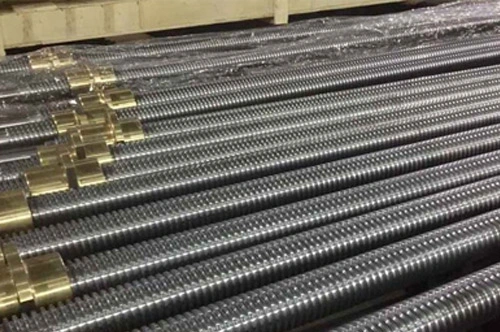
| Nut material | Bronze, steel, engineering polymer | Bronze for durability; polymer for low noise and cleaner running; steel for specific high-load designs |
| Protection accessories | Wipers, bellows, covers, grease fittings | Dusty environments, abrasive particles, or outdoor equipment |
Nut selection is where “good on paper” becomes “good in the machine.” If you expect contamination, a polymer nut with proper guidance and covers can reduce noise and simplify lubrication. If you expect heavy load and long life, bronze is a classic pairing. The goal is not perfection—it's stable performance with manageable maintenance.
Backlash, Efficiency, and Positioning Strategies
Backlash is the small clearance between screw and nut that allows smooth motion and thermal expansion—but it can also create chatter, poor repeatability, and uneven wear. The trick is choosing the smallest backlash you can reliably maintain in your environment.
Common ways to control backlash in trapezoidal systems:
- Anti-backlash nut: Often uses a split design or spring feature to take up clearance; good for direction changes and modest accuracy targets.
- Preloaded dual nut: Two nuts adjusted against each other; stronger control, often used for better repeatability.
- Guided axis design: Let linear guides handle side loads; the screw focuses on axial drive, improving smoothness and life.
Efficiency is the other piece buyers underestimate. A Trapezoidal Lead Screw typically runs at lower efficiency than a ball screw, meaning your motor may need more torque for the same thrust. But in return, you often gain a simpler system that resists back-driving and tolerates real-world dust and handling. For vertical lifting, this can be a safety and cost advantage.
If positioning is your priority, don’t try to “solve accuracy” with the screw alone. Pair the screw with proper bearings, rigid nut mounting, and stable guides. Accuracy is a system property, not a single-part purchase.
Installation and Maintenance That Prevent Failures
Many early failures blamed on “bad quality” are actually installation issues. Trapezoidal drives are strong, but they don’t enjoy being forced to compensate for poor alignment.
High-impact installation habits:
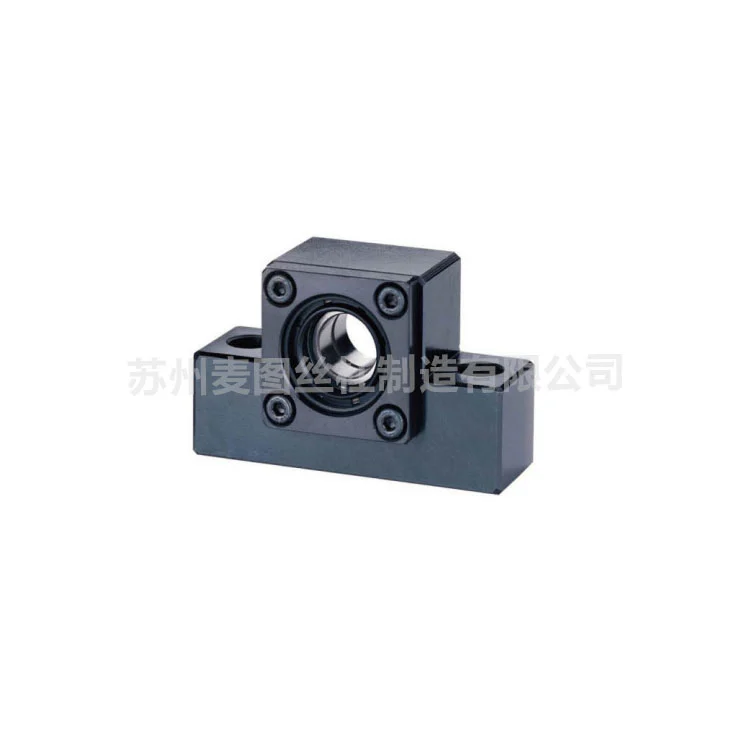
- Use proper end bearings/support blocks and avoid cantilevered designs for long spans.
- Ensure the nut housing is aligned and does not apply side load to the thread.
- Confirm parallelism between screw axis and guide rails; binding often starts as a small geometric mismatch.
- Choose lubrication that matches temperature and speed, and keep it consistent.
- Add protection (covers/bellows) when abrasive dust or chips are present.
Maintenance can be simple: clean, lubricate, inspect wear, and check for looseness in mounting. If your application runs continuously or in a harsh environment, build a basic service interval into SOPs. That one habit alone often doubles service life.
Trapezoidal vs Ball Screw vs Belt
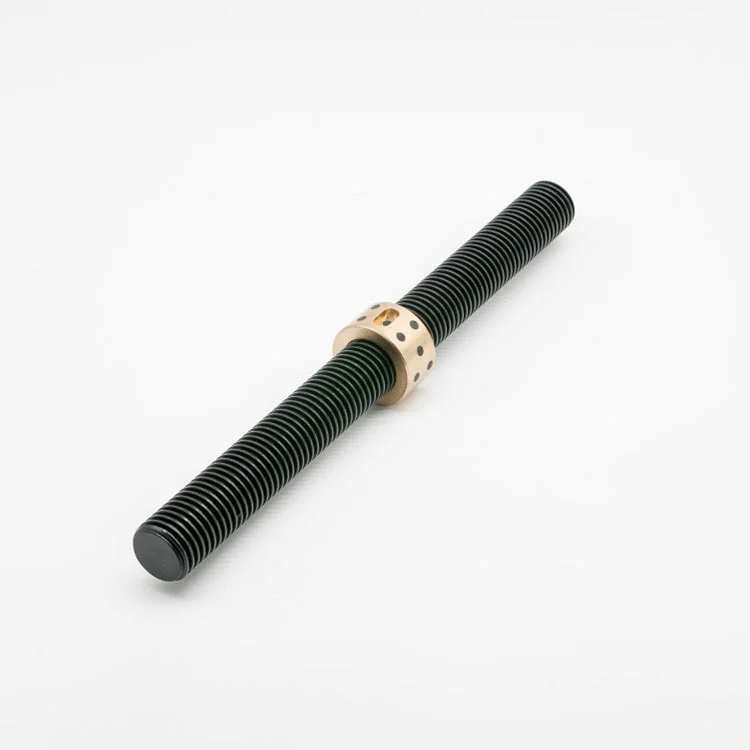
Buyers often get stuck in an “upgrade spiral.” This comparison helps you justify the right level of engineering for your actual use case.
| Drive Type | Strengths | Trade-offs |
|---|---|---|
| Trapezoidal Lead Screw | Durable, cost-effective, practical for many loads, easier to service, can resist back-driving | Lower efficiency, speed limits on long spans, backlash management needed for tight positioning |
| Ball screw | High efficiency, higher speed potential, low friction, strong repeatability | Higher cost, more sensitive to contamination, requires cleaner environment and protection |
| Belt/chain | Very fast travel, long strokes, lightweight systems | Stretch, lower stiffness, different maintenance profile, less suitable for high thrust at slow speed |
If you’re building equipment meant to run day after day with minimal fuss, the trapezoidal option is often the “quiet winner” because it reduces complexity in sourcing, machining, and service. That’s a big reason many industrial teams keep specifying a Trapezoidal Lead Screw even when trendier solutions exist.
FAQ
Is a trapezoidal lead screw suitable for vertical lifting?
Yes, it’s commonly used for lifting and positioning. Many designs provide a helpful resistance to back-driving, and the thread geometry is well
suited to power transmission. For safety-critical lifting, confirm the load case, add appropriate braking/locking measures, and avoid relying on
friction alone.
How do I reduce backlash without turning the project into a redesign?
Start with an anti-backlash nut or a dual-nut arrangement. Also make sure guides handle side loads; backlash often feels worse when the axis is
flexing or binding. If the environment is dirty, choose a design that maintains performance even as lubrication and contaminants vary.
Which nut material is better for long life?
Bronze is a proven choice for durability in many industrial conditions. Engineering polymers can lower noise and run cleaner in some setups.
The best option depends on load, speed, temperature, and contamination. Match the material to your operating reality, not just a catalog chart.
Can I run a trapezoidal screw fast for long strokes?
You can, but you must consider whip, support strategy, and heat/wear. Long slender screws at high RPM can vibrate. Solutions include choosing a
larger diameter, adding intermediate supports, reducing RPM via lead selection, or using a different drive type for very long, high-speed travel.
What information should I send to get an accurate quote?
Send thread designation, length, effective travel, load (static/dynamic), speed and duty cycle, nut type/material, backlash target, environment,
and end machining details. This is the fastest way to receive a configuration that fits your machine and avoids surprises in assembly.
Next Steps
If you’re ready to select a Trapezoidal Lead Screw that matches your load, speed, and lifecycle goals, work with a manufacturer who can support both standard sizes and custom end machining. Suzhou Maitu Screw Rod Manufacturing Co., Ltd. supplies trapezoidal lead screws and matching nuts for practical industrial motion systems, with options tailored to different environments and assembly needs.
Share your stroke, load, speed, and backlash target, and we’ll help you narrow down a reliable configuration quickly—then confirm details with a clear drawing before production. For pricing and technical support, contact us today.
Related News
- Can PEEK Trapezoidal Screw Nuts Withstand Regular Disinfection in Pharmaceutical Cleanrooms?
- How To Maintain PEEK Trapezoidal Screw Nuts On Textile Production Equipment?
- How Does PEEK Trapezoidal Screw Nut Reduce Textile Machine Downtime?
- How Can a C7 Large Lead Ball Screw for Material Handling Improve Speed, Precision, and Heavy-Duty Performance
- How Can Ultra Precision Linear Guides Improve Accuracy, Stability, and Reliability in Modern Motion Systems
- Why Is the C7 High Speed Large Lead Rolled Ball Screw for Robots a Smart Choice for Fast and Reliable Automation
Leave me a message