How a Ball Screw Improves Precision in CNC Machines and Automation Systems?
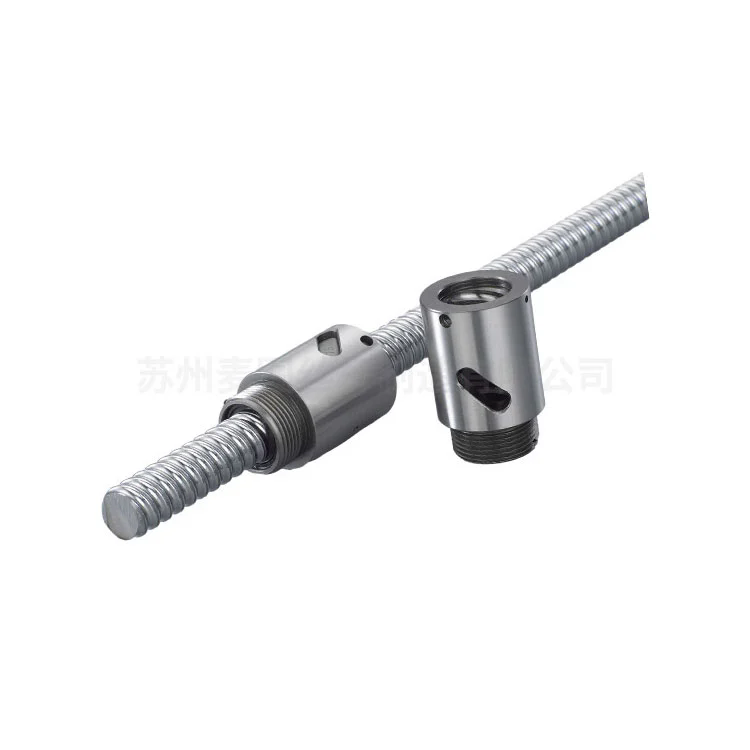
For CNC machines and automated systems, where repeatability and rigidity dictate performance, the ball screw stands as the undisputed cornerstone of precision motion control. Unlike traditional lead screws that rely on sliding friction, a ball screw employs recirculating steel balls to minimize friction and eliminate backlash. This fundamental design allows modern CNC equipment to achieve positioning tolerances within microns, enabling industries from aerospace to medical device manufacturing to push the boundaries of what is possible. At its core, the ball screw transforms rotary motion into linear motion with exceptional efficiency, directly translating motor torque into smooth, predictable movement—an essential requirement for any automation ecosystem demanding sub-micron repeatability.
But how exactly does a ball screw elevate precision to such levels? The answer lies in a combination of mechanical architecture, preload engineering, and thermal stability. By distributing load through rolling elements rather than sliding surfaces, a ball screw drastically reduces frictional losses and heat generation, two primary enemies of precision in machining. Furthermore, through adjustable preload mechanisms, backlash—the inherent play between mechanical components—is virtually eliminated, ensuring that directional changes occur instantaneously without lost motion. For automation systems handling complex pick-and-place operations or five-axis CNC machining, this translates to tighter tolerances, superior surface finishes, and prolonged tool life. Suzhou Maitu Screw Rod Manufacturing Co., Ltd. has dedicated over two decades to mastering these nuances, producing ball screws that set benchmarks for accuracy in modern factories worldwide. In this article, we will dissect the technical parameters, engineering principles, and practical benefits that affirm why the ball screw remains irreplaceable in precision-driven industries.
Content Directory
- 1. What Critical Design Features Make a Ball Screw Indispensable for High-Precision CNC Machining?
- 2. Why Does a Ball Screw Outperform Traditional Lead Screws in Automation Systems?
- 3. How Do Key Technical Parameters Define the Accuracy of a Ball Screw in Industrial Applications?
- 4. What Role Does Preload and Backlash Elimination Play in Achieving Sub-Micron Positioning?
- 5. Conclusion: The Definitive Role of Ball Screws in Next-Generation Precision Automation
- 6. Frequently Asked Questions: How a Ball Screw Improves Precision in CNC Machines and Automation Systems?
What Critical Design Features Make a Ball Screw Indispensable for High-Precision CNC Machining?
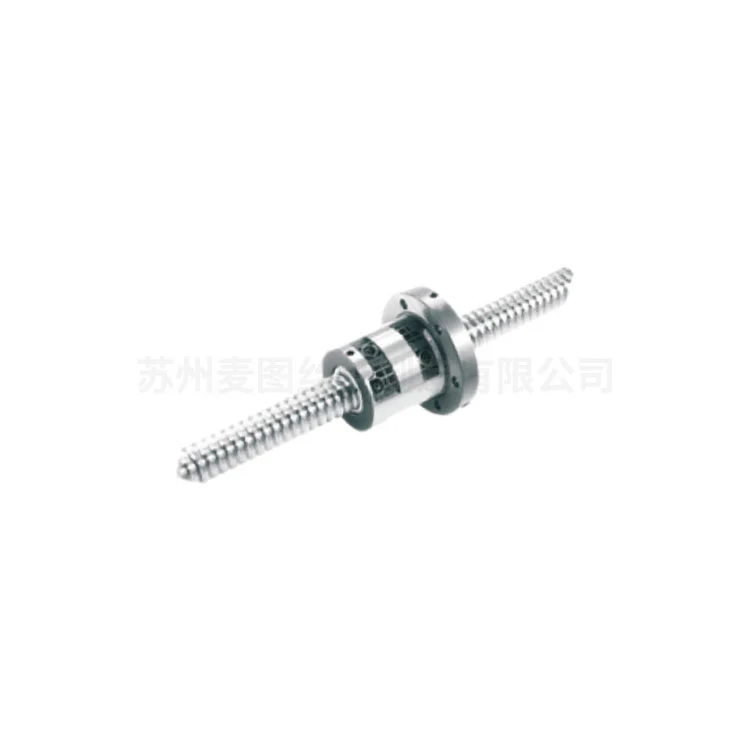
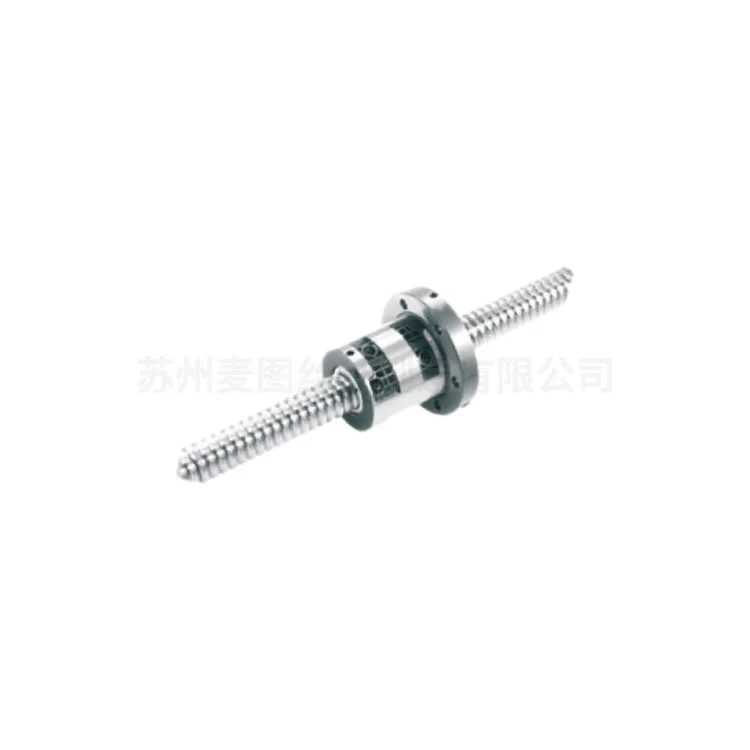
The modern CNC machining center operates at the mercy of its linear drive components. When evaluating why a ball screw is the gold standard, one must examine the architectural features that separate it from conventional screw assemblies. Our factory, Suzhou Maitu Screw Rod Manufacturing Co., Ltd., engineers each Ball Screw with a holistic approach to geometric accuracy, material science, and load distribution. Below are the core design attributes that underpin superior precision.
- Recirculating Ball Bearings: Unlike sliding contact in acme screws, a ball screw uses hardened steel balls that roll within the raceway. This rolling action reduces the coefficient of friction to as low as 0.005, enabling smoother motion and reducing the torque required from servo motors. Lower friction also minimizes heat generation, which is critical because thermal expansion can cause positioning errors of up to 10 microns per degree Celsius per meter.
- High Lead Accuracy (JIS C0-C5 Grades): Precision ground ball screws from our factory achieve lead accuracy up to C0 grade, meaning deviation is limited to ±3 microns per 300mm. This level of accuracy ensures that programmed tool paths correspond precisely with actual motion, essential for contouring complex aerospace components or microelectronics molds.
- Optimized Ball Circulation Systems: Internal deflectors or tube return systems ensure smooth ball recirculation without vibration or noise. Our proprietary deflector designs reduce pulsation, which directly translates to consistent feed rates and eliminates mark-off on machined surfaces.
- High Axial Rigidity: By combining large screw diameters with preloaded nut assemblies, a ball screw offers axial rigidity up to 500 N/µm. This stiffness prevents deflection under cutting forces, maintaining tool position even during heavy milling operations.
- Customizable Preload Mechanisms: Double-nut preload or oversized ball preload methods allow us to fine-tune backlash to zero. For CNC applications requiring bidirectional positioning accuracy, this feature is non-negotiable.
At Maitu Screw Rod, our manufacturing protocol adheres to stringent quality gates. We utilize induction-hardened screw shafts with a hardness of HRC 58-62 and precision-ground raceways to ensure wear resistance over millions of cycles. Moreover, our design philosophy incorporates finite element analysis to optimize lead pitch versus ball diameter ratios, maximizing both speed and precision. For automation systems that operate 24/7, the combination of these design features ensures that a ball screw maintains its initial accuracy for years, reducing recalibration downtime. Ultimately, the critical design features transform a simple mechanical component into a precision enabler that defines the capability of any CNC machine or automated assembly line.
When our engineers develop a custom Ball Screw for a client, they focus on three pillars: lead accuracy standardization, thermal stability management, and preload consistency. By integrating these pillars, we guarantee that the linear motion system responds instantaneously to control signals—a mandatory requirement for high-speed machining centers and semiconductor automation. In our 20 years of industry experience, we have observed that the design features of a ball screw directly correlate to the achievable Cpk values in mass production environments, confirming why it remains the top choice for mission-critical applications.
Why Does a Ball Screw Outperform Traditional Lead Screws in Automation Systems?
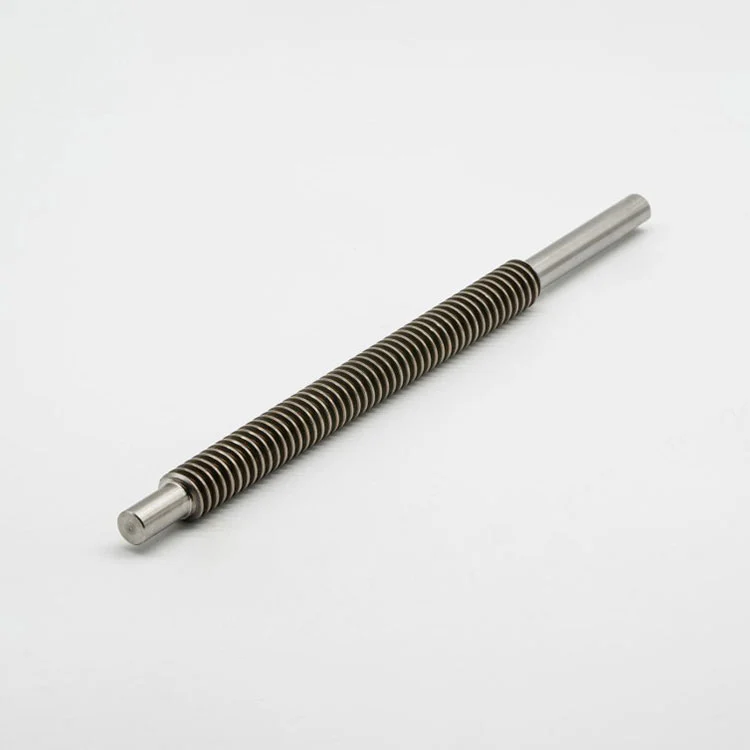
Automation systems—ranging from robotic arms to pick-and-place units—demand consistent, frictionless motion with minimal maintenance. Traditional lead screws (acme or trapezoidal) rely on sliding friction between the screw and nut, which introduces stick-slip behavior and rapid wear. In contrast, a ball screw fundamentally redefines operational efficiency. Drawing from decades of production expertise at our factory, we’ve compiled the definitive reasons why the ball screw dominates automated environments.
- Friction Efficiency & Energy Consumption: A typical lead screw operates with efficiency around 20-40%, whereas a ball screw achieves 90% or higher efficiency. For automation systems with multiple axes, this efficiency reduces motor size requirements, lowers energy costs, and decreases thermal load on controllers.
- Zero Stick-Slip Phenomenon: Sliding friction generates static friction that must be overcome before motion begins, causing jerky starts. The rolling contact in a ball screw eliminates stick-slip, enabling ultra-smooth micro-movements—a necessity for precision coating or electronic assembly.
- Longevity and Mean Time Between Failures (MTBF): Because rolling contact minimizes abrasive wear, a ball screw’s lifespan often exceeds 20,000 hours under rated load, compared to 5,000-8,000 hours for sliding lead screws. Our factory’s accelerated life tests confirm that with proper lubrication, our ball screws sustain original accuracy for extended production runs.
- Higher Travel Speeds: The low inertia and reduced friction allow ball screws to achieve traverse speeds up to 120 m/min or more with appropriate design, whereas lead screws generate excessive heat at speeds beyond 30 m/min. This speed advantage boosts throughput in high-volume automation lines.
- Simplified Maintenance: Ball screws require only periodic lubrication and seal inspection, whereas lead screws demand frequent adjustments to compensate for wear-induced backlash. For automated warehouses or CNC tool changers, reduced maintenance translates to higher uptime.
In our production facility, Suzhou Maitu Screw Rod Manufacturing Co., Ltd., we often perform side-by-side comparative analyses for clients transitioning from lead screws to ball screws. The data consistently shows a 30-50% improvement in positional repeatability and a 20% reduction in cycle times due to higher acceleration capabilities.
Additionally, automation systems equipped with ball screws demonstrate significantly lower vibration signatures, which is critical when integrating vision systems or laser measurement devices. The inherent ability of a ball screw to handle both thrust and moment loads in compact packaging also allows design engineers to shrink machine footprints without compromising precision. For any automation system that demands high duty cycles and micron-level accuracy, the ball screw is not merely an upgrade—it is an operational imperative.
Furthermore, the versatility of our ball screw designs—including custom end machining, nut configurations, and wiper seals—ensures seamless integration into existing automation architectures. Whether it’s a cleanroom environment for semiconductor fabrication or a harsh machining environment with coolant ingress, our ball screws maintain superior performance. This adaptability, combined with undeniable mechanical advantages, explains why industries have standardized on ball screw technology for next-generation automation projects.
How Do Key Technical Parameters Define the Accuracy of a Ball Screw in Industrial Applications?
For engineers and procurement specialists, understanding the specification sheet of a ball screw is essential to predicting real-world precision. At Maitu Screw Rod, we manufacture ball screws with parameters that are meticulously aligned with international standards. Below is a detailed table showcasing the technical parameters that dictate accuracy, load capacity, and dynamic behavior. Each parameter plays a pivotal role in how a ball screw improves precision in CNC machines and automation systems.
| Parameter | Specification Range / Details | Impact on Precision |
| Lead Accuracy Grade | C0 (3µm/300mm), C1 (6µm/300mm), C3 (12µm/300mm), C5 (23µm/300mm) | Higher grades (C0/C1) guarantee positional accuracy for ultra-precision machining centers and coordinate measuring machines. |
| Screw Diameter (d) | 12mm to 100mm (custom up to 120mm) | Larger diameters increase axial rigidity and critical speed, reducing vibration-induced errors during high-speed machining. |
| Lead (Pitch) | 2mm to 40mm; multiple start options available | Finer leads provide higher resolution; coarser leads enable faster traversal while maintaining torque efficiency. |
| Dynamic Load Rating (Ca) | 2 kN to 250 kN | Higher load ratings allow heavier cutting forces without deflection, preserving toolpath integrity. |
| Preload Type | Double-nut preload, oversized ball preload, or spring-loaded | Eliminates backlash (<2µm for double-nut), enabling bidirectional repeatability essential for contouring. |
| Axial Backlash | 0 to 0.005 mm (adjustable) | Zero backlash models ensure immediate axis response, critical for CNC interpolation and high-frequency reversing. |
| Screw Hardness | HRC 58-62 (induction hardened), core hardness HRC 25-32 | Surface hardness resists wear, maintaining lead accuracy over extended operational life. |
| Operating Temperature Range | -20°C to +80°C (standard); high-temp options up to 150°C | Thermal stability prevents lead elongation; our factory’s cryogenic treatment reduces thermal expansion coefficient by 15%. |
These parameters are not isolated; they work synergistically. For instance, a C0-grade ball screw combined with double-nut preload and large diameter yields a motion platform that achieves ±1µm positioning accuracy. Our factory utilizes laser interferometer verification for each precision ball screw before shipment, ensuring traceability to international length standards. For customers in industries like optical lens grinding or medical robotics, we provide measurement reports that certify lead deviation, runout, and preload torque. By meticulously controlling these parameters, Suzhou Maitu Screw Rod Manufacturing Co., Ltd. empowers engineers to design systems that consistently achieve the highest precision benchmarks.
Additionally, we offer custom lead modifications to compensate for thermal growth in high-speed applications, further enhancing real-world accuracy. The right selection of these technical specifications directly correlates with the attainable geometric tolerances in finished workpieces, reaffirming why a ball screw is the ultimate precision component.
What Role Does Preload and Backlash Elimination Play in Achieving Sub-Micron Positioning?
Backlash is the arch-nemesis of precision motion control. In any mechanical transmission, the clearance between mating components causes a delay when reversing direction—a phenomenon that degrades CNC contouring accuracy and automation repeatability. The ball screw addresses this through advanced preload techniques that create internal compression, eliminating lost motion. In our factory, Suzhou Maitu Screw Rod Manufacturing Co., Ltd., we have refined preload methodologies that deliver sub-micron positioning performance even under fluctuating loads.
- Double-Nut Preload: Two nuts are mounted with a spacer that induces an axial offset, forcing the balls in each nut to contact opposite flanks of the screw groove. This method eliminates backlash entirely and increases axial rigidity by 30-50%. For 5-axis CNC machines, this ensures that circular interpolation tests show deviation under 2 microns.
- Oversized Ball Preload: By using balls slightly larger than the raceway groove diameter, a controlled interference fit is achieved. This single-nut preload method is compact and ideal for automation axes where space is limited, yet still provides backlash-free operation.
- Adjustable Preload Mechanisms: Some designs incorporate a nut that allows field adjustment of preload force, enabling recalibration after extended service. Our factory provides clear adjustment protocols to maintain precision over the equipment lifecycle.
- Effect on System Stiffness: Preload not only eliminates backlash but also increases the overall stiffness of the drive train. Higher stiffness means that external forces—such as cutting loads in a CNC mill—cause minimal displacement, preserving part accuracy.
- Impact on Repeatability: With backlash eliminated, a ball screw achieves bidirectional repeatability within 1-2 microns. For pick-and-place automation handling delicate electronics, this repeatability prevents component misalignment and assembly defects.
From a controls perspective, preloaded ball screws enable servo loops to run with higher gains without inducing oscillation, further improving settling time and positional accuracy. Our engineering team frequently demonstrates this using laser calibration: a CNC axis with a preloaded ball screw shows a reversal error of less than 1 micron, compared to 15-30 microns for a standard lead screw. In high-precision sectors like mold making and EDM, this translates directly to superior surface finishes and elimination of witness lines.
Moreover, the elimination of backlash reduces impact forces during direction reversal, protecting the entire drive mechanism from premature wear. For any application requiring bidirectional motion—whether it’s a gantry router or a semiconductor wafer stage—the preload-enabled ball screw is the only viable solution to guarantee sub-micron positioning. Suzhou Maitu Screw Rod Manufacturing Co., Ltd. offers preload calibration reports with each precision-grade ball screw, ensuring our customers receive components that meet the most stringent motion control demands.
Conclusion: The Definitive Role of Ball Screws in Next-Generation Precision Automation
Precision engineering in CNC machines and automation systems is not merely a matter of advanced software or high-resolution encoders; it fundamentally relies on the mechanical integrity of the linear drive. As we have explored, the ball screw—with its rolling-element design, preload customization, and superior rigidity—forms the backbone of modern high-accuracy motion control. From reducing friction-induced thermal drift to eliminating backlash for instantaneous response, every attribute of a ball screw is tailored to meet the relentless pursuit of tighter tolerances and higher throughput.
In our decades of manufacturing experience at Suzhou Maitu Screw Rod Manufacturing Co., Ltd., we have witnessed how the proper selection and integration of a ball screw can transform standard machinery into world-class precision equipment. Industries such as aerospace, automotive, medical devices, and advanced electronics all rely on the performance benchmarks set by precision ball screws.
By leveraging state-of-the-art grinding technology, rigorous quality control, and custom engineering capabilities, our factory ensures that each ball screw we produce contributes to measurable gains in accuracy, reliability, and overall equipment effectiveness. As automation continues to evolve with Industry 4.0, the demand for components that deliver micron-level repeatability under varying loads will only intensify. The ball screw stands ready to meet this challenge, offering a proven pathway to achieving—and surpassing—the precision requirements of tomorrow’s manufacturing landscape.
Are you ready to elevate the precision of your CNC machines or automation systems? Partner with Suzhou Maitu Screw Rod Manufacturing Co., Ltd. to get ball screws engineered to your exact specifications. Our expert team provides comprehensive support, from design consultation to after-sales service, ensuring your motion control solutions deliver unmatched accuracy. Contact our factory today to request a quote or discuss your custom ball screw requirements—let’s build precision together.
Frequently Asked Questions: How a Ball Screw Improves Precision in CNC Machines and Automation Systems?
Q1: What is the main reason a ball screw provides higher precision than a lead screw in CNC applications?
A1: The primary reason is the ball screw’s ability to eliminate backlash through preloading and its rolling-element design that reduces friction. Backlash—the mechanical play between the screw and nut—causes positioning errors during direction reversal, especially in contouring operations. A ball screw with double-nut preload ensures zero axial play, delivering bidirectional repeatability within microns. Additionally, the low-friction rolling contact prevents stick-slip behavior, allowing smoother micro-movements and more consistent positioning. For CNC machines that rely on high-feed rates and frequent reversals, this translates directly to tighter tolerances and superior surface finishes.
Q2: How does the lead accuracy grade of a ball screw affect overall CNC machine performance?
A2: Lead accuracy grade defines the maximum deviation of the screw’s lead over a given travel length. Grades such as C0 (3µm/300mm) and C1 (6µm/300mm) ensure that the actual linear displacement precisely matches the commanded motion. In CNC machining, any lead error will cause dimensional inaccuracies in the finished part, particularly in large components where error accumulation becomes significant. Higher-grade ball screws are essential for die and mold making, precision milling, and any application where part geometry must conform to stringent tolerances. Our factory manufactures ball screws that meet or exceed JIS and DIN standards, ensuring predictable accuracy throughout the machine’s travel.
Q3: Can a ball screw maintain precision under high-speed automation cycles without thermal expansion issues?
A3: Yes, due to its high efficiency (over 90%) and reduced friction, a ball screw generates significantly less heat than traditional lead screws. Lower heat generation minimizes thermal expansion of the screw shaft, which is a common cause of positioning drift. Moreover, advanced designs—such as hollow shafts with coolant flow or special material treatments—can further mitigate thermal effects. For high-speed pick-and-place systems or gantry robots running continuously, our ball screws incorporate precision-ground flanks and optimized ball recirculation to keep temperature rise below 10°C, preserving repeatability and reducing the need for thermal compensation algorithms.
Q4: What maintenance practices are required to preserve the precision of a ball screw in harsh industrial environments?
A4: To maintain long-term precision, regular lubrication with high-quality grease or oil is essential to ensure the rolling elements operate smoothly and prevent corrosion. Additionally, using effective wiper seals or bellows protects the screw shaft from contaminants such as metal chips, dust, and coolant. Periodic inspection of preload torque and backlash—especially in high-wear applications—allows early detection of any degradation. Our factory designs ball screws with durable seals and wear-resistant materials, and we recommend a preventive maintenance schedule aligned with operating hours to sustain original accuracy for years.
Q5: How does Suzhou Maitu Screw Rod Manufacturing Co., Ltd. customize ball screws for unique precision requirements in automation systems?
A5: We offer complete customization, including screw diameter, lead pitch, nut geometry, end machining (for motor coupling or bearing mounting), and preload type. Our engineering team collaborates with clients to analyze load profiles, speed requirements, and environmental conditions. For ultra-precision applications, we provide C0-grade grinding, cryogenic treatment for thermal stability, and 100% laser interferometer verification. By tailoring each ball screw to the exact application, we ensure that automation systems achieve the highest possible precision, minimized downtime, and optimized life cycle costs.
Related News
- Can PEEK Trapezoidal Screw Nuts Withstand Regular Disinfection in Pharmaceutical Cleanrooms?
- How To Maintain PEEK Trapezoidal Screw Nuts On Textile Production Equipment?
- How Does PEEK Trapezoidal Screw Nut Reduce Textile Machine Downtime?
- How Can a C7 Large Lead Ball Screw for Material Handling Improve Speed, Precision, and Heavy-Duty Performance
- How Can Ultra Precision Linear Guides Improve Accuracy, Stability, and Reliability in Modern Motion Systems
- Why Is the C7 High Speed Large Lead Rolled Ball Screw for Robots a Smart Choice for Fast and Reliable Automation
Leave me a message