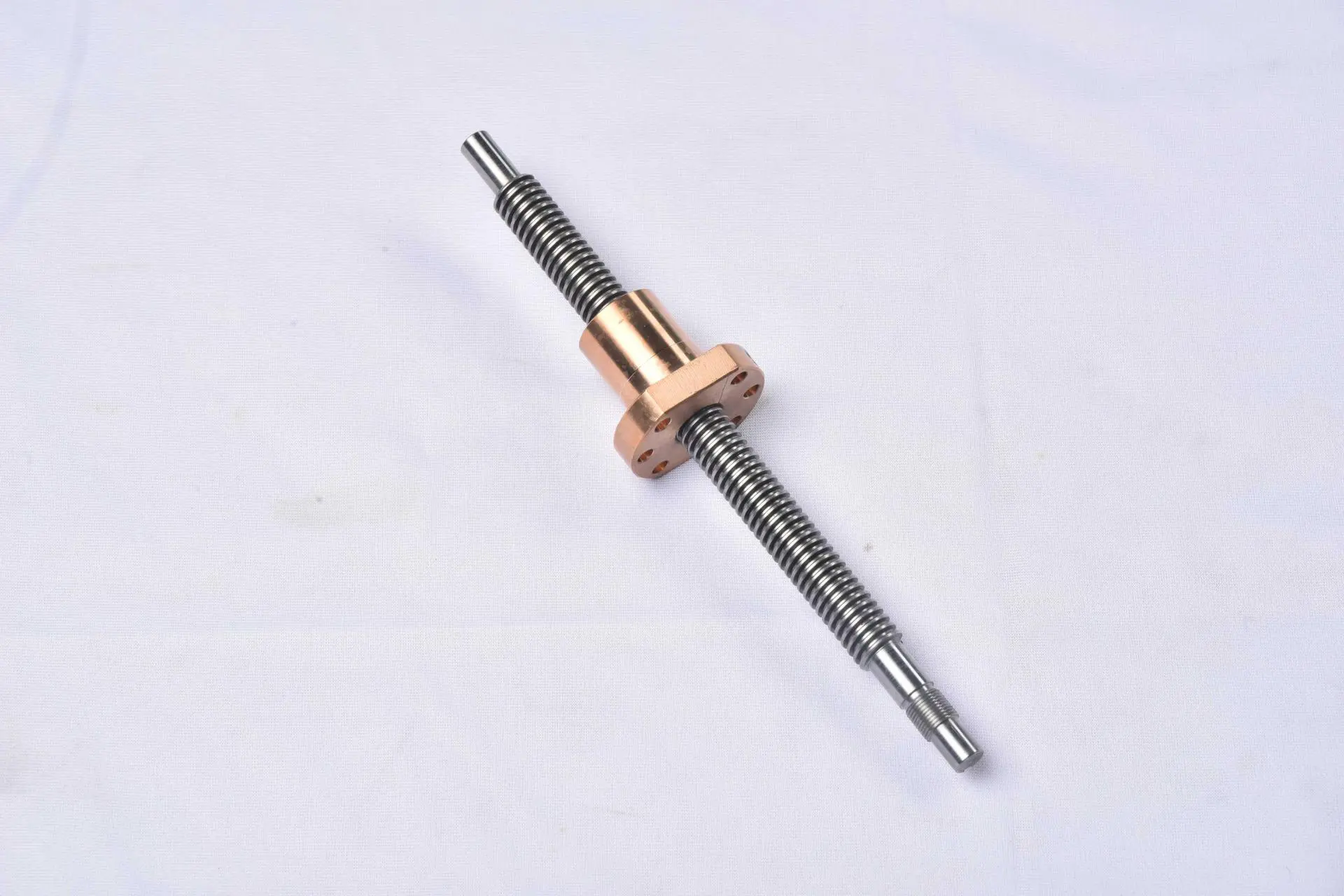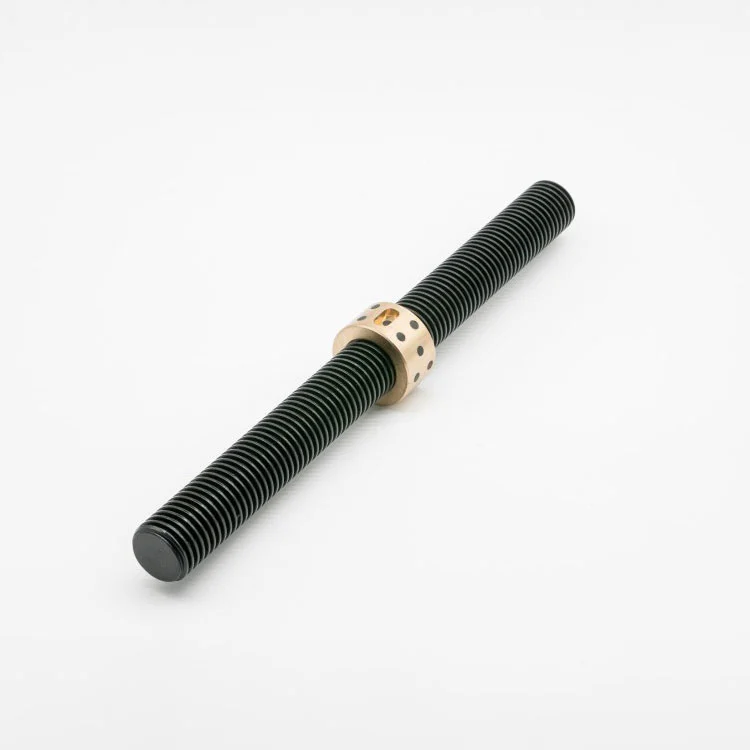
Which PEEK Trapezoidal Screw Nut for Textile Machinery Ensures Reliable Linear Motion Performance?
Textile Machinery Transmission Guide
Article Summary
Textile machinery relies on stable mechanical transmission to maintain accurate positioning, consistent fabric movement, and efficient production. In many automated textile systems, trapezoidal screw nuts play an important role in converting rotary motion into controlled linear movement. However, traditional metal nuts may create challenges related to lubrication, friction, wear, noise, and maintenance in certain operating environments.
A PEEK trapezoidal screw nut offers an engineering plastic alternative for applications that require a combination of mechanical strength, wear resistance, dimensional stability, and chemical resistance. When properly matched with a compatible trapezoidal lead screw, it can support reliable linear motion in textile equipment. This article explains its working principle, material characteristics, applications, selection factors, installation requirements, and maintenance considerations to help machinery manufacturers and industrial buyers make informed decisions.
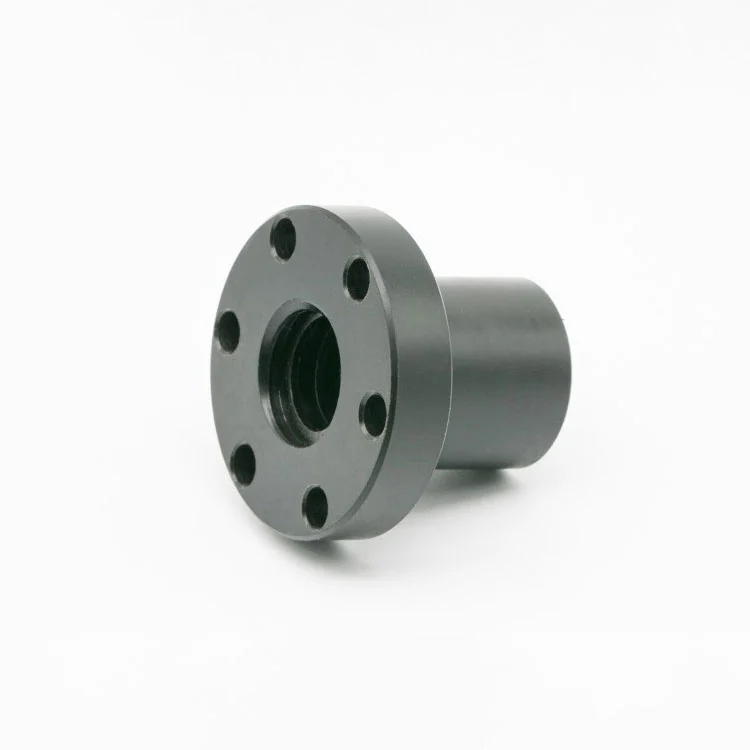
Table of Contents
- What Is a PEEK Trapezoidal Screw Nut for Textile Machinery?
- How Does a Trapezoidal Screw Nut Work?
- Why Is PEEK Suitable for Textile Machinery?
- Key Performance Advantages of PEEK Screw Nuts
- Common Applications in Textile Equipment
- PEEK vs. Metal and Other Plastic Screw Nuts
- How to Select the Right PEEK Trapezoidal Screw Nut
- Understanding Load, Speed, Friction, and Wear
- Installation and Maintenance Best Practices
- Common Operating Problems and Solutions
- What Should Buyers Check Before Ordering?
- Frequently Asked Questions
1. What Is a PEEK Trapezoidal Screw Nut for Textile Machinery?
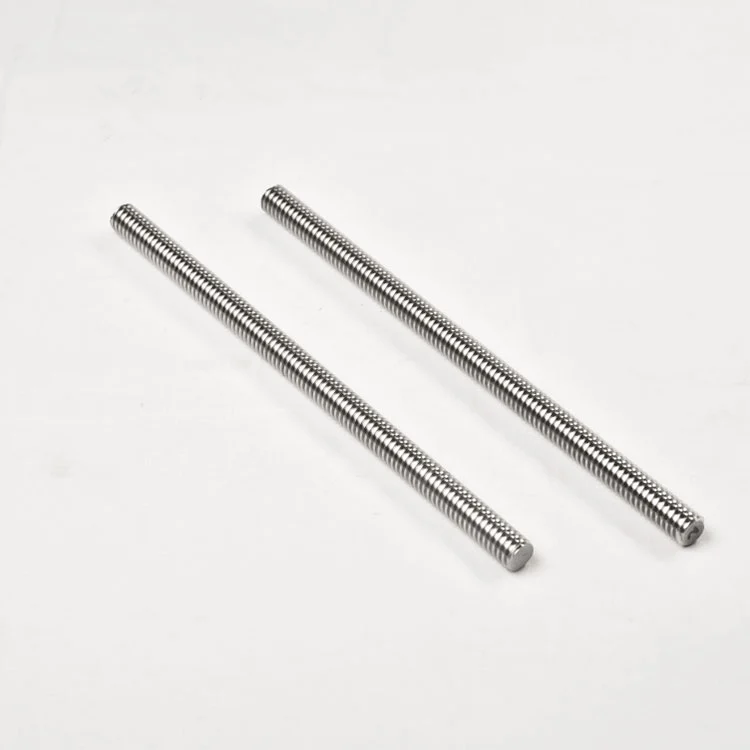
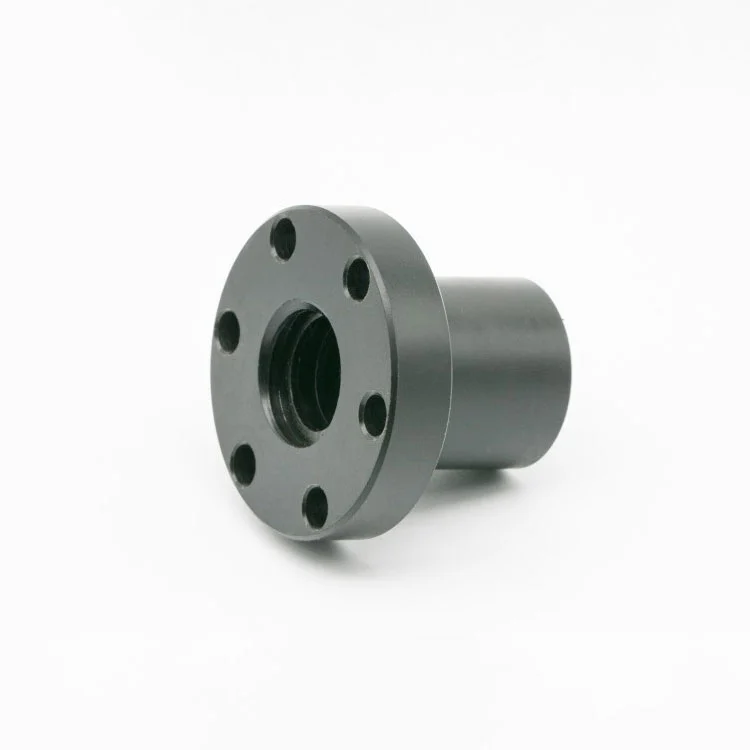
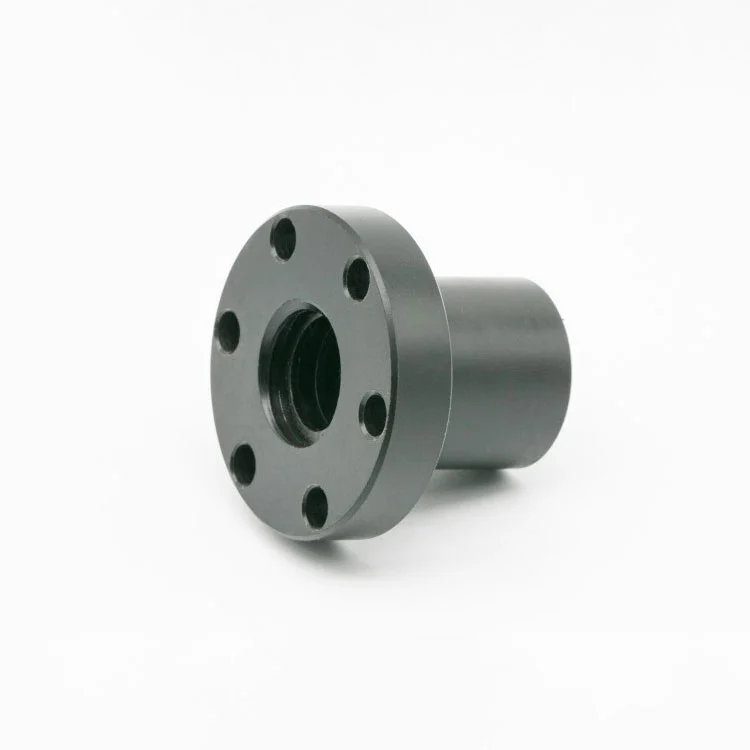
A PEEK trapezoidal screw nut is a threaded transmission component manufactured from polyether ether ketone (PEEK), a high-performance engineering thermoplastic. It works together with a trapezoidal lead screw to convert rotational movement into linear displacement.
In textile machinery, this type of component can be used in positioning mechanisms, adjustment assemblies, and other linear motion systems where stable movement and resistance to repeated mechanical contact are important.
The product combines two essential engineering features:
- PEEK material: Provides a combination of mechanical strength, thermal stability, wear resistance, and chemical resistance.
- Trapezoidal thread geometry: Provides a practical transmission structure for moving loads through controlled linear motion.
Compared with conventional metal screw nuts, PEEK versions can reduce component weight and provide electrical insulation. Depending on the formulation and mating screw conditions, they may also support lower-friction operation and reduced lubrication requirements.
Important concept: A PEEK trapezoidal screw nut is not simply a plastic replacement for a metal component. Its performance depends on the material grade, thread geometry, mating screw, contact pressure, operating speed, temperature, and lubrication conditions.
Why Does Textile Machinery Need Reliable Screw Transmission?
Textile production equipment often operates for extended periods and contains multiple moving assemblies. Positioning mechanisms must maintain consistent movement even when exposed to vibration, airborne fibers, oil residues, and repeated operating cycles.
If a screw nut experiences excessive friction or premature wear, the resulting backlash, positioning errors, or movement instability can affect production consistency. Selecting a suitable nut material and thread design helps address these mechanical challenges.
2. How Does a Trapezoidal Screw Nut Work?
A trapezoidal screw nut operates through the engagement between its internal threads and the external threads of a matching lead screw. When the screw rotates, the thread contact converts rotational movement into linear movement, provided the nut or screw is constrained against unwanted rotation.
Step 1: The Drive System Generates Rotation
An electric motor, gearbox, or other mechanical drive rotates the trapezoidal lead screw. The rotation may be controlled through a motor controller or mechanical transmission system.
Step 2: The Threads Engage
The external threads of the lead screw engage with the internal threads of the PEEK nut. The thread flanks transmit axial force between the two components.
Step 3: Rotational Motion Becomes Linear Movement
As the screw rotates, the nut travels along the screw axis if its rotation is restrained. Alternatively, the screw may move axially while the nut remains fixed, depending on the machine design.
Step 4: The Mechanism Reaches Its Required Position
The transmission system moves the connected component to a specified position. This may involve adjusting a guide assembly, positioning a mechanical support, or moving a textile machine component.
Understanding Lead and Pitch
Pitch refers to the axial distance between corresponding points on adjacent threads. Lead is the axial distance the nut travels during one complete revolution of the screw. For a single-start screw, lead and pitch are equal. For a multi-start screw, lead equals pitch multiplied by the number of starts.
Basic movement relationship:
Linear Travel = Screw Rotations × Lead
For example, if a single-start screw has a lead of 4 mm, one complete revolution theoretically moves the nut 4 mm, assuming no slipping or other mechanical losses.
This relationship allows engineers to calculate the required motor speed and approximate positioning displacement when designing textile machinery transmission systems.
3. Why Is PEEK Suitable for Textile Machinery?
PEEK is a high-performance thermoplastic used in demanding mechanical applications. Its combination of strength, thermal properties, chemical resistance, and wear behavior makes it a candidate material for certain screw nut applications.
3.1 Mechanical Strength
PEEK has a relatively high strength and stiffness compared with many conventional engineering plastics. These characteristics allow appropriately designed PEEK components to withstand mechanical loads in industrial equipment.
For screw nuts, the relevant considerations include thread strength, contact pressure, deformation, and resistance to repeated loading. Material properties alone do not determine the allowable load; the actual nut geometry and operating conditions must also be evaluated.
3.2 Wear Resistance
The internal threads of a screw nut experience repeated contact with the lead screw. Over time, friction and contact stress can cause wear and affect positioning accuracy.
Suitable PEEK formulations can offer useful wear resistance in sliding applications. Reinforced or modified grades may be considered when higher mechanical demands exist, although the best formulation depends on the mating surface and operating conditions.
3.3 Thermal Stability
Textile equipment may experience temperature changes due to motors, friction, nearby heating processes, and environmental conditions. PEEK retains useful mechanical properties at elevated temperatures compared with many ordinary plastics.
However, the maximum allowable operating temperature of a finished screw nut must be determined from its material grade, applied load, dimensional requirements, and continuous operating conditions.
3.4 Chemical Resistance
Some textile machinery environments involve oils, lubricants, cleaning agents, and process chemicals. PEEK offers resistance to many chemicals, making it useful in applications where material compatibility is important.
Nevertheless, chemical compatibility should be checked against the exact chemical composition, concentration, temperature, and exposure duration.
3.5 Low Friction and Lubrication Flexibility
PEEK may offer favorable sliding characteristics in suitable material combinations. This can help reduce friction and maintenance demands in selected applications.
Some PEEK screw nuts can operate with reduced lubrication or under dry-running conditions. This does not mean that every PEEK grade is suitable for completely lubricant-free operation. Load, speed, heat generation, surface finish, and mating material must all be evaluated.
4. Key Performance Advantages of PEEK Screw Nuts
For textile machinery manufacturers, the main value of a PEEK trapezoidal screw nut lies in its ability to address specific transmission challenges. The following advantages explain why engineers consider this material for selected industrial applications.
01. High Wear Resistance
Suitable PEEK grades can resist sliding wear and help maintain stable thread engagement over repeated operating cycles.
02. Lightweight Construction
Compared with metal alternatives, PEEK components can reduce moving mass and support lighter mechanical assemblies.
03. Good Thermal Stability
PEEK maintains useful mechanical characteristics across a relatively wide temperature range when correctly selected.
04. Chemical Resistance
Its resistance to many oils and chemicals makes it suitable for evaluating use in demanding industrial environments.
05. Electrical Insulation
Unfilled PEEK is electrically insulating, which can be beneficial in equipment where electrical separation is required.
06. Potentially Lower Maintenance
Suitable material and lubrication combinations may reduce wear-related maintenance and component replacement frequency.
These advantages can help textile equipment designers improve the performance of specific motion assemblies. Actual results should be confirmed through engineering calculations and application testing rather than assumed from the material name alone.
5. Common Applications in Textile Equipment
Textile machinery includes spinning, weaving, knitting, winding, finishing, and material handling equipment. Each machine contains different movement requirements, but many use mechanical positioning and adjustment systems that can incorporate trapezoidal screw transmission.
5.1 Spinning Machinery
Spinning equipment uses multiple mechanical assemblies to process fibers into yarn. Certain positioning and adjustment mechanisms require controlled linear movement to maintain the intended equipment configuration.
A suitable PEEK screw nut can be considered for selected adjustment systems where low weight, sliding performance, and resistance to the operating environment are important.
5.2 Yarn Winding and Rewinding Machines
Winding systems need consistent material handling and accurate movement of selected guide or adjustment components. Linear positioning mechanisms can help control the location of machine elements during the winding process.
PEEK screw nuts may be suitable for these mechanisms when their load capacity, speed, and dimensional stability meet the application requirements.
5.3 Weaving Equipment
Weaving machines contain moving mechanisms that operate repeatedly under dynamic conditions. Some auxiliary adjustment assemblies use lead screws to position supports, guides, or other machine components.
In these applications, engineers should evaluate vibration, operating cycles, impact loads, and required positioning accuracy before choosing the nut material.
5.4 Knitting Machinery
Knitting machines may include adjustment and positioning systems that require repeatable linear motion. A properly matched screw and nut assembly can support controlled mechanical adjustment.
5.5 Textile Finishing and Processing Lines
Finishing equipment may include guide positioning, tension adjustment, and mechanical alignment assemblies. Some of these mechanisms can benefit from polymer screw nuts where material compatibility and wear performance are appropriate.
5.6 Automated Textile Production Lines
Modern textile production increasingly uses automated equipment for material transfer, positioning, and adjustment. PEEK trapezoidal screw nuts can be considered for selected linear motion systems where weight reduction and material performance are important.
| Textile Equipment | Potential Motion Application | Important Requirement |
|---|---|---|
| Spinning Machinery | Positioning and adjustment mechanisms | Stable movement and wear resistance |
| Winding Machines | Guide and component positioning | Repeatable linear displacement |
| Weaving Machines | Auxiliary mechanical adjustment | Resistance to vibration and repeated cycles |
| Knitting Machines | Adjustment and alignment systems | Dimensional stability and smooth movement |
| Finishing Equipment | Guide positioning and tension adjustment | Environmental and chemical compatibility |
| Automated Textile Lines | Linear positioning and transfer systems | Reliable operation and low maintenance |
The exact suitability of a PEEK screw nut depends on the mechanical design. It should not be assumed that every movement mechanism in a textile machine requires or benefits from a polymer nut.
6. PEEK vs. Metal and Other Plastic Screw Nuts
Material selection is one of the most important decisions when designing a trapezoidal screw transmission system. PEEK, bronze, brass, steel, and other engineering plastics offer different combinations of strength, friction, wear resistance, weight, and cost.
There is no universally best material. The correct choice depends on the applied load, operating speed, environmental conditions, required service life, and total system cost.
| Material | Potential Advantages | Considerations |
|---|---|---|
| PEEK | High-performance polymer, thermal stability, chemical resistance, and electrical insulation. | Higher material cost; grade and load conditions require evaluation. |
| Bronze | Established sliding bearing characteristics and mechanical strength. | Higher weight and possible lubrication requirements. |
| Brass | Good machinability and practical performance in selected low-to-moderate load systems. | Wear and load capacity depend on alloy and operating conditions. |
| Steel | High mechanical strength and load-bearing capability. | Metal-to-metal friction, lubrication, and galling need consideration. |
| Nylon | Relatively economical and lightweight engineering plastic. | Moisture absorption and dimensional changes may affect precision. |
| Acetal (POM) | Good machinability, low friction, and dimensional stability in many applications. | Thermal and mechanical limits differ from PEEK. |
When Is PEEK Worth Considering?
PEEK may be worth considering when an application requires a combination of:
- Higher temperature capability than ordinary engineering plastics.
- Good resistance to repeated sliding contact.
- Electrical insulation in a mechanical transmission component.
- Resistance to selected oils and chemicals.
- Reduced moving weight compared with metal components.
- Potentially reduced lubrication requirements.
For applications involving very high axial loads or severe impact, a metal nut or a reinforced PEEK formulation may be more appropriate. Engineering assessment is essential before finalizing the material.
7. How to Select the Right PEEK Trapezoidal Screw Nut
Choosing a PEEK trapezoidal screw nut requires an understanding of the complete transmission system. Buyers should provide more than the required diameter or product name when requesting a quotation.
7.1 Confirm the Thread Standard
Trapezoidal thread systems use defined thread profiles and dimensions. Common metric trapezoidal threads use a 30-degree included thread angle, while ACME threads commonly use a 29-degree included angle.
These thread forms are not automatically interchangeable. The screw and nut must use matching thread geometry, pitch, diameter, and handedness.
7.2 Determine the Required Diameter and Lead
The nominal diameter and lead influence the available load capacity, linear travel, and drive requirements. A higher lead generally produces greater linear travel per revolution but also changes the torque and positioning characteristics of the system.
7.3 Evaluate Axial Load
Determine the maximum axial load during normal operation, startup, stopping, and any temporary overload condition. The nut must have sufficient thread engagement and contact area to withstand the specified force.
7.4 Check Operating Speed
Higher screw speeds can increase frictional heat and wear. The nut material, thread finish, and lubrication method should be suitable for the intended operating speed.
7.5 Confirm the PEEK Material Grade
PEEK is available in different formulations, including unfilled and reinforced grades. Unfilled PEEK may be preferred when electrical insulation and material purity are important, while selected reinforced grades may offer improved stiffness or wear characteristics.
However, fillers can change friction, wear behavior, electrical properties, and counterface compatibility. The material should be selected based on actual application requirements.
7.6 Specify the Nut Structure
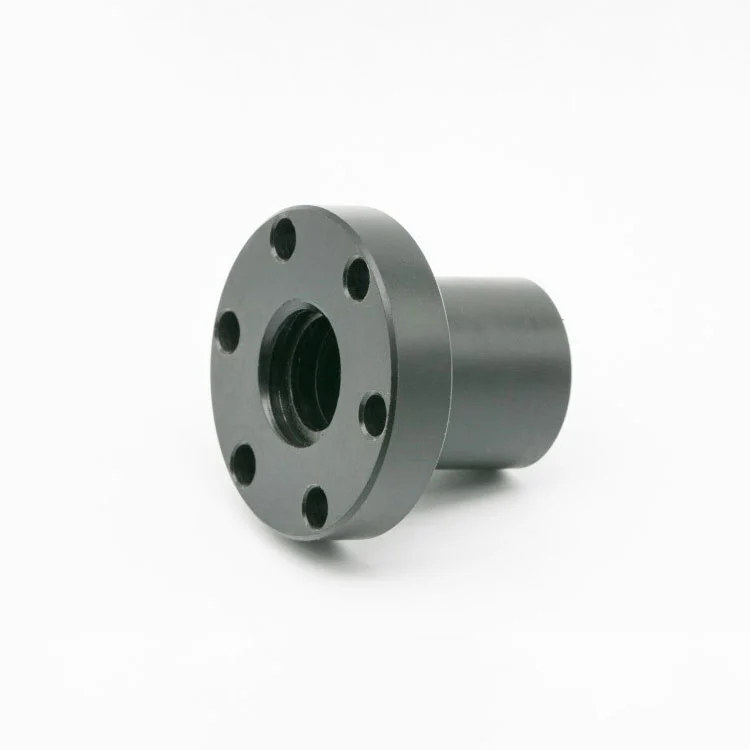
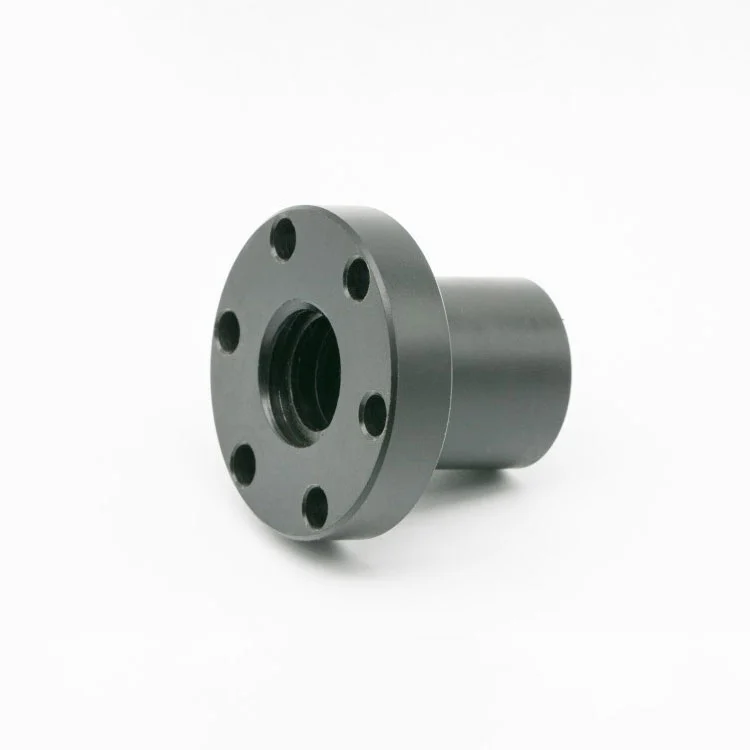
Common configurations may include cylindrical nuts, round flanged nuts, rectangular flanged nuts, and other customized geometries.
The required mounting holes, flange dimensions, overall length, and installation orientation should be clearly indicated in the technical drawing.
| Selection Parameter | Information Required | Engineering Purpose |
|---|---|---|
| Thread Type | Trapezoidal or ACME | Ensures thread compatibility. |
| Nominal Diameter | Screw diameter | Determines basic transmission dimensions. |
| Pitch and Lead | Thread pitch and lead distance | Defines linear movement per revolution. |
| Axial Load | Continuous and peak loads | Supports strength and wear calculations. |
| Operating Speed | Rotational speed and duty cycle | Helps evaluate frictional heating and wear. |
| Material Grade | Unfilled or reinforced PEEK | Matches mechanical and environmental requirements. |
| Nut Configuration | Round, flanged, or custom structure | Ensures mounting compatibility. |
| Operating Environment | Temperature, oil, dust, and chemicals | Evaluates material suitability. |
8. Understanding Load, Speed, Friction, and Wear
One of the most common mistakes in screw nut selection is focusing only on material strength. In practical transmission systems, load, speed, contact pressure, lubrication, and heat generation must be considered together.
8.1 Axial Load and Thread Contact Pressure
The axial load is transmitted through the contacting thread flanks. If the contact pressure is too high, the polymer may experience excessive deformation, wear, or premature failure.
The effective contact area depends on thread geometry, nut length, engagement, manufacturing accuracy, and actual load distribution.
8.2 Sliding Speed and PV Considerations
PV is a useful engineering concept for evaluating sliding components. It represents the relationship between contact pressure (P) and sliding velocity (V).
PV = Contact Pressure × Sliding Velocity
Where:
- P: Average contact pressure at the sliding interface.
- V: Relative sliding velocity between the nut and screw.
The allowable PV value depends on the specific PEEK grade, mating material, lubrication, temperature, and operating conditions. It should be obtained from the material supplier or validated through testing.
8.3 Frictional Heat Generation
Sliding friction generates heat at the contact surface. Excessive temperature can affect dimensional stability, material stiffness, and long-term wear behavior.
For continuous textile machinery operation, thermal conditions should be assessed at the actual operating load and speed rather than only under short-duration laboratory conditions.
8.4 Backlash and Positioning Accuracy
Backlash is the clearance between mating threads that can produce lost motion when the direction of movement changes. Excessive backlash may reduce positioning accuracy, especially in systems that frequently reverse direction.
Designers should consider thread clearance, machining tolerance, thermal expansion, and wear allowance when specifying the nut.
8.5 Lubrication Requirements
Some PEEK nut applications can operate with reduced lubrication, but lubrication may still improve wear performance depending on the load and mating screw material.
Where textile equipment uses lubricants, compatibility with the PEEK formulation and surrounding machine components should be confirmed. Where dry running is required, testing under representative load and speed conditions is particularly important.
9. Installation and Maintenance Best Practices
Proper installation is essential for achieving stable transmission performance. Incorrect alignment, incompatible thread dimensions, or uneven loading can cause excessive friction and premature wear even when a suitable PEEK nut is selected.
Installation Guidelines
- Check thread compatibility: Confirm that the screw and nut have matching thread profiles, pitch, lead, and handedness.
- Inspect the lead screw: Check for burrs, contamination, damaged threads, and excessive surface roughness.
- Verify alignment: Ensure the screw axis is properly aligned with the nut and connected linear guide system.
- Secure the mounting structure: Tighten mounting fasteners according to the equipment manufacturer's instructions.
- Check free movement: Move the assembly manually where possible before applying power.
- Test under low load: Start with a controlled operating condition and observe movement, noise, and friction.
- Increase load gradually: Verify performance under representative operating conditions before full production.
Routine Maintenance Recommendations
- Inspect the screw and nut for visible wear or damage.
- Keep the transmission area free from excessive fiber accumulation and foreign particles.
- Check for abnormal vibration, noise, or movement resistance.
- Monitor backlash and positioning repeatability.
- Check mounting fasteners and alignment periodically.
- Follow the recommended lubrication procedure for the selected material combination.
- Replace the nut when wear exceeds the machine's allowable tolerance.
Practical maintenance note: Textile machinery may generate fiber dust and lint. Although PEEK offers useful material properties, the transmission assembly still needs suitable protection and cleaning. Contamination can accumulate on screw threads and increase friction or interfere with smooth movement.
10. Common Operating Problems and Solutions
Understanding typical transmission problems helps equipment manufacturers and maintenance teams identify potential causes before they result in production interruptions.
| Problem | Possible Cause | Recommended Action |
|---|---|---|
| Excessive Friction | Misalignment, unsuitable lubrication, or excessive contact pressure. | Check alignment, load conditions, and material compatibility. |
| Premature Thread Wear | High PV conditions, abrasive contamination, or poor mating surface quality. | Review load and speed, inspect the screw, and reassess the material grade. |
| Abnormal Noise | Thread clearance, vibration, damaged threads, or loose mounting. | Inspect the transmission and mounting structure. |
| Excessive Backlash | Wear, incorrect tolerance, or unsuitable thread engagement. | Measure backlash and replace or redesign the nut if necessary. |
| High Operating Temperature | Excessive friction, continuous high-speed operation, or inadequate heat dissipation. | Reduce the operating load or speed and review lubrication. |
| Irregular Linear Movement | Contamination, screw deformation, poor alignment, or inconsistent drive control. | Clean and inspect the complete linear motion assembly. |
| Nut Deformation | Excessive axial load, thermal expansion, or incorrect material selection. | Recalculate mechanical loads and confirm the correct PEEK grade. |
When a problem occurs, replacing the nut immediately may not solve the underlying cause. The complete screw transmission system should be checked, including the screw surface, mounting alignment, drive system, lubrication, and actual operating conditions.
11. What Should Buyers Check Before Ordering?
For textile machinery manufacturers, OEM buyers, distributors, and industrial spare parts suppliers, purchasing the correct PEEK trapezoidal screw nut requires accurate technical communication.
11.1 Confirm the Manufacturer's Product Capabilities
Buyers should evaluate whether the manufacturer can produce the required material, thread geometry, dimensions, and nut configuration. Experience with engineering plastics and precision thread machining is especially relevant.
11.2 Request Technical Drawings
A technical drawing should clearly identify the nominal diameter, pitch, lead, thread direction, nut length, flange dimensions, mounting holes, and relevant tolerances.
11.3 Verify Material Specifications
Confirm whether the product uses unfilled PEEK or a reinforced formulation. If the application has special electrical, chemical, thermal, or wear requirements, the material grade should be stated clearly.
11.4 Evaluate Manufacturing and Inspection Procedures
Thread accuracy, dimensional consistency, surface finish, and mounting dimensions can influence transmission performance. Buyers should ask about inspection methods and quality documentation.
11.5 Consider Custom Manufacturing
Standard dimensions may not fit every textile machine. Custom diameter, lead, pitch, nut shape, flange dimensions, and mounting arrangements may be necessary to match existing equipment.
11.6 Test Samples Before Bulk Purchasing
For new applications, sample testing helps verify assembly compatibility, movement smoothness, wear behavior, and operating temperature under representative conditions.
Purchasing checklist:
- Confirm the exact PEEK material grade.
- Provide the screw diameter, pitch, and lead.
- Specify the thread standard and direction.
- Provide continuous and peak axial loads.
- Specify rotational speed and duty cycle.
- Confirm operating temperature and environmental exposure.
- Provide drawings or samples for custom production.
- Request dimensional inspection information.
- Confirm MOQ, sample availability, and delivery schedule.
Why Work with Suzhou Maitu Screw Rod Manufacturing Co., Ltd.?
Choosing a manufacturer with relevant screw and nut production experience can simplify the process of matching the component to the application.
Suzhou Maitu Screw Rod Manufacturing Co., Ltd. specializes in trapezoidal lead screws, matching nuts, ball screws, and linear motion products. Its product range includes PEEK trapezoidal screw nuts developed for different industrial applications, including textile machinery.
With experience in carbon steel, stainless steel, brass, bronze, engineering plastics, PEEK, and PTFE, the company supports different material and configuration requirements. Custom manufacturing options include diameter, lead, pitch, thread form, nut geometry, and end machining.
For OEM projects and machinery manufacturers, the ability to provide drawing-based customization and technical communication can help simplify component selection and production coordination.
12. Frequently Asked Questions
Q1. What is a PEEK trapezoidal screw nut used for in textile machinery?
It is used in selected linear motion and positioning mechanisms to convert screw rotation into controlled linear displacement. Applications may include adjustment assemblies, guide positioning, and other mechanical transmission systems.
Q2. What does PEEK stand for?
PEEK stands for polyether ether ketone. It is a high-performance thermoplastic known for its mechanical strength, thermal stability, chemical resistance, and wear characteristics.
Q3. Why use PEEK instead of bronze for a trapezoidal screw nut?
PEEK may provide lower weight, electrical insulation, and useful wear and chemical resistance in suitable applications. Bronze may be preferable for other load, lubrication, or cost requirements. The correct choice depends on the complete operating conditions.
Q4. Can a PEEK trapezoidal screw nut operate without lubrication?
Some PEEK formulations can support dry-running or reduced-lubrication operation. However, suitability depends on contact pressure, sliding speed, temperature, screw material, and surface finish. Application testing is recommended.
Q5. Is PEEK suitable for high-temperature textile machinery?
PEEK offers better thermal stability than many ordinary engineering plastics. However, the allowable continuous operating temperature of a finished screw nut depends on the material grade, mechanical load, dimensions, and duty cycle.
Q6. What is the difference between pitch and lead?
Pitch is the distance between adjacent threads, while lead is the axial distance traveled during one complete revolution. For a single-start screw, they are equal. For a multi-start screw, lead is pitch multiplied by the number of starts.
Q7. Can PEEK screw nuts be customized?
Yes. Depending on the manufacturer's production capabilities, customization may include diameter, pitch, lead, thread form, nut length, flange structure, mounting holes, and material formulation.
Q8. How can buyers reduce wear in PEEK trapezoidal screw nuts?
Use compatible thread geometry, maintain proper alignment, control axial loads and operating speeds, select a suitable material grade, and keep the screw surface clean. An appropriate lubrication strategy can also help where required.
Q9. Are PEEK screw nuts suitable for continuous textile machinery operation?
They can be considered for continuous-duty applications when the material grade, load, speed, temperature, and lubrication conditions are properly evaluated. Testing under representative operating conditions is important before mass production use.
Q10. What information is needed to request a quotation?
Provide the thread standard, nominal diameter, pitch, lead, thread direction, axial load, rotational speed, operating temperature, material requirements, and a technical drawing if available. These details help the manufacturer assess the application accurately.
Conclusion: Improving Textile Machinery Transmission with the Right PEEK Nut
A PEEK trapezoidal screw nut for textile machinery provides an alternative to conventional metal transmission components in applications where low weight, wear resistance, thermal stability, chemical resistance, and electrical insulation are important.
When paired with a compatible trapezoidal lead screw, it can support controlled linear motion in selected spinning, winding, weaving, knitting, finishing, and automated textile equipment.
However, reliable performance depends on more than material selection. Thread geometry, axial load, sliding speed, lubrication, operating temperature, alignment, and manufacturing accuracy all influence the service life of the screw nut.
For machinery manufacturers, distributors, and industrial buyers, working with an experienced screw and nut manufacturer can help ensure that the final component matches the intended application. Careful technical communication and sample testing are valuable steps toward stable production and reduced maintenance costs.
Looking for a Reliable PEEK Trapezoidal Screw Nut Manufacturer?
Suzhou Maitu Screw Rod Manufacturing Co., Ltd. specializes in trapezoidal lead screws, screw nuts, ball screws, and customized linear motion components.
Whether you need a PEEK trapezoidal screw nut for textile machinery, a customized thread specification, or a complete screw and nut transmission solution, our team can help you evaluate your requirements.
Send us your technical drawings, dimensions, or application details. Contact us today to discuss material selection, customized manufacturing, samples, and bulk purchasing requirements.
Contact UsNext:
-
Related News
- How Does Surface Treatment Improve ACME Trapezoidal Screws?
- Can PEEK Trapezoidal Screw Nuts Withstand Regular Disinfection in Pharmaceutical Cleanrooms?
- How To Maintain PEEK Trapezoidal Screw Nuts On Textile Production Equipment?
- How Does PEEK Trapezoidal Screw Nut Reduce Textile Machine Downtime?
- How Can a C7 Large Lead Ball Screw for Material Handling Improve Speed, Precision, and Heavy-Duty Performance
- How Can Ultra Precision Linear Guides Improve Accuracy, Stability, and Reliability in Modern Motion Systems
Leave me a message
News Recommendations