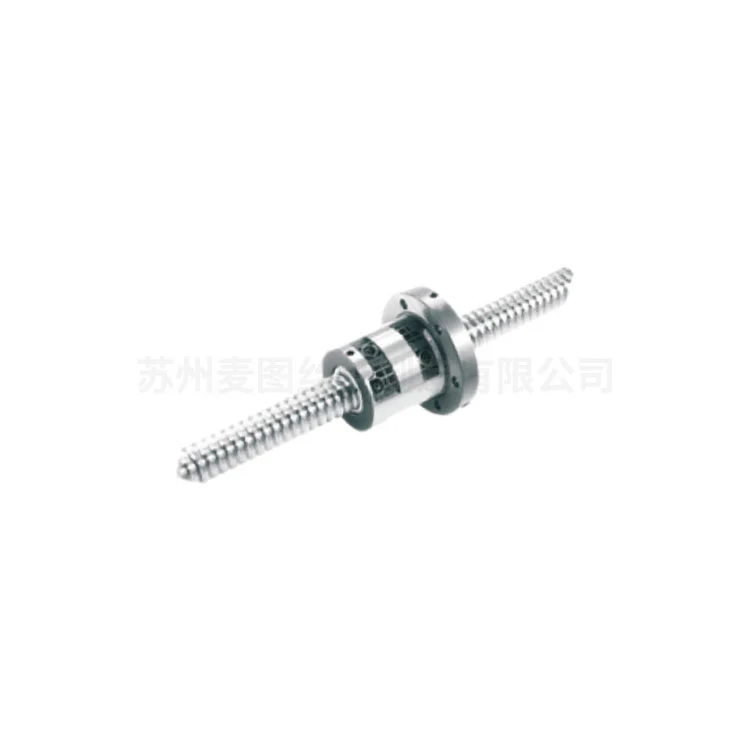
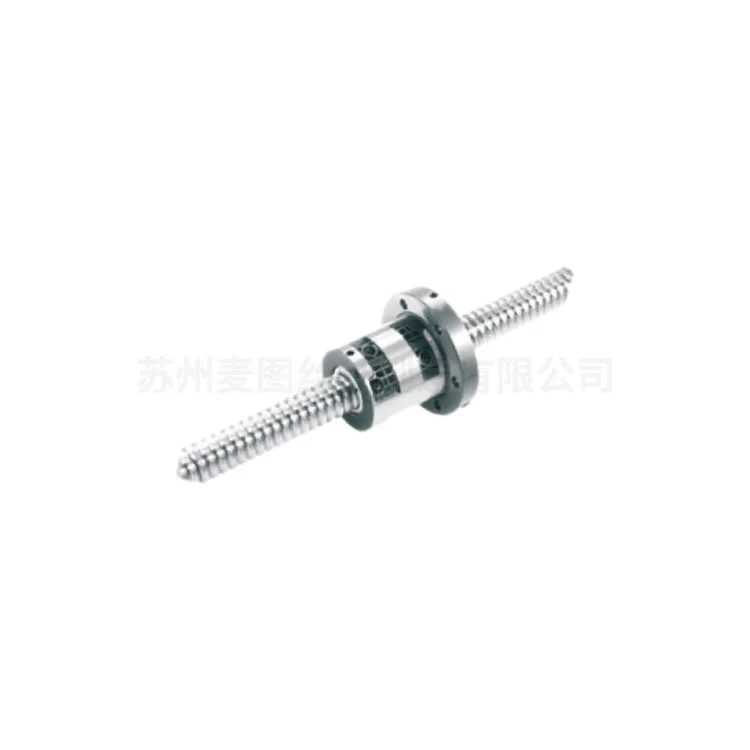
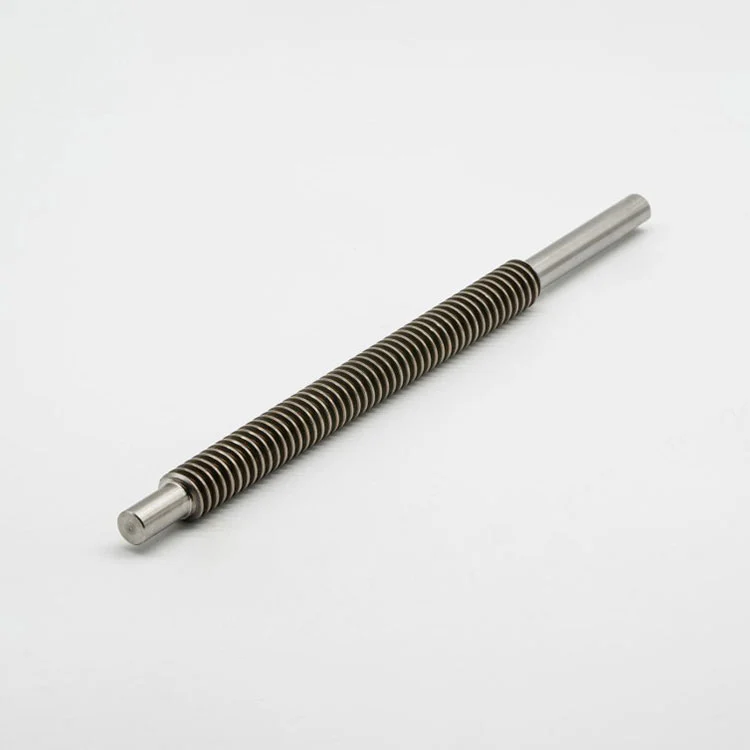
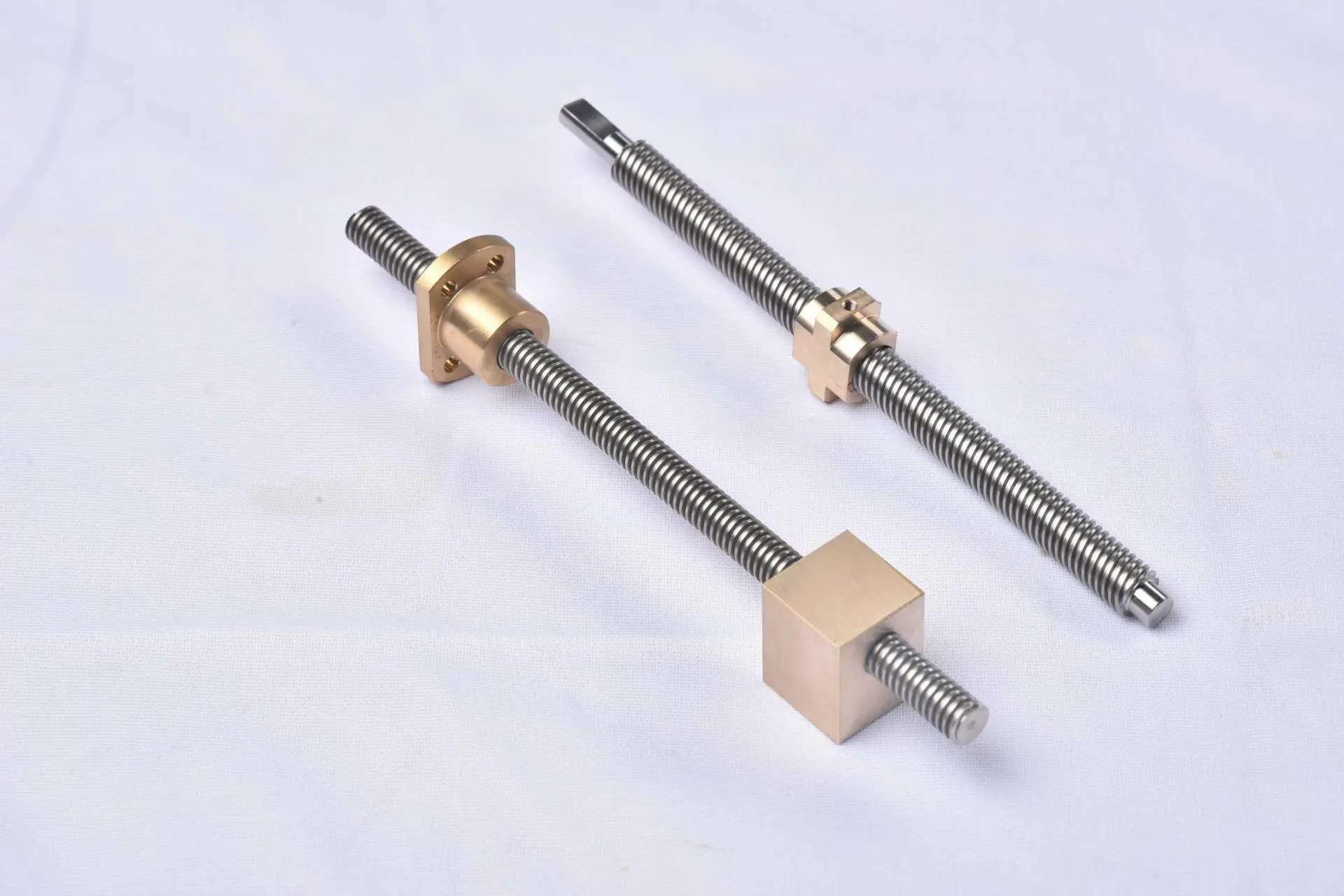
In the field of mechanical transmission, trapezoidal screws have become a core component in scenarios such as precision feeding and lifting due to their simple structure, strong load-bearing capacity, and stable transmission. The basic size of the trapezoidal screw pitch is a key parameter that determines transmission efficiency, accuracy and load capacity, and directly affects the overall performance of the equipment. This article will analyze in detail the basic size standards, selection logic and application scenarios of trapezoidal screw pitch, helping companies and engineers quickly lock in adaptation solutions.
1. What is the pitch of trapezoidal screw? Why is it the core of selection?
The "pitch" of a trapezoidal screw refers to the axial distance between corresponding points on the center diameter line of two adjacent turns of threads. The unit is usually millimeters (mm). As the “metronome” of the transmission system, the pitch directly determines:
Transmission speed: The larger the pitch, the longer the axial movement distance of the nut per revolution of the screw rod, and the faster the transmission speed;
Load capacity: Under the same screw diameter, small pitch threads have denser threads and more even force distribution, making it suitable for high load scenarios;
Precision control: The single-turn displacement of the small-pitch screw is small, and it can achieve higher-precision micro-feeding with the servo motor.
Therefore, clarifying the basic dimensions of the trapezoidal screw pitch is the prerequisite for ensuring the transmission efficiency, stability and life of the equipment.
2. Basic dimensions of trapezoidal screw pitch: national standards and common specifications
Our country's trapezoidal screws comply with the GB/T 5796 "Trapezoidal Thread" standard, which clearly stipulates the basic size of the pitch. It is divided into two categories: ordinary pitch and fine pitch, adapting to the needs of different scenarios:
1. Ordinary pitch (applicable to general transmission scenarios)
Common basic sizes (mm): 1.5, 2, 3, 4, 5, 6, 8, 10, 12, 16, 20, 24, 32, etc.
For example: for a trapezoidal screw with a diameter of 20mm, the common pitches are 4mm and 6mm; for a screw with a diameter of 30mm, the common pitches are 6mm and 10mm.
2.Fine pitch (suitable for high-precision, small displacement scenarios)
Fine pitch screw dimensions are more precise, common specifications (mm): 1, 1.5, 2, 3, etc.
For example: the 12mm diameter screw rod commonly used in precision instruments has a fine pitch of 2mm, which can achieve 0.01mm level fine adjustment.
In addition, the pitch of inch-standard trapezoidal screws (such as ACME thread) is usually expressed in "threads per inch (TPI)". Common specifications include 4TPI (pitch 6.35mm), 5TPI (pitch 5.08mm), etc., which need to be matched according to the equipment system.
3. Basic pitch size selection: 3 core principles
When selecting the pitch of the trapezoidal screw, it is necessary to make a comprehensive judgment based on the transmission requirements of the equipment, load size, and accuracy requirements to avoid "big horse-drawn cart" or "small horse-drawn cart":
Look at the transmission speed requirements
If the equipment requires rapid feed (such as material pushing in an automated production line), give priority to a large pitch (such as 10mm, 16mm) to reduce motor speed pressure; if it is a low-speed precision transmission (such as machine tool tool feed), choose a small pitch (such as 3mm, 4mm).
Look at load and life
In high-load scenarios (such as lifting equipment and presses), priority must be given to ensuring thread strength. It is recommended that medium pitch (such as 6mm, 8mm) be selected to balance force and wear resistance if the diameter of the screw rod is sufficient. Fine-pitch threads can be used for light-load equipment (such as small valve drives) to reduce costs.
Look at the accuracy level
Precision instruments (such as optical equipment and detection platforms) have extremely high requirements for displacement control and need to be equipped with small pitch screws (such as 1.5mm, 2mm) and high-precision nuts to achieve micron-level adjustments; ordinary transmission scenarios (such as conveying mechanisms) can be relaxed to ordinary pitches.
4. Choose the right pitch size, don’t ignore these details!
Match the diameter of the screw: The bigger the pitch, the better. It needs to be proportional to the diameter of the screw (usually the pitch is 1/3~1/5 of the diameter), otherwise it will easily lead to insufficient thread strength and risk of breakage.
Consider processing feasibility: special thread pitches (such as non-standard sizes) may increase processing difficulty and cost. Prioritize national standard specifications to reduce procurement and maintenance costs.
Combining lubrication and environment: In harsh environments such as dust and high temperature, large-pitch screws have larger gaps and are prone to dirt accumulation, so they need to be equipped with a sealing structure; small-pitch screws require enhanced lubrication to avoid wear.
5. High-quality trapezoidal screw, starting from standard pitch size
Whether it is industrial automation, precision machine tools or lifting equipment, the basic pitch size of the trapezoidal screw is the key to "moving one hair to affect the whole body". Choosing a trapezoidal screw that complies with GB/T 5796 standards and has an adapted pitch size can significantly improve the transmission efficiency, stability and lifespan of the equipment.
If you are struggling with selection or need to customize a trapezoidal screw with a specific pitch, you can contact Maitu Screw - we have been involved in the production of trapezoidal screws for more than ten years. We strictly follow the national standard size and support full specification customization from diameter 4mm to 120mm and pitch 1mm to 22mm. We are equipped with precision testing equipment to ensure that the pitch error of each batch of products is ≤0.02mm.
We use cookies to offer you a better browsing experience, analyze site traffic and personalize content. By using this site, you agree to our use of cookies. Privacy Policy