How Does a Trapezoidal Screw Deliver Smooth Linear Motion in Real Machines?
Article Abstract
If your actuator drifts under load, your stage chatters, or your mechanism binds after a few weeks, the problem is often not “bad luck”— it’s mismatch: lead, diameter, nut material, lubrication, alignment, and end support were not chosen as a system.
This guide breaks down how a Trapezoidal Screw works, why it’s popular for dependable positioning and load holding, and how to pick specifications that reduce backlash, heat, and premature wear. You’ll get a practical selection matrix, a supplier checklist, and a buyer-friendly way to write your RFQ so the final assembly performs the way you expect.
Contents
- Outline
- The pain points that keep showing up
- What a Trapezoidal Screw really is
- Selection basics that prevent regret
- Quick selection matrix
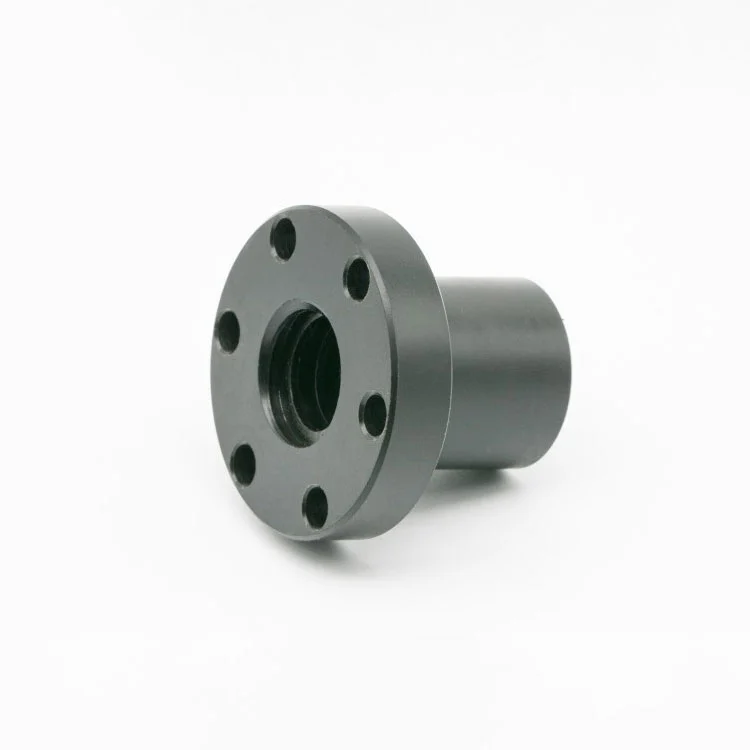
- Nut types and materials that actually matter
- Integration checklist: supports, alignment, lubrication
- Quality questions to ask before you buy
- Where Suzhou Maitu Screw Rod Manufacturing Co., Ltd. can help
- FAQ
◆◆◆
Outline
- Identify the real failure mode (drift, backlash, binding, wear, noise, heat).
- Understand why the Trapezoidal Screw profile balances load capacity, manufacturability, and stability.
- Choose lead, diameter, and end support to control speed, stiffness, and whipping.
- Pick nut design and material to handle friction, contamination, and maintenance limits.
- Validate with a short checklist so production parts match prototypes.
◆◆◆
The pain points that keep showing up
Buyers rarely start by saying “I need a Trapezoidal Screw.” They start with a headache: the lift column slides down a few millimeters overnight, the linear slide can’t repeat a position, or the nut gets hot and starts squealing. Here are the most common issues—and what they usually point to.
- Back-driving or load drift: You stop the motor, but the load creeps. This can happen when lead is too aggressive, friction is too low, or the system has vibration/impact. Many trapezoidal systems can resist back-driving, but it’s not automatic—geometry matters.
- Backlash that ruins positioning: You reverse direction and nothing moves for a moment. That “dead band” can be the difference between smooth automation and a product that feels cheap.
- Binding and uneven motion: The screw feels smooth by hand, but binds under assembly. Misalignment, insufficient end support, or a nut material that doesn’t tolerate edge loading is often the real culprit.
- Fast wear and black dust: Dry running with the wrong material pair can wear quickly, especially with contamination. Sometimes lubrication exists—but it’s the wrong type, applied inconsistently, or gets washed away.
- Noise and heat at speed: Higher rpm increases frictional heating and can lead to vibration or whipping. A lead screw that works at 100 rpm may fail at 1,000 rpm without redesign.
Buyer shortcut: Before choosing sizes, write one sentence:
“My system must move X mm per second, carry Y N (or kg), hold position when power is off, and repeat within Z mm.” That sentence will instantly narrow your Trapezoidal Screw options.
◆◆◆
What a Trapezoidal Screw really is
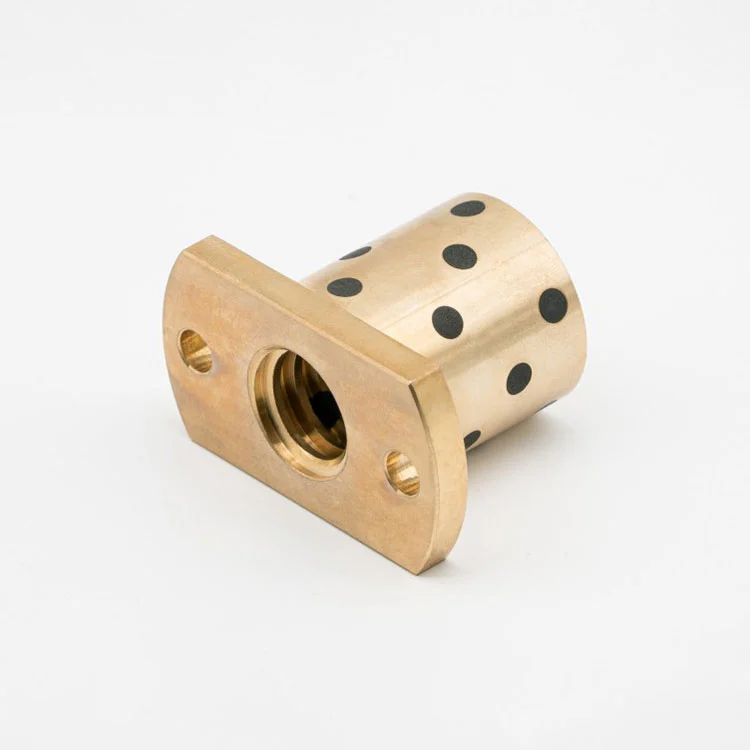
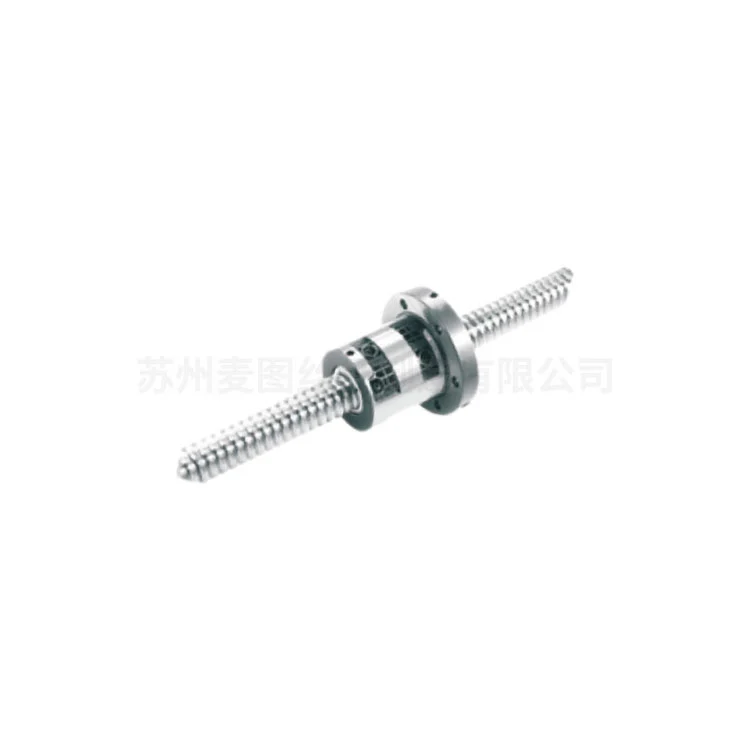
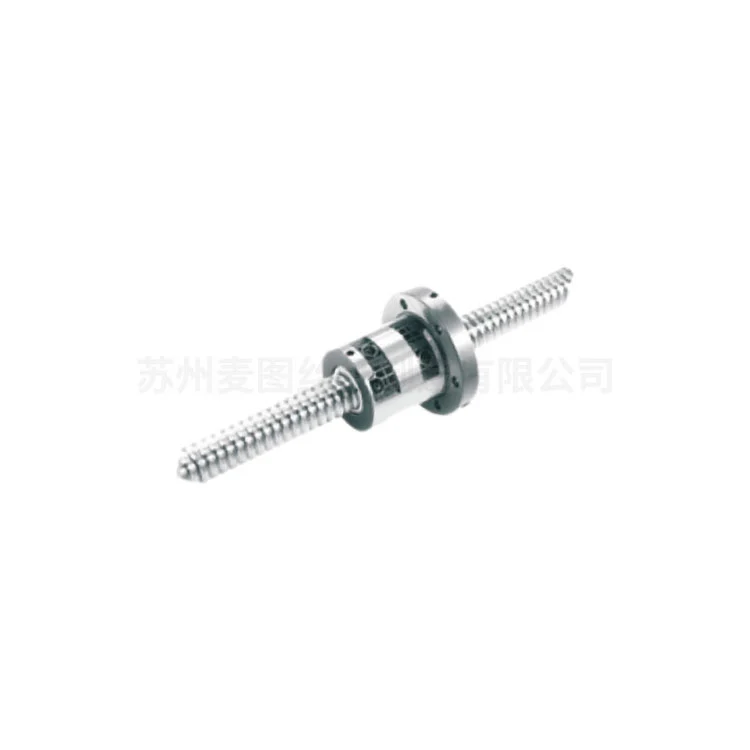
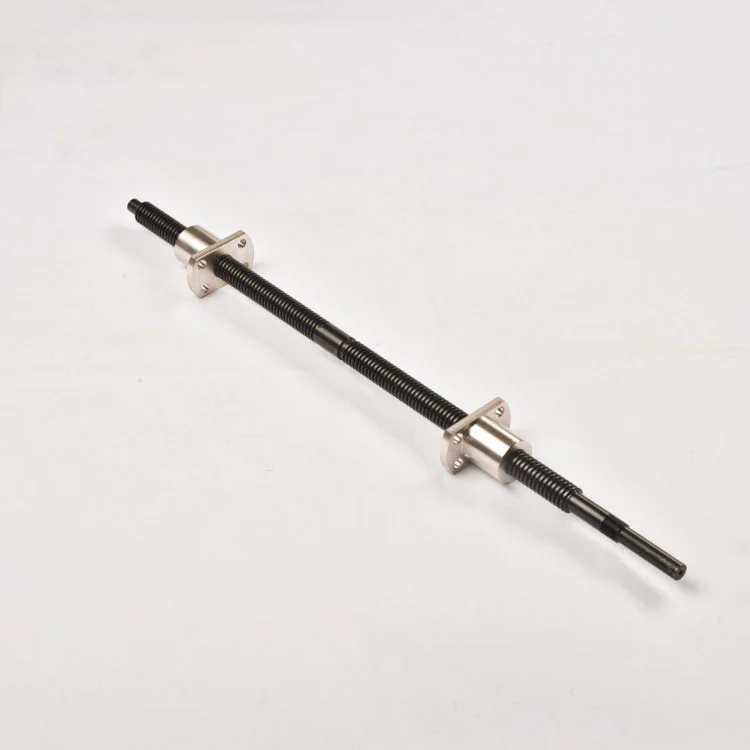
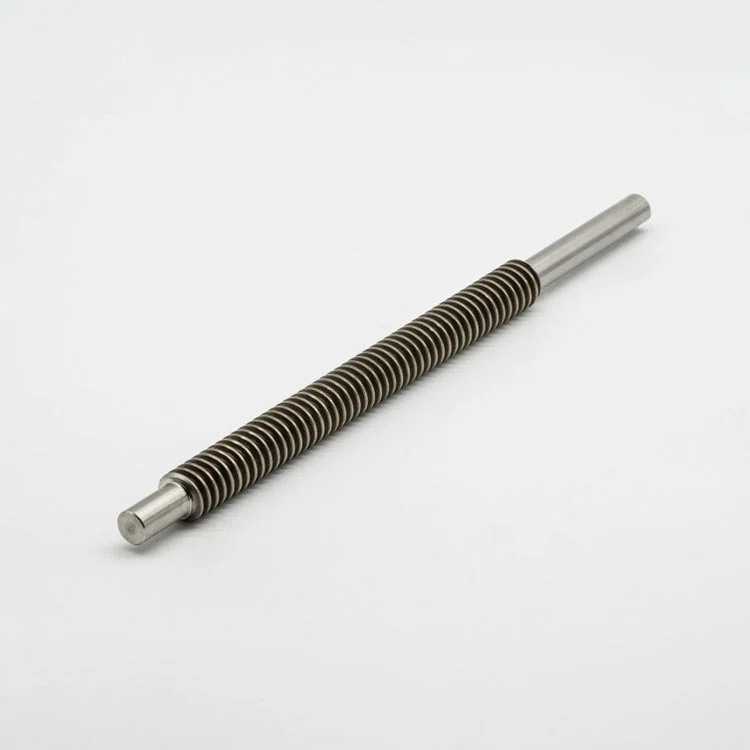
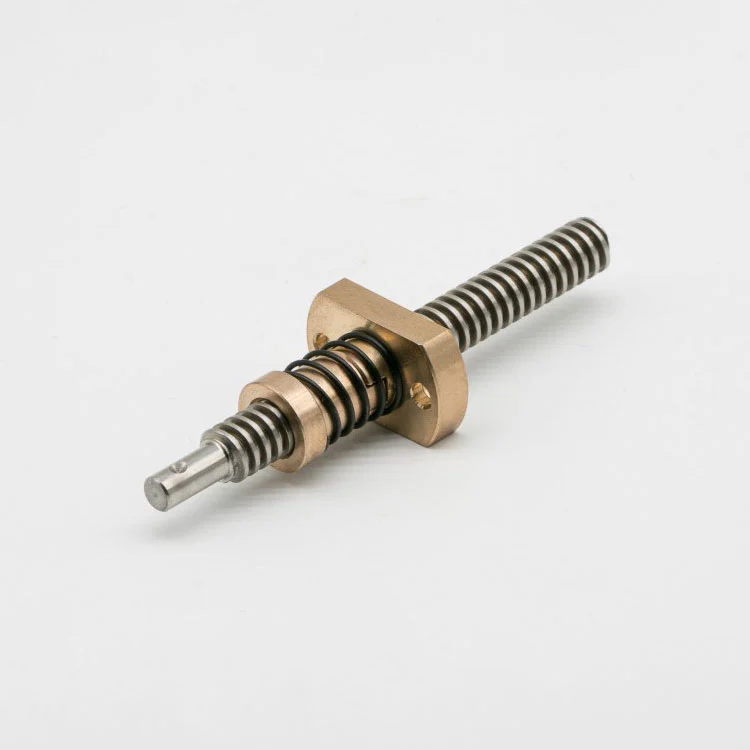
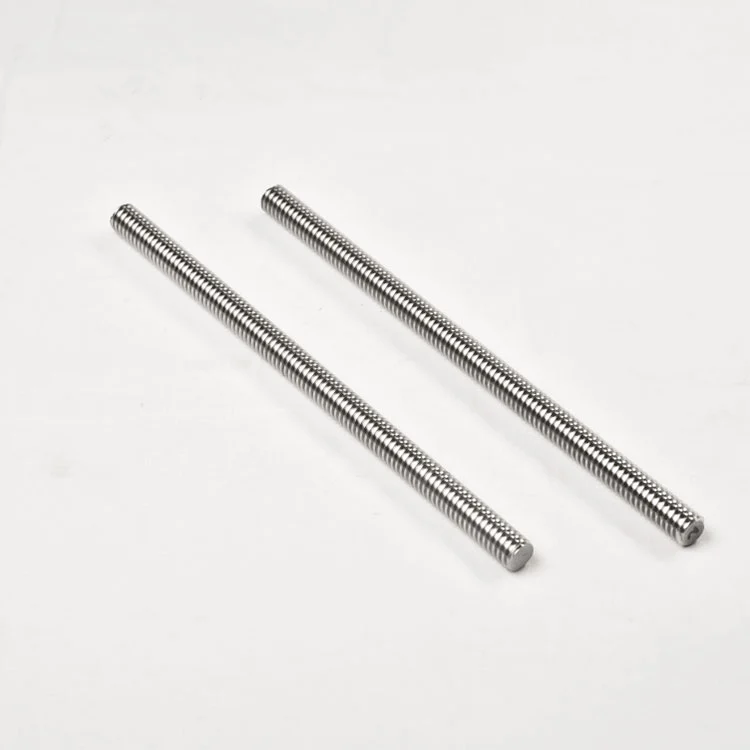
A Trapezoidal Screw is a power screw with a trapezoid-shaped thread profile designed to convert rotary motion into linear motion. Compared with ball screws, it typically trades efficiency for simplicity, robustness, and easier load holding. That trade can be exactly what you want in lifting, clamping, adjustment, or motion systems where “stays where you put it” matters more than ultra-low friction.
What makes it practical in industrial environments is not just the thread shape—it’s the ecosystem: matching nuts (bronze, steel, polymers), anti-backlash solutions, self-lubricating designs, and flexible manufacturing methods. Done right, a Trapezoidal Screw assembly can be cost-effective, maintainable, and surprisingly precise for many applications.
Key idea: A trapezoidal lead screw is a “controlled friction” component.
That friction is useful (load holding, stability) but must be managed (heat, wear). Your spec choices decide which side wins.
◆◆◆
Selection basics that prevent regret
If you only remember one thing: don’t select a Trapezoidal Screw by diameter alone. Select it as a system: lead (or pitch), length, nut design, material pairing, lubrication plan, and end support.
- Lead (travel per revolution): Larger lead moves faster but is more likely to back-drive and generates more heat at high load. Smaller lead improves controllability and load holding but reduces speed.
- Diameter and core strength: Larger diameter improves buckling resistance and stiffness, which matters for long spans and heavy loads.
- Unsupported length and whipping risk: Long screws at high rpm can whip. If you need speed on a long length, you may need intermediate support, different end-bearing arrangements, or a different motion solution.
- Duty cycle: Intermittent adjustment (a few seconds here and there) is very different from continuous motion. Continuous duty demands better heat management and wear strategy.
- Environment: Dust, coolant, detergents, and outdoor corrosion shift the best choice toward sealed protection, stainless materials, or polymer nuts.
Common buying mistake: requesting “high precision” without defining what precision means.
Do you mean repeatability, lead accuracy over length, low backlash, or smoothness under load? Each one pushes the design in a different direction.
◆◆◆
Quick selection matrix
Use this table as a starting point for choosing a Trapezoidal Screw configuration. It’s not a replacement for engineering calculations, but it will keep you out of the most common traps.
| Typical use case | What the customer usually cares about | Lead direction | Nut recommendation | Screw material direction | Notes that prevent failures |
|---|---|---|---|---|---|
| Lifting columns / vertical loads | Load holding, safety, stable positioning | Lower-to-moderate lead | Bronze or anti-backlash option | Carbon steel with surface protection, or stainless if corrosive | Confirm back-driving behavior under real load and vibration; specify end bearings. |
| Automation slides (moderate precision) | Smoothness, repeatability, low noise | Moderate lead | Polymer or engineered plastic for quieter running | Ground or well-controlled rolled screw | Manage contamination; add wipers or covers if dust is present. |
| Adjustment mechanisms / manual positioning | Simple, durable, “set and stay” | Lower lead | Standard bronze or polymer | Carbon steel or stainless | Prioritize feel and backlash; manual systems often “broadcast” looseness. |
| High-speed transport (short strokes) | Speed, throughput | Higher lead or multi-start | Wear-resistant nut; consider oil-free designs | Controlled finish; heat and lubrication become critical | Validate temperature rise and duty cycle; don’t ignore whipping limits. |
| Harsh/clean environments (washdown, debris) | Low maintenance, reliability | Moderate lead | Self-lubricating / oil-free polymer variants | Stainless or coated steels | Plan for sealing, drainage, and compatibility with chemicals. |
◆◆◆
Nut types and materials that actually matter
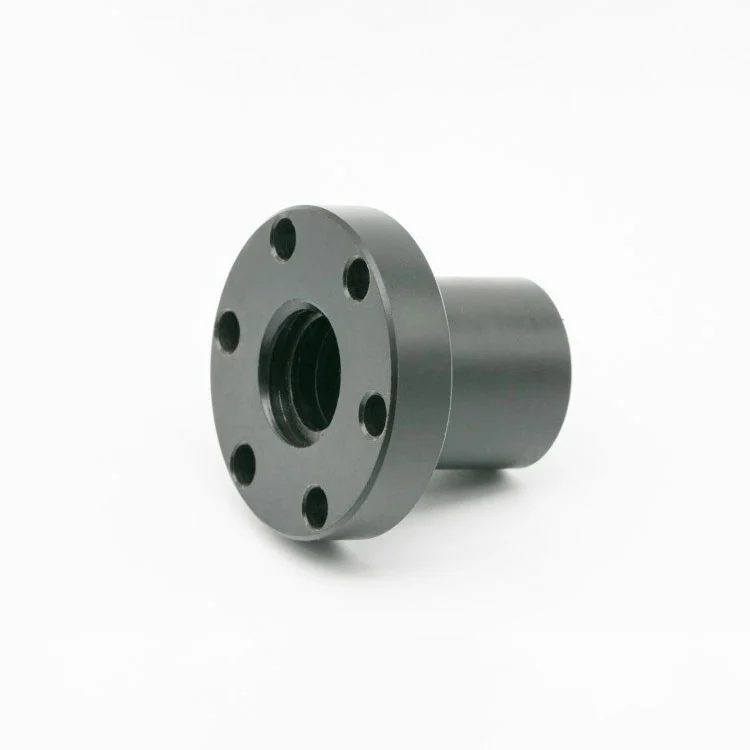
The screw gets the attention, but the nut often decides lifespan and feel. For a Trapezoidal Screw assembly, the nut choice affects: friction, noise, backlash, contamination tolerance, and how forgiving the system is to misalignment.
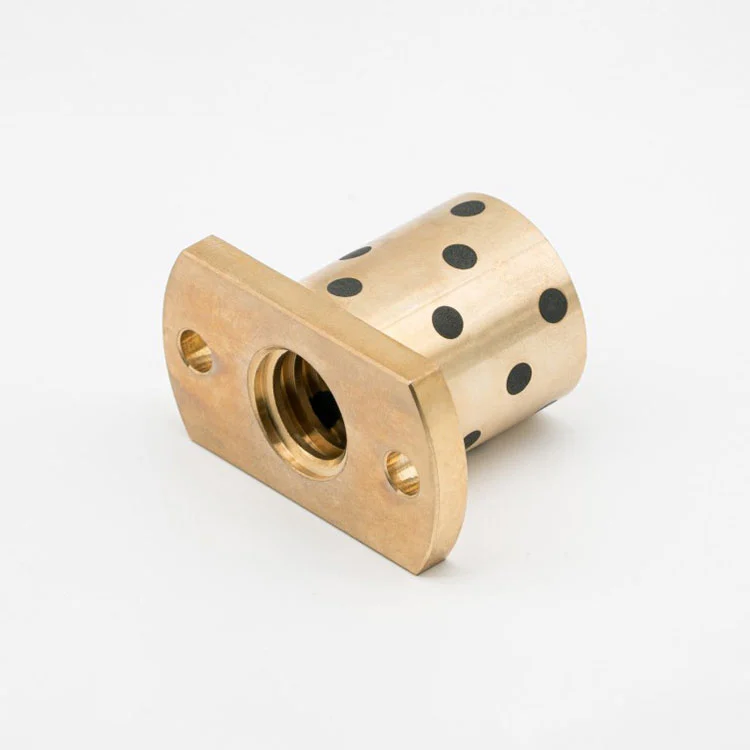
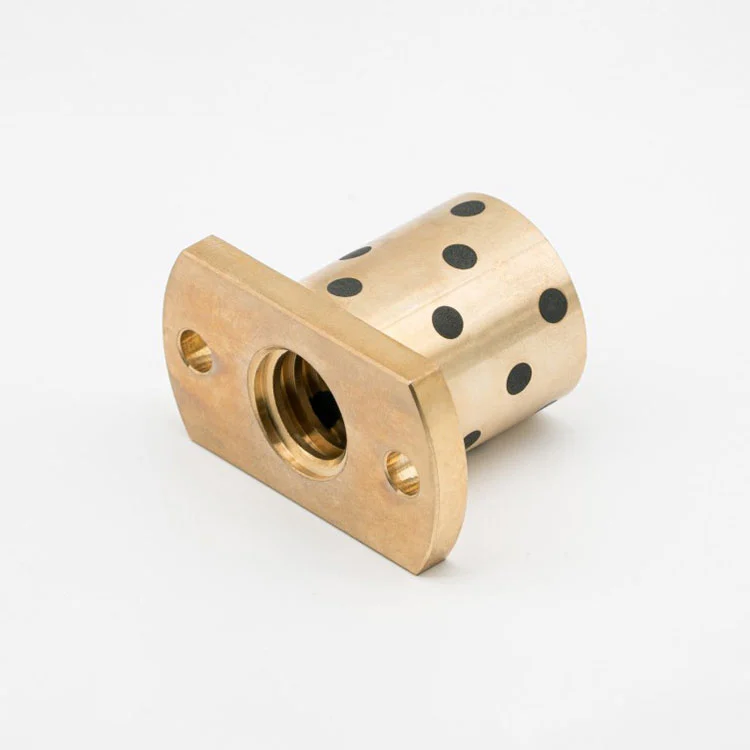
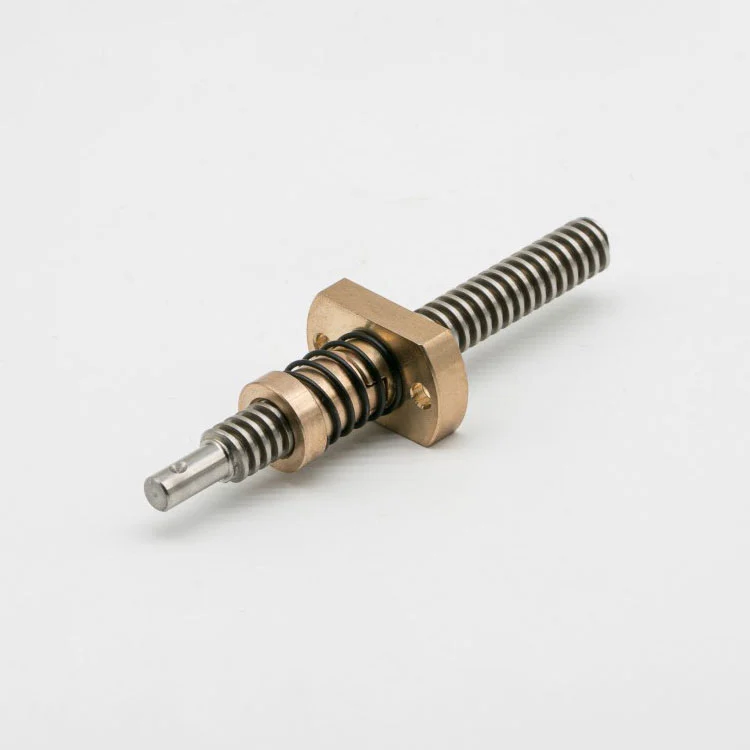
- Bronze nuts: A classic choice for load capacity and predictable wear. Great when you can lubricate and keep debris under control.
- Steel nuts: Strong, but can be less forgiving and may demand careful lubrication and surface pairing to avoid galling.
- Engineering plastics (nylon, POM, PEEK, composites): Often quieter and can run with minimal lubrication. The right polymer can handle tough environments; the wrong polymer can creep under load or soften with heat.
- Anti-backlash nuts: Designed to reduce clearance and improve direction changes. Ideal when positioning quality matters more than ultra-low torque.
- Oil-free / self-lubricating nuts: Helpful when lubrication is impractical, undesirable, or easily washed away.
Practical advice: If your customer complains about “cheap feel,” it’s often backlash—use an anti-backlash approach.
If they complain about “maintenance,” it’s often lubrication—consider an oil-free nut strategy or protective covers.
◆◆◆
Integration checklist: supports, alignment, lubrication
Even the best Trapezoidal Screw will disappoint if the surrounding design is careless. These integration points are where many projects quietly fail during scaling from prototype to production.
- End support strategy: Define which end is fixed and which is floating. Bearing choice impacts axial play, stiffness, and noise.
- Alignment and mounting: Misalignment increases friction and wear dramatically. Use proper housings, machining references, and avoid forcing the nut into position during assembly.
- Lubrication plan: Decide early: grease, oil, dry-running polymer, or sealed approach. “We’ll add lubrication later” usually becomes “We didn’t design space for lubrication.”
- Protection from contamination: Bellows, covers, wipers, and placement away from chips and dust can multiply service life.
- Thermal behavior: Higher duty cycles generate heat. Heat changes clearances, increases wear, and can soften some polymers.
- Back-driving verification: If “must hold when power is off” is a requirement, validate it with real loads and real vibration.
◆◆◆
Quality questions to ask before you buy
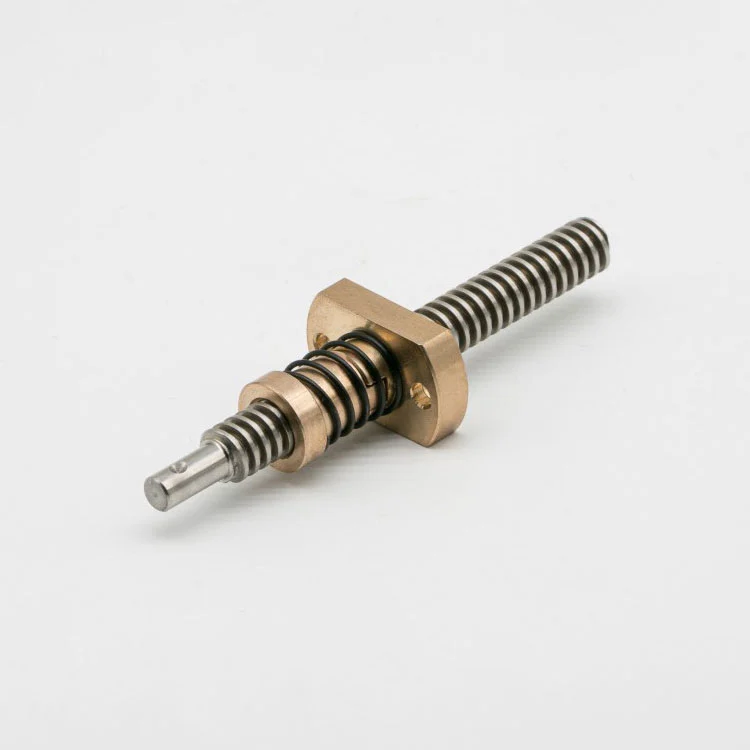
If you’re sourcing a Trapezoidal Screw, the smartest move is to ask questions that reveal process control. Price is easy to compare; consistency is not. These questions protect you from unpleasant surprises.
- What tolerances can you hold on lead accuracy, straightness, and thread form? Ask for the supplier’s standard and optional grades.
- Rolled or ground? And what is the inspection method for each batch?
- What material pairs do you recommend for my load, speed, and environment? A good supplier will ask about duty cycle and contamination.
- How do you control backlash? Standard clearance, selectable fits, or anti-backlash designs.
- What surface treatments are available? Especially if corrosion or wear is a concern.
- Can you supply screw-and-nut assemblies matched as a pair? Matching reduces variability and saves debugging time.
- What do you need from me to quote correctly? Drawings, stroke, load, speed, mounting, and “hold position” requirements.
RFQ tip: Include your “must not fail” condition.
Example: “No drift under 500 N in vertical orientation for 8 hours after power-off.” That one line forces the correct conversation early.
◆◆◆
Where Suzhou Maitu Screw Rod Manufacturing Co., Ltd. can help
If you’re looking for a supplier who can support both standard and customized configurations, Suzhou Maitu Screw Rod Manufacturing Co., Ltd. focuses on trapezoidal lead screw solutions for linear motion and automation use cases—including options such as multi-start styles, paired screw-and-nut supply, and multiple nut material routes (for example, polymer-based choices and anti-backlash approaches).
In practice, that means you can approach sourcing in a cleaner way: instead of picking a screw from a catalog and hoping the nut behaves, you can specify performance targets and receive a recommended pairing. This is especially useful when your constraints include “no lubrication,” “reduced backlash,” “special bronze,” or “engineering plastics,” or when your project needs repeated customization across variants.
What to send for faster quoting and fewer revisions:
- Stroke, speed (mm/s), and duty cycle
- Max axial load and orientation (horizontal/vertical)
- Target backlash (or acceptable direction-change dead band)
- Environment (dust, coolant, washdown, temperature range)
- Preference on lubrication (grease/oil/dry-running)
- End machining and support layout (fixed/floating, bearing type if known)
◆◆◆
FAQ
Is a Trapezoidal Screw always self-locking?
Not always. Many trapezoidal systems resist back-driving due to geometry and friction, but higher leads, low friction material pairs, vibration, or shock loads can reduce load-holding behavior. If “must hold position when power is off” is critical, validate it under real conditions.
What’s the fastest way to reduce backlash?
Use an anti-backlash nut design or a controlled fit strategy (and keep alignment tight). Backlash is not only a “thread clearance” issue—support bearings and mounting compliance can contribute too.
When should I choose polymer nuts over bronze?
Polymer nuts can be excellent when you want quieter running, reduced maintenance, or better tolerance to certain environments. The key is matching polymer type to load, speed, and temperature. For high load and continuous duty, bronze (with correct lubrication) may still be the safer baseline.
Can I run a Trapezoidal Screw without lubrication?
Sometimes—especially with self-lubricating or oil-free nut materials. However, “no lubrication” increases the importance of contamination control, heat management, and correct material pairing. If debris is present, add protection like covers or wipers.
Rolled vs. ground: which one should I buy?
It depends on your performance target. Ground screws can offer tighter control on geometry and lead accuracy, while rolled screws often provide strong value for many industrial applications. Define what you truly need—repeatability, smoothness, or lead accuracy over length—then select accordingly.
What information do suppliers need to recommend the right screw-and-nut pairing?
Load, speed, stroke, duty cycle, orientation, target backlash, environment, lubrication preference, and end support details are the essentials. With those, a supplier can propose a pairing that avoids overheating, binding, or premature wear.
If you’re comparing options or struggling with drift, backlash, or unexpected wear, share your load, speed, stroke, and environment requirements and ask for a matched screw-and-nut proposal from Suzhou Maitu Screw Rod Manufacturing Co., Ltd.
Want fewer redesign loops and a smoother first build? contact us with your drawing or application targets, and let’s turn your motion requirement into a reliable, repeatable assembly.
Related News
- Can PEEK Trapezoidal Screw Nuts Withstand Regular Disinfection in Pharmaceutical Cleanrooms?
- How To Maintain PEEK Trapezoidal Screw Nuts On Textile Production Equipment?
- How Does PEEK Trapezoidal Screw Nut Reduce Textile Machine Downtime?
- How Can a C7 Large Lead Ball Screw for Material Handling Improve Speed, Precision, and Heavy-Duty Performance
- How Can Ultra Precision Linear Guides Improve Accuracy, Stability, and Reliability in Modern Motion Systems
- Why Is the C7 High Speed Large Lead Rolled Ball Screw for Robots a Smart Choice for Fast and Reliable Automation
Leave me a message