Abstract
If your machine needs to move a load quickly, quietly, and reliably, a standard lead screw can start to feel like a bottleneck: too slow at practical motor speeds, too much friction under load, or too sensitive to dust and maintenance. A Multi-Start Trapezoidal Screw is a practical way to increase travel per revolution (lead) while keeping the rugged, contamination-tolerant behavior that makes trapezoidal threads popular in industrial equipment. This article breaks down the real customer pain points—speed limits, wear, efficiency, stick-slip, noise, and service life—and shows how multi-start geometry addresses them, where it makes sense (and where it doesn’t), and what to check before you commit to a design.
Contents
- The Pain Points Buyers Want Solved
- What Makes a Multi-Start Trapezoidal Screw Different
- Performance Benefits You Can Actually Feel
- Trade-Offs and When Not to Use It
- Selection Checklist for Specifying the Right Screw
- Quick Comparison Table
- Integration Tips for Longer Service Life
- Common Applications
- How a Manufacturer Supports Your Outcome
- FAQ
- Next Steps
Outline
- Define the problem: why traditional screws may be too slow or too “grabby.”
- Explain the geometry: starts, pitch, and lead in plain language.
- Connect geometry to results: speed, smoothness, efficiency, and stability.
- Surface the trade-offs: self-locking, holding load, and drive sizing.
- Give a practical checklist: what buyers should specify to avoid expensive redesigns.
- Provide an at-a-glance comparison: single-start vs multi-start and ball screws.
- Finish with implementation + FAQ: lubrication, alignment, backlash, and noise.
The Pain Points Buyers Want Solved
Most buyers don’t wake up thinking, “I need a new thread profile.” They wake up to problems like these:
- Not enough speed: You can’t hit target cycle time unless the motor spins uncomfortably fast.
- Stick-slip and jerky motion: The carriage hesitates, then jumps—ruining positioning quality and surface finish.
- Premature wear: The nut gets sloppy; backlash grows; accuracy drifts; maintenance becomes a routine tax.
- High drive torque: Your motor/gearbox runs hot, draws more current, or needs oversizing.
- Noise and vibration: Especially when the screw is long or runs at higher RPM.
- Dirty environments: Ball screws can feel too “delicate” when dust, chips, or splash are unavoidable.
A Multi-Start Trapezoidal Screw is often selected when you want more travel per revolution without abandoning the robust, forgiving behavior of trapezoidal threads.
What Makes a Multi-Start Trapezoidal Screw Different

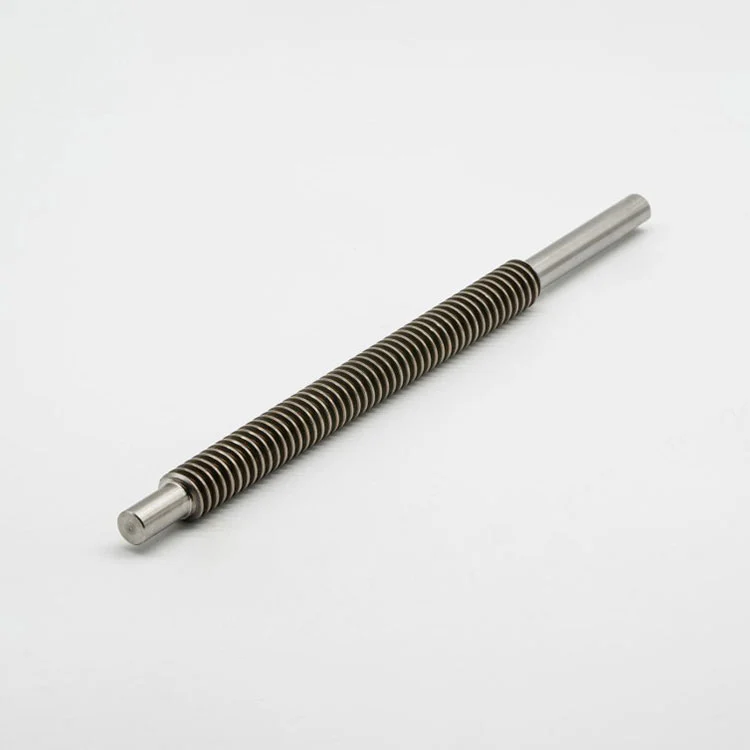
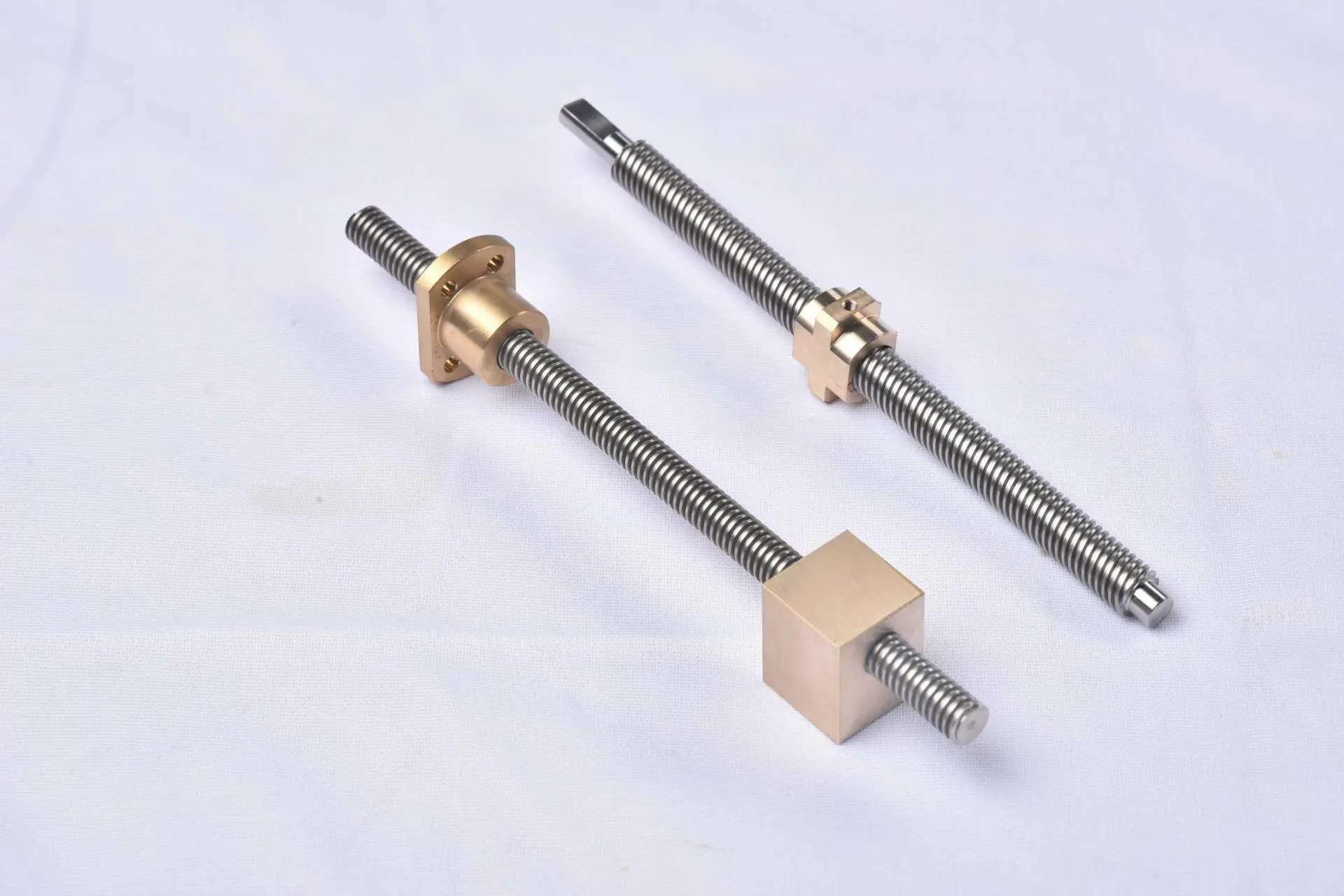
Trapezoidal screws use a trapezoid-shaped thread (commonly associated with “Acme-style” behavior) designed for load-carrying, manufacturability, and reliable performance in industrial conditions.
The “multi-start” part describes how many thread helices wrap around the screw. Here’s the simplest way to think about it:
- Pitch = distance between adjacent thread peaks along the axis.
- Starts = number of independent thread tracks (1-start, 2-start, 4-start, etc.).
- Lead = how far the nut moves in one full screw revolution.
With a single-start screw, lead equals pitch. With a multi-start screw, lead equals pitch multiplied by the number of starts. That means you can keep a reasonable pitch (good for strength and manufacturability) while increasing lead to gain speed.
In buyer language: multi-start = more movement per turn, so you can meet speed targets without pushing motor RPM to the edge.
Performance Benefits You Can Actually Feel
Multi-start trapezoidal designs tend to show their value when speed and smoothness matter, but the application still wants a sturdy, serviceable mechanism.
-
Higher linear speed at comfortable motor RPM
If your design is limited by motor speed, gearbox limits, or noise at high RPM, increasing lead can reduce the required rotation speed for the same travel rate. -
Smoother motion with less “cogging” feel
Many systems feel better when the screw advances farther per turn—especially if your control system is step-based and you want fewer micro-steps to achieve a given travel distance. -
Better productivity in cycling equipment
Packaging, fixtures, automated doors, and linear actuators often care more about repeatable motion and uptime than ultra-fine accuracy. Multi-start lead can shorten cycle time without forcing an entirely new drivetrain architecture. -
Practical reliability in harsh environments
Compared with solutions that rely on recirculating balls, trapezoidal screw systems are typically more tolerant of contamination and simpler to maintain when dirt and debris are part of the real world.
Trade-Offs and When Not to Use It
A smarter spec is one that admits trade-offs early—before you discover them in testing.
-
Self-locking is not guaranteed
As lead increases, the system can become more likely to back-drive under load. If you need a load to hold position without power, you may need a brake, a different lead, or an alternative mechanism. -
Holding load vs moving load
Designs optimized for fast travel may require more attention to how the load is restrained at rest (especially vertical axes). -
Drive sizing and heat
Higher lead can change the torque-speed relationship and the dynamic behavior. You’ll want to confirm the motor/gearbox curve against real duty cycles. -
Not the top choice for ultra-precision
If you need very high accuracy, minimal backlash, and high efficiency at fine positioning, you may still favor ground ball screws or other precision systems.
Selection Checklist for Specifying the Right Screw
When buyers say “We need a faster screw,” what they really need is a spec that protects them from rework. Use this checklist to communicate with engineering teams and suppliers clearly:
-
Target travel per revolution
Define your desired lead based on cycle time and motor RPM limits. -
Load type and direction
State axial load (max and typical), shock loads, and whether it’s a vertical axis that might back-drive. -
Duty cycle and speed profile
Continuous vs intermittent, acceleration requirements, and any frequent reversing that can increase wear. -
Required positioning quality
List acceptable backlash, repeatability expectations, and whether you’ll compensate in software. -
Nut material and lubrication strategy
Specify whether you prefer metal nut, engineered polymer, bronze, or a custom pairing—and how you plan to lubricate (grease/oil/dry). -
Environment
Dust, chips, washdown, temperature range, corrosion risk, and any need for surface treatments. -
Mounting and alignment constraints
Share available space, end machining requirements, support bearing arrangement, and allowable runout.
Pro tip: If you’re switching from single-start to multi-start, confirm whether your system relied on self-locking for safety. Many “mystery failures” are really “holding behavior changed” failures.
Quick Comparison Table
| Option | Best For | Typical Strengths | Watch Outs |
|---|---|---|---|
| Single-Start Trapezoidal Screw | Holding load, simple actuators, steady motion | Often better inherent holding, straightforward design | Lower speed per RPM, can feel “sticky” under certain conditions |
| Multi-Start Trapezoidal Screw | Faster travel with rugged hardware | Higher lead, improved speed potential, practical in dusty environments | May back-drive more easily; verify holding and safety strategy |
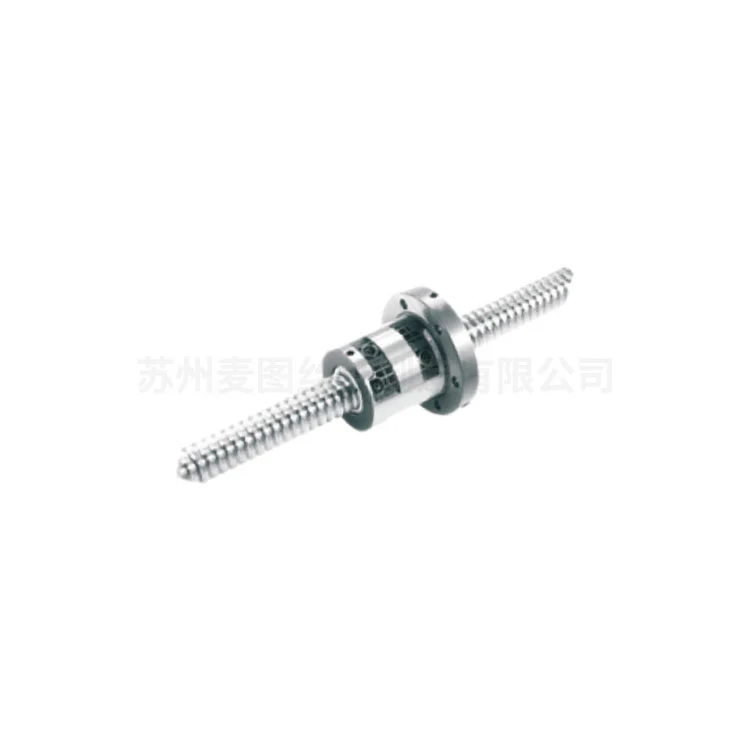
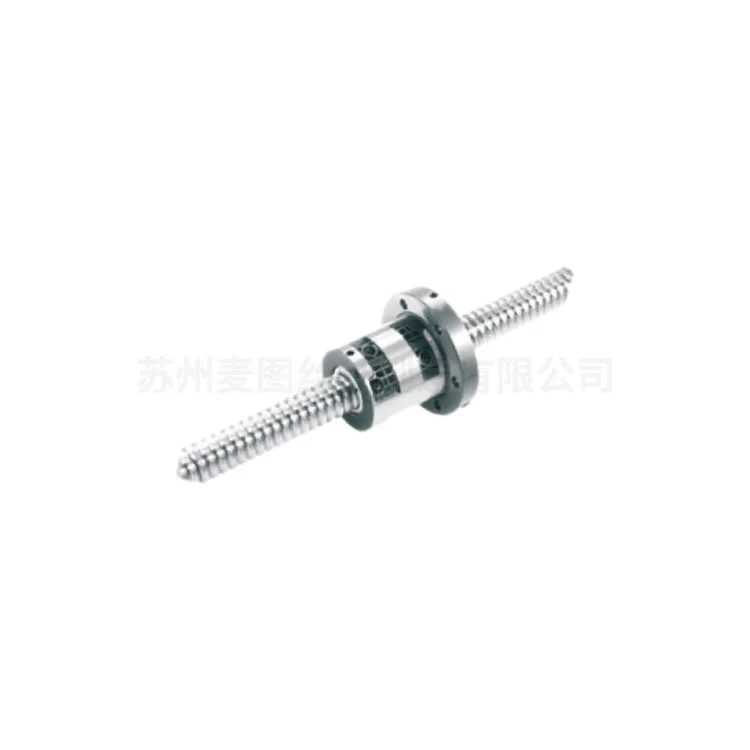
| Ball Screw | High efficiency, precision positioning | Low friction, high accuracy potential, smooth at fine motion | More sensitive to contamination; can be higher cost and maintenance-specific |
Integration Tips for Longer Service Life
Even a well-chosen screw can perform poorly if integration is sloppy. These practices tend to pay for themselves:
-
Control misalignment early
Use proper supports and alignment methods to reduce side loading on the nut—one of the fastest ways to accelerate wear. -
Choose the right nut pairing
Bronze or engineered polymers can change noise, friction behavior, and maintenance needs. Match materials to your environment and duty cycle. -
Manage lubrication like a design feature
Decide whether you’re using grease or oil, how it will be replenished, and how you’ll prevent contamination from turning lubricant into abrasive paste. -
Plan for backlash growth
If your application needs consistent positioning, consider anti-backlash nut options, periodic adjustment plans, or software compensation. -
Confirm critical speed for long screws
Long, slender screws can whip at higher RPM. If you’re increasing speed, validate support spacing and operating range to keep vibration under control.
Common Applications
A Multi-Start Trapezoidal Screw often fits applications where speed and durability must coexist:
- Linear actuators for industrial automation and fixtures
- Packaging and handling equipment with repeated fast travel
- Adjustable platforms, gates, and protective covers
- Medical and laboratory devices where smooth motion matters but the environment demands reliable mechanics
- Woodworking, light fabrication, and equipment exposed to dust or chips
How a Manufacturer Supports Your Outcome
Speed on paper is easy. Speed that stays smooth after months of cycles is the real target. That’s why many buyers choose a manufacturer who can support thread geometry choices, material pairing, and end machining details—not just deliver a part number.
Suzhou Maitu Screw Rod Manufacturing Co., Ltd. produces multi-start trapezoidal screw solutions that are commonly specified for customers who need higher travel per revolution while maintaining a robust mechanical interface. In practice, this means you can align the screw’s starts, lead, and nut pairing with what your machine actually does: your load profile, your environment, and your service expectations.
If you’re migrating from a single-start design, a good supplier can also help you sanity-check holding behavior, drive sizing, and integration details so you don’t “win speed” and then lose reliability.
FAQ
Q: Does a multi-start trapezoidal screw always move faster than a single-start?
A: It can, because higher lead means more linear travel per revolution. But actual speed depends on motor RPM limits, load, and system dynamics.
The key benefit is meeting speed targets at lower RPM—not just chasing maximum RPM.
Q: Will changing to multi-start increase backlash?
A: Backlash is mainly influenced by nut fit, wear, and whether anti-backlash features are used. A multi-start design doesn’t automatically
mean higher backlash, but higher duty cycles and speed can accelerate wear if lubrication and alignment are ignored.
Q: Is a multi-start trapezoidal screw self-locking?
A: Not necessarily. As lead increases, back-driving becomes more likely. If holding without power is critical, treat this as a design requirement
(brake, different lead, or safety mechanism) rather than an assumption.
Q: How do I choose the number of starts?
A: Start from your required lead and motor RPM comfort zone. Then validate torque, holding behavior, and critical speed limits.
More starts generally increase lead for a given pitch, but system safety and stability must be checked.
Q: What matters more for service life—thread geometry or lubrication?
A: Both, but lubrication and alignment often decide whether a good design becomes a long-life design.
Even the best screw will wear quickly if it runs dry, misaligned, or contaminated.
Q: When should I choose a ball screw instead?
A: If your application demands very high efficiency, fine positioning, and minimal backlash at higher precision levels,
ball screws can be the better fit—provided your environment and maintenance plan support them.
Next Steps
If your current actuator is too slow, too noisy, or wearing out earlier than it should, a Multi-Start Trapezoidal Screw may be the simplest way to unlock faster travel without turning your machine into a maintenance project. Share your load, stroke, target speed, duty cycle, and environment details, and we can help you narrow down an optimal specification.
Ready to upgrade performance without gambling on reliability? Contact us to discuss your application and get a matched screw-and-nut solution for your next build or retrofit.