How Do Linear Guides Deliver Precision Motion in Real Factories?
Abstract
Linear Guides sit at the quiet center of modern automation: CNC routers, laser cutters, pick-and-place systems, packaging lines, inspection gantries, and more. Yet the most common complaints are painfully consistent—jitter at low speed, noise, premature wear, unexpected accuracy drift, and “mysterious” binding after installation. This article breaks the problem down into practical decisions and shop-floor habits that actually prevent downtime: selecting the right rail and carriage style, sizing for load and moments, balancing preload vs. smoothness, protecting against contamination, and setting up lubrication and maintenance that match real operating conditions. You’ll also get a checklist, a comparison table, and a troubleshooting guide you can use immediately.
Table of Contents
- Pain Points That Linear Guides Should Solve
- Which Type of Linear Guide Fits Your Machine
- Sizing Basics Without Guesswork
- Accuracy, Preload, Rigidity, and Feel
- Contamination, Corrosion, and Protection
- Installation Practices That Prevent Binding
- Lubrication and Maintenance That Actually Works
- A Buying Checklist for Less Risk
- FAQ
Outline
- Define the failure modes you’re trying to eliminate (noise, chatter, drift, binding).
- Pick the correct structure (profile rail vs. round, ball vs. roller).
- Size for real loads, including moment loads and duty cycle.
- Balance rigidity and smoothness through preload and accuracy grade.
- Design for the environment: sealing, wipers, covers, and surface protection.
- Install with alignment discipline to avoid “perfect parts, bad assembly.”
- Set lubrication and inspection intervals that match your contamination level.
- Use a supplier checklist to reduce surprises.
Pain Points That Linear Guides Should Solve
If you’re shopping for Linear Guides (or replacing them), you’re usually fighting one of these headaches:
- Chatter or vibration that shows up during cutting, scanning, or fast direction changes.
- Stiction (sticky motion at low speed) that ruins repeatability in dispensing, inspection, or fine positioning.
- Noise and heat that increases week by week until a carriage fails.
- Accuracy drift caused by wear, contamination, or misalignment.
- Binding after installation even when the rails and blocks are new.
- Short service life in dusty, wet, or corrosive environments.
The trick is that many “Linear Guide problems” are not about the rail itself—they’re about load assumptions, mounting surfaces, sealing strategy, and lubrication discipline. Fix the system, and the guide suddenly looks “high-end” even if it’s not the most expensive model on the market.
Which Type of Linear Guide Fits Your Machine
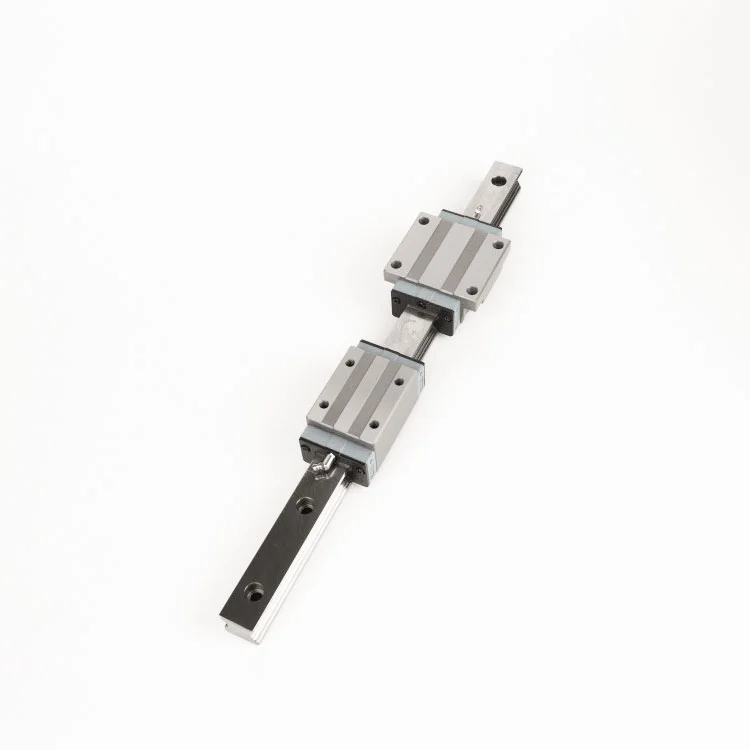
Most buyers start with a brand or a size. A better starting point is the motion reality: load direction, moment loads, speed profile, and environment.
| Scenario | What Usually Works Best | Why |
|---|---|---|
| CNC / high cutting forces | Profile rail + higher preload, often roller-type | Rigidity and damping matter more than ultra-light running feel |
| Pick-and-place / fast cycles | Profile rail + ball-type, balanced preload | Good speed capability with stable precision and manageable friction |
| Light-duty positioning | Round rail or compact profile rail | Cost-effective and forgiving if loads are truly modest |
| Dusty/wood/stone processing | Profile rail with strong sealing + covers | Contamination is the silent life-killer; sealing strategy dominates |
| Wet/corrosive washdown | Corrosion-protected rails + compatible grease + wipers | Rust pits become vibration and wear; lubricant choice becomes critical |
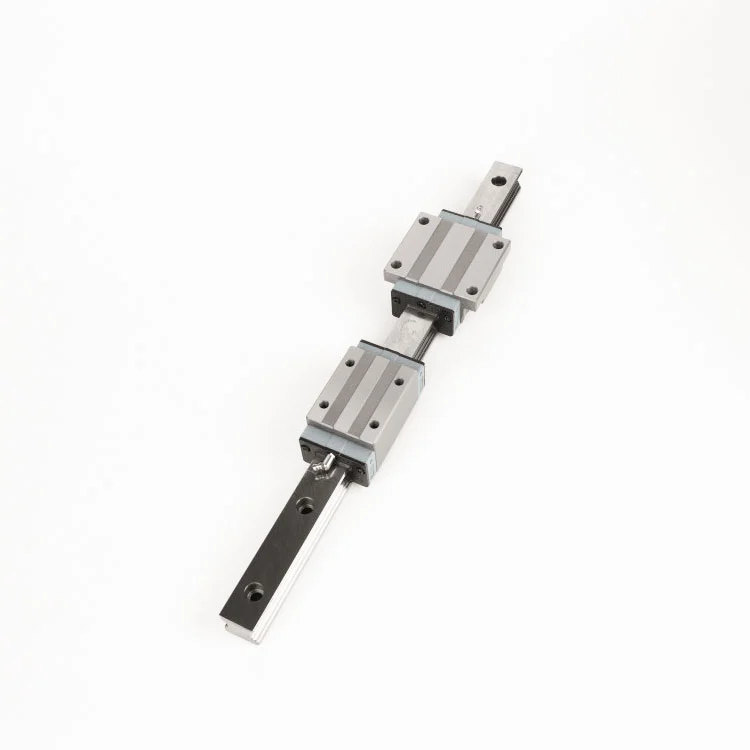
A quick rule of thumb: when moment loads are significant (cantilevered tooling, long end-effectors, off-center payloads), profile rail systems generally handle the real-world abuse better—especially when paired rails share the load correctly.
Sizing Basics Without Guesswork
Many machines “work” with undersized Linear Guides for a while. Then accuracy fades, noise rises, and a carriage fails early. The sizing conversation should include three things:
- Load (F): the actual working forces, not just the payload weight.
- Moments (Mx, My, Mz): the rotational loads created by offsets and tooling leverage.
- Duty cycle: how often it accelerates, stops, reverses, and how long it runs per day.
If your load is offset from the rail centerline, the rail doesn’t just “carry weight”—it fights torque. That torque is where many unexpected failures live.
Practical sizing tip: If your carriage plate is wide, use that width to reduce moments (spread the blocks, increase rail spacing, or use two blocks per rail). Mechanical layout often buys you more life than simply jumping to a bigger rail size.
You do not need to do advanced math to avoid the biggest mistakes. You need to avoid these traps:
- Trap 1: sizing only by payload weight and ignoring cutting force, belt tension, or actuator thrust.
- Trap 2: assuming two rails always share load evenly (they don’t unless alignment and stiffness are right).
- Trap 3: forgetting shock loads from hard stops, crashes, or jam events.
If you’re replacing a worn guide, measure the machine’s symptoms. Uneven wear marks, polished streaks on one side, or a single noisy carriage often points to uneven load sharing or mounting surface issues—not “bad rails.”
Accuracy, Preload, Rigidity, and Feel
Two Linear Guides can look identical and still behave totally differently because of preload and accuracy grade. Here’s the practical way to think about it:
- More preload increases rigidity and reduces micro-play, but it also increases friction and can amplify heat if lubrication is weak.
- Lower preload feels smoother and can be kinder to smaller motors, but may allow tiny deflection that shows up as chatter or positional variation.
- Higher accuracy grade helps when you need consistent height, straightness, and repeatability—especially in multi-axis stacks.
Your goal is not “maximum preload.” Your goal is the preload that matches your machine stiffness and process forces. A lightweight aluminum gantry with aggressive preload may bind when temperature changes or when mounting surfaces aren’t truly straight.
Reality check: If your machine struggles at low speed (stick-slip), don’t blindly reduce preload first. Confirm lubrication, check contamination, and verify mounting flatness. Many “stiction problems” are dirt or alignment, not preload.
Contamination, Corrosion, and Protection
The fastest way to ruin Linear Guides is to let the environment do whatever it wants. Dust, chips, coolant mist, humidity, and chemical vapors all attack the rolling contact surfaces.
A robust protection strategy usually combines:
- Wipers and end seals appropriate for your contamination type (fine dust vs. sharp chips).
- Rail covers or bellows when debris is constant or abrasive.
- Correct grease for temperature and exposure (especially in humid or washdown conditions).
- Clean handling during assembly (one careless rag can seed a lifetime of wear).
If your workshop produces fine abrasive dust (wood, stone, composite), treat sealing as a first-class design requirement. Rails that look “fine” on day one can develop rough motion quickly when microscopic particles embed in seals or mix into grease like grinding paste.
Installation Practices That Prevent Binding
Binding after installation is one of the most frustrating problems because it feels like the Linear Guides are defective. More often, the rails are being forced into a shape they were never meant to take.
Use this installation discipline:
- Prepare mounting surfaces: remove burrs, paint, and high spots; confirm flatness and straightness where it matters.
- Lightly seat fasteners first: do not fully torque one end and “pull” the rail into alignment with bolts.
- Align progressively: move the block as you tighten, so the guide tells you where stress is building.
- Torque in a pattern: incremental torque steps help avoid twisting the rail.
- Verify parallelism: paired rails must be parallel within the tolerance your preload can tolerate.
Small habit, big payoff: If motion tightens at one section of travel, stop and investigate immediately. Don’t “run it in.” Running under stress can create permanent wear patterns.
Lubrication and Maintenance That Actually Works

Linear Guides fail quietly when lubrication is treated as an afterthought. The best routine is simple and consistent:
- Set an interval based on contamination and duty cycle, not on calendar time alone.
- Use the right quantity: too little increases wear; too much can attract debris and increase drag.
- Watch for early indicators: rising motor current, new noise, localized heat, and inconsistent travel force.
In high-debris environments, consider a “clean-and-re-lube” schedule that includes wiping exposed rail sections and inspecting wipers. In cleaner environments, a steady grease replenishment interval often keeps friction stable for a long time.
If your guides use centralized lubrication, confirm that grease is actually reaching each carriage. A single starved block can become the weak link that ruins the whole assembly.
A Buying Checklist for Less Risk
When choosing Linear Guides, the cheapest purchase price often becomes the most expensive downtime. A safer buying process is to standardize what you ask for and what you verify.
Checklist
- Application details: payload, acceleration, speed, stroke length, duty hours per day.
- Load geometry: offsets that create moment loads; rail spacing; number of blocks per rail.
- Performance target: acceptable vibration, repeatability, noise, and smoothness at low speed.
- Environment: dust/chips, coolant, humidity, chemical exposure, temperature range.
- Protection plan: seals, wipers, covers, corrosion protection.
- Installation support: recommended torque, alignment method, and guidance for paired rails.
- Maintenance plan: grease type, replenishment interval, inspection points.
If you want a supplier who can help you translate “my machine chatters at the end of travel” into a practical rail/block configuration, choose one that asks good questions instead of just quoting a part number.
Suzhou Maitu Screw Rod Manufacturing Co., Ltd. works with motion-component buyers who need Linear Guides that match real operating conditions—load behavior, contamination risk, installation realities, and maintenance constraints—so the system stays smooth and predictable after the first week, not just during a showroom demo.
FAQ
Q: Why do Linear Guides feel smooth by hand but chatter under load?
Hand-feel tests usually don’t reproduce cutting forces, acceleration shock, or moment loads. Chatter often points to insufficient rigidity (preload too low, rail size too small, blocks too close together) or an assembly issue such as uneven rail mounting or poor load sharing between rails.
Q: Why does a new rail bind only in one section of travel?
Local binding is commonly caused by mounting surface flatness issues, a rail being pulled into a curve during tightening, or paired rails not being parallel. With higher preload, small alignment errors become much more noticeable.
Q: Which matters more for service life—bigger rails or better sealing?
In clean environments, correct sizing dominates. In dirty environments, sealing and covers can dominate. Fine abrasive dust mixed into grease can destroy even large rails quickly, while well-protected guides can run for a long time at moderate sizes.
Q: How can I reduce noise without sacrificing rigidity?
First confirm lubrication quality and quantity, then check contamination at the seals. If noise persists, evaluate whether preload is too aggressive for your mounting stiffness, and whether rail alignment is inducing stress. Sometimes a better protection plan and stable lubrication reduce noise more than changing rail type.
Q: How often should I lubricate?
There is no universal interval because duty cycle and contamination vary wildly. Establish a baseline using motor current, noise level, and temperature as indicators. In debris-heavy environments, shorter intervals with light cleaning can outperform long intervals with heavy greasing.
Conclusion
Linear Guides earn their reputation when the system around them is designed and maintained with the same seriousness as the rails themselves. Choose the correct structure for your loads, size for moments and duty cycle, balance preload with your machine stiffness, protect against contamination, install with alignment discipline, and lubricate like you mean it. Do those things, and you’ll see smoother motion, tighter repeatability, and dramatically fewer “mystery failures.”
Planning a new build or troubleshooting a stubborn motion issue? If you want a recommendation that matches your load case, environment, and installation constraints, contact us at Suzhou Maitu Screw Rod Manufacturing Co., Ltd. and tell us your stroke, payload, speed, and workspace conditions—we’ll help you narrow down a Linear Guides solution that stays reliable long after commissioning.
Related News
- Can PEEK Trapezoidal Screw Nuts Withstand Regular Disinfection in Pharmaceutical Cleanrooms?
- How To Maintain PEEK Trapezoidal Screw Nuts On Textile Production Equipment?
- How Does PEEK Trapezoidal Screw Nut Reduce Textile Machine Downtime?
- How Can a C7 Large Lead Ball Screw for Material Handling Improve Speed, Precision, and Heavy-Duty Performance
- How Can Ultra Precision Linear Guides Improve Accuracy, Stability, and Reliability in Modern Motion Systems
- Why Is the C7 High Speed Large Lead Rolled Ball Screw for Robots a Smart Choice for Fast and Reliable Automation
Leave me a message