How Can a Precision Ball Screw Fix Positioning Errors and Downtime in Motion Systems?
Article Abstract
A Precision Ball Screw is often the difference between a motion system that “mostly works” and one that holds tolerance all day. If you’re dealing with backlash, inconsistent repeatability, noisy travel, unexpected heat, or premature bearing failures, the root cause is frequently a mismatch between the screw’s accuracy class, preload, lubrication strategy, and real-world loads. This article breaks down the most common buyer pain points, explains the selection process in plain engineering terms, and offers installation and maintenance practices that protect accuracy over the long run—so you can reduce scrap, stabilize cycle time, and stop chasing mysterious drift.
Table of Contents
- Outline
- What a Precision Ball Screw Really Does
- Customer Pain Points and the Real Fixes
- Selection Checklist for a Better Purchase Decision
- Table: Ball Screw vs Lead Screw vs Belt Drive
- Installation Practices That Protect Accuracy
- Maintenance and Troubleshooting Guide
- What to Ask Your Supplier Before You Buy
- FAQ
Outline
- Define what a precision ball screw is and why it improves motion control.
- Connect common operational problems to the design choices that cause them.
- Provide a practical selection checklist (accuracy, lead, preload, load, speed, environment).
- Compare drive options with a simple table for quick decision-making.
- Share installation and alignment tips that prevent early failure.
- Offer a maintenance routine and troubleshooting patterns.
- List supplier questions that reveal real manufacturing and inspection capability.
- Answer buyer FAQs and wrap with a clear next step to get support.
What a Precision Ball Screw Really Does
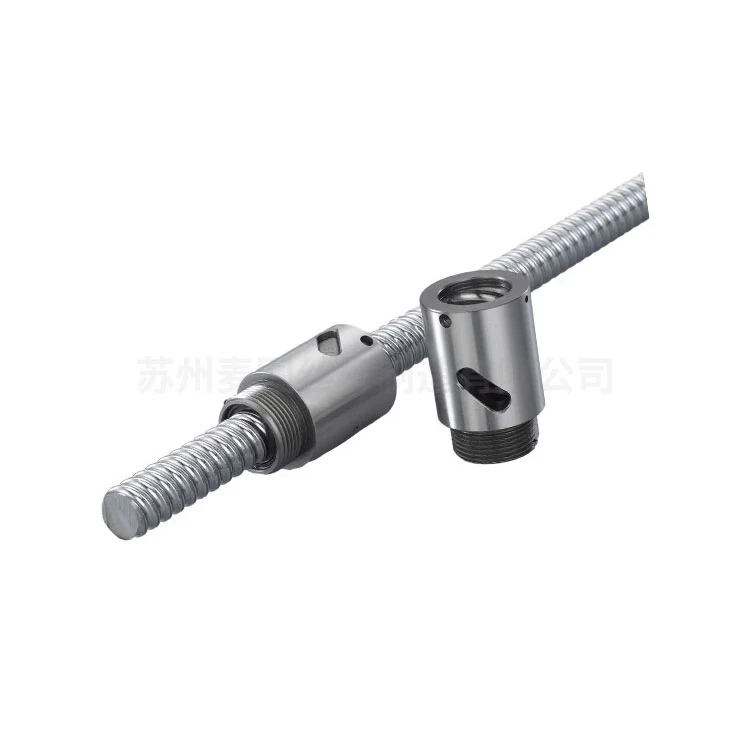
A ball screw converts rotary motion into linear motion by rolling ball bearings between a screw shaft and a nut. The key word is rolling: compared to sliding mechanisms, rolling contact typically delivers higher efficiency, less stick-slip, and more consistent motion at low speeds. A Precision Ball Screw goes further by controlling lead accuracy, runout, surface finish, and internal geometry so the axis can maintain tighter positioning and repeatability under realistic loads.
In practical terms, buyers choose precision ball screws when they need one or more of the following:
- Stable repeatability for CNC, robotics, semiconductor handling, and inspection equipment
- High rigidity to reduce deflection and vibration during cutting or rapid positioning
- Low backlash for contouring, interpolation, and frequent reversing motion
- Predictable life with correct lubrication, seals, and contamination control
But the “best” ball screw is not the most expensive one—it’s the one whose accuracy class, preload level, nut design, and protection features match your duty cycle and environment. Most disappointments come from over-simplifying selection to just “diameter and lead.”
Customer Pain Points and the Real Fixes
Pain Point 1: Backlash shows up as overshoot, chatter, or poor surface finish.
Backlash is the lost motion when direction changes, often felt as a “dead band” in the axis. In ball screws, backlash is typically controlled with preload (removing internal clearance) and careful matching between the nut and screw. If your application reverses direction often—think tapping, pocketing, pick-and-place, or scanning—preload choice becomes central.
- What helps: Correct preload level, rigid mounting, and healthy support bearings
- What hurts: Under-preload for heavy reversing loads, or over-preload for high speed (heat growth)
Pain Point 2: Position drift increases after warm-up.
Thermal growth is real. Preloaded assemblies create more friction, and friction creates heat. If temperature rises unevenly along the axis, the effective length changes, and your zero point “moves.” This is why a ball screw that seems accurate in short tests can disappoint in a full shift.
- What helps: Balanced preload, stable lubrication, appropriate speed limits, and thermal compensation in control where possible
- What hurts: Running near critical speed, poor lubrication, or contamination that raises friction
Pain Point 3: Unexpected noise, vibration, or “gritty” travel.
Noise is often a symptom, not the problem. It can indicate contamination, damaged recirculation components, insufficient lubricant film, misalignment between nut travel and guide rails, or brinelling in support bearings. Don’t ignore it—noise usually arrives before failure.
Pain Point 4: Short service life and frequent maintenance.
Early failures usually trace back to one of four issues: incorrect load calculation (especially dynamic loads), improper installation alignment, poor protection against chips/dust, or inconsistent lubrication. The good news is that each issue has a practical fix—if it’s addressed before procurement, not after breakdown.
Pain Point 5: Supplier specifications look similar, but real performance varies.
Two ball screws can share the same diameter, lead, and declared accuracy grade, yet perform differently due to grinding quality, heat treatment consistency, nut ball sorting, and inspection discipline. If your process is sensitive (tight tolerance, high throughput, expensive scrap), you need to evaluate the supplier’s capability—not just the catalog line.
Selection Checklist for a Better Purchase Decision
Use the checklist below to align your requirements with a screw that will actually hold up in production. If you’re handing this to a supplier, it also reduces back-and-forth and prevents “guess-based” quoting.
- Define accuracy need: Are you chasing absolute positioning accuracy, repeatability, or both? Repeatability can sometimes be achieved with lower lead accuracy if your system always approaches from one direction—but reversing cycles demand more control.
- Choose lead deliberately: Higher lead increases linear speed per motor revolution, but also increases required torque under load and can reduce resolution depending on encoder and gearing.
- Confirm load type: Axial load is obvious; don’t forget moment loads from offset forces, cantilevered tooling, or poor guide alignment.
- Consider duty cycle: High-speed continuous motion needs attention to heat, lubrication, and critical speed. Short intermittent cycles may tolerate higher preload.
- Pick preload level: Low backlash versus low heat is a trade. For fast axes, excessive preload can become a thermal problem; for heavy reversing loads, insufficient preload becomes a quality problem.
- Environment and protection: Chips, abrasive dust, coolant mist, or washdown conditions require seals, bellows, or protective covers. Clean-room needs low outgassing lubricants and controlled debris generation.
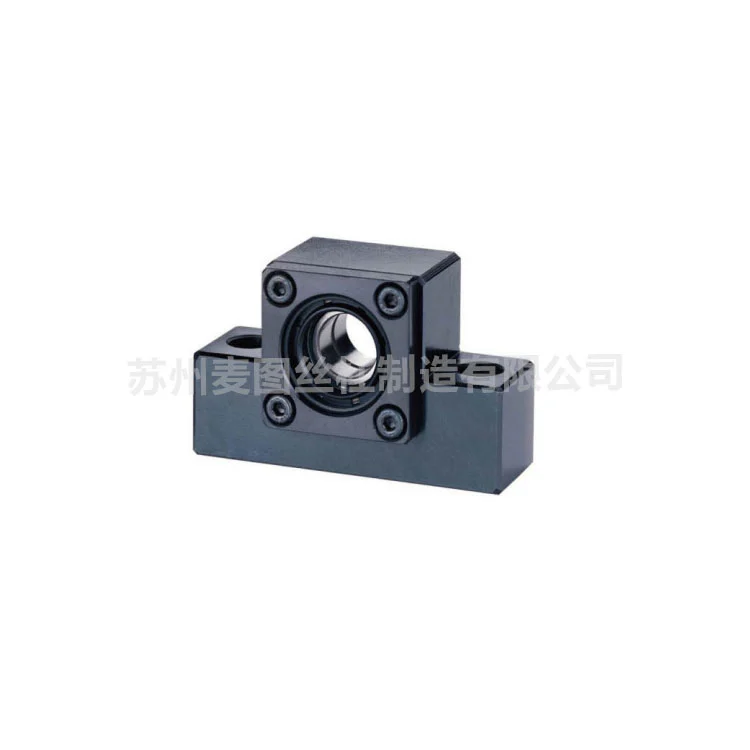
- Mounting and support bearings: Your ball screw can only perform as well as its end supports. Incorrect bearing arrangement or poor rigidity will mask any “precision” you paid for.
- Lubrication plan: Choose grease vs oil based on speed, temperature, cleanliness, and maintenance access. Then specify replenishment method (manual, centralized, automated).
If you want a simple starting point, gather these inputs before requesting a quote:
- Required stroke length and installation length constraints
- Target positioning accuracy and repeatability
- Maximum linear speed and acceleration
- Typical and peak axial load (including reversing load)
- Operating environment (chips, dust, coolant, clean, high humidity, etc.)
- Preferred lubrication method and maintenance interval
Table: Ball Screw vs Lead Screw vs Belt Drive
| Drive Type | Strengths | Limitations | Best Fit Scenarios |
|---|---|---|---|
| Precision Ball Screw | High efficiency, strong rigidity, excellent repeatability, low backlash with preload | Needs good lubrication and contamination control; heat management at high speed | CNC axes, robotics, precision automation, metrology, high-load linear positioning |
| Lead Screw (Trapezoidal/ACME) | Lower cost, self-locking options, simple construction | Lower efficiency, stick-slip at low speed, wear increases backlash over time | Light-duty actuators, low-speed positioning, cost-sensitive mechanisms |
| Belt Drive | Very high speed, long travel, low moving mass | Elasticity reduces stiffness; positioning depends on belt condition and tension | Pick-and-place, packaging lines, long-stroke high-speed transfers |
Installation Practices That Protect Accuracy
Many ball screws are “killed” during installation—not during operation. If you want the precision you paid for, treat installation like a controlled process.
- Keep it clean: Rolling contact hates grit. Open packaging only when the axis is ready, and protect the nut from debris during assembly.
- Prevent misalignment: The screw axis must be parallel to the linear guide axis. Even small angular errors can create uneven loading inside the nut and shorten life.
- Use correct end support arrangement: Fixed-supported or fixed-fixed setups change stiffness and thermal behavior. Choose based on speed, stroke length, and accuracy needs.
- Control mounting stress: Avoid forcing the screw into place. If it “doesn’t fit,” something is misaligned. Forcing it often introduces bending that shows up later as noise and heat.
- Verify runout and smooth travel: Rotate the screw through full stroke slowly and check for tight spots before power-on. Tight spots often signal alignment issues.
A practical tip: if your axis binds when guides are torqued down, loosen the guide rail fasteners, align the screw and nut carriage, then re-torque in a controlled sequence. This reduces the chance that the assembly is fighting itself.
Maintenance and Troubleshooting Guide
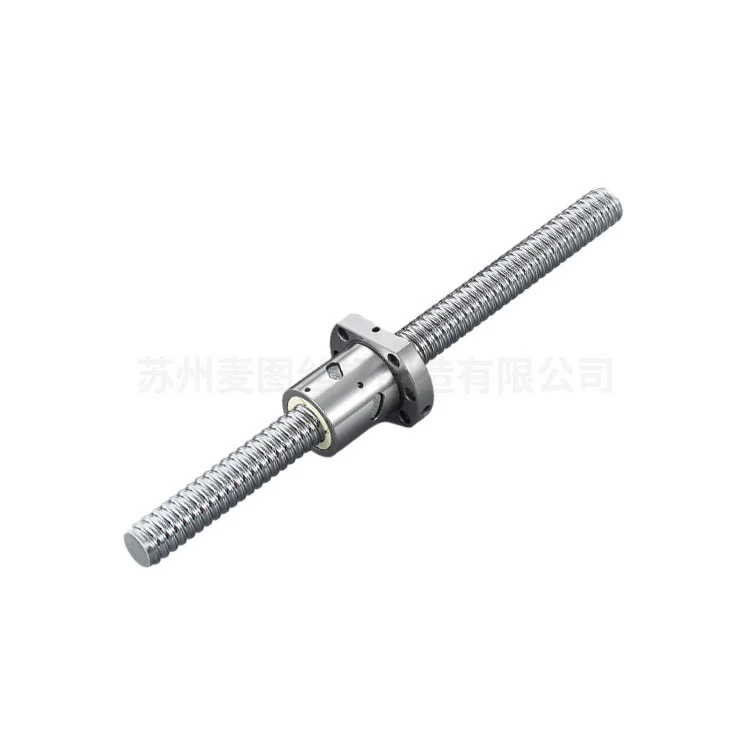
A Precision Ball Screw is not “install and forget,” but it also shouldn’t become a weekly headache. A stable routine can dramatically extend service life and preserve accuracy.
- Lubricate on schedule: Under-lubrication increases friction and wear; over-lubrication can attract debris or create churning heat at speed. Follow a consistent interval and quantity.
- Inspect seals and wipers: If protective elements fail, contamination enters fast. Replace worn wipers early—cheap parts, expensive consequences.
- Listen for change: A new sound, new vibration, or rising motor current is often the first sign of contamination, misalignment, or bearing issues.
- Track temperature: A noticeable increase in operating temperature can indicate preload issues, lubrication breakdown, or excessive speed/load.
- Check axial play periodically: Growing play suggests wear or preload loss. Catching it early can prevent secondary damage.
Common symptoms and likely causes:
- Sudden roughness: contamination ingress, damaged recirculation, ball damage
- Gradual loss of accuracy: wear, preload relaxation, thermal drift, mounting looseness
- Rising motor current: misalignment, insufficient lubrication, seal drag, bearing preload problems
- Noise at certain speeds: resonance, critical speed proximity, support bearing wear
What to Ask Your Supplier Before You Buy
If your project is sensitive to tolerance, uptime, and reputation, the supplier conversation should go beyond quoting a diameter and lead. You want confidence in process control, inspection, and after-sales support.
- How is lead accuracy verified? Ask what measurement equipment is used and whether inspection data can be provided for critical orders.
- What heat treatment and hardness control is applied? Consistency matters for wear and fatigue life.
- How is preload achieved and validated? Preload stability impacts backlash and temperature behavior.
- What protection options exist? Wipers, seals, bellows, and surface treatments should match your environment.
- What support is available for sizing? A supplier who can sanity-check load, speed, and mounting choices helps prevent expensive mis-specification.
For buyers evaluating manufacturing partners, Suzhou Maitu Screw Rod Manufacturing Co., Ltd. supports precision ball screw solutions with a focus on practical application matching—helping customers translate axis requirements into the right combination of accuracy, preload, and protection so the final system performs consistently in real production conditions.
FAQ
Q: What makes a ball screw “precision” compared to a standard one?
Precision typically refers to tighter control of lead accuracy, geometry, and running consistency, supported by more rigorous manufacturing steps and inspection. The result is more predictable positioning and repeatability when installed correctly.
Q: Is higher preload always better for accuracy?
Not always. Higher preload can reduce backlash and increase rigidity, but it also increases friction and heat—especially at high speeds. The best preload is the one that meets your accuracy and rigidity needs without causing thermal problems or shortening life.
Q: Why does my axis lose accuracy after the machine runs for a while?
Thermal growth and lubricant behavior are common reasons. As temperature rises, the screw length changes and can shift position. Excess friction from over-preload, contamination, or poor lubrication can intensify the effect.
Q: Can I use a ball screw in a dirty environment with chips or dust?
Yes, but you must plan protection: seals/wipers, covers, and a lubrication approach that doesn’t turn debris into grinding paste. In harsh conditions, protection design is as important as the screw specification itself.
Q: What information should I send when requesting a quote?
Provide stroke, required accuracy and repeatability, maximum speed and acceleration, typical and peak loads, environment details, mounting arrangement, and lubrication preference. This allows the supplier to recommend a configuration that performs instead of just “fits.”
Next Steps
If your current axis is fighting backlash, heat, drift, or premature wear, it’s usually not “bad luck”—it’s a specification, installation, or environment mismatch that can be corrected. Share your stroke, load, speed, and accuracy targets, and you can quickly narrow down the right Precision Ball Screw configuration for stable production performance.
Ready to stop troubleshooting and start holding tolerance? Contact us to discuss your application requirements and get a recommendation that matches your machine’s real duty cycle—contact us today and let’s build a smoother, more reliable motion system.
Related News
- Can PEEK Trapezoidal Screw Nuts Withstand Regular Disinfection in Pharmaceutical Cleanrooms?
- How To Maintain PEEK Trapezoidal Screw Nuts On Textile Production Equipment?
- How Does PEEK Trapezoidal Screw Nut Reduce Textile Machine Downtime?
- How Can a C7 Large Lead Ball Screw for Material Handling Improve Speed, Precision, and Heavy-Duty Performance
- How Can Ultra Precision Linear Guides Improve Accuracy, Stability, and Reliability in Modern Motion Systems
- Why Is the C7 High Speed Large Lead Rolled Ball Screw for Robots a Smart Choice for Fast and Reliable Automation
Leave me a message