How Do Metric Screw Studs Support Precision Assembly Across Industrial Applications?
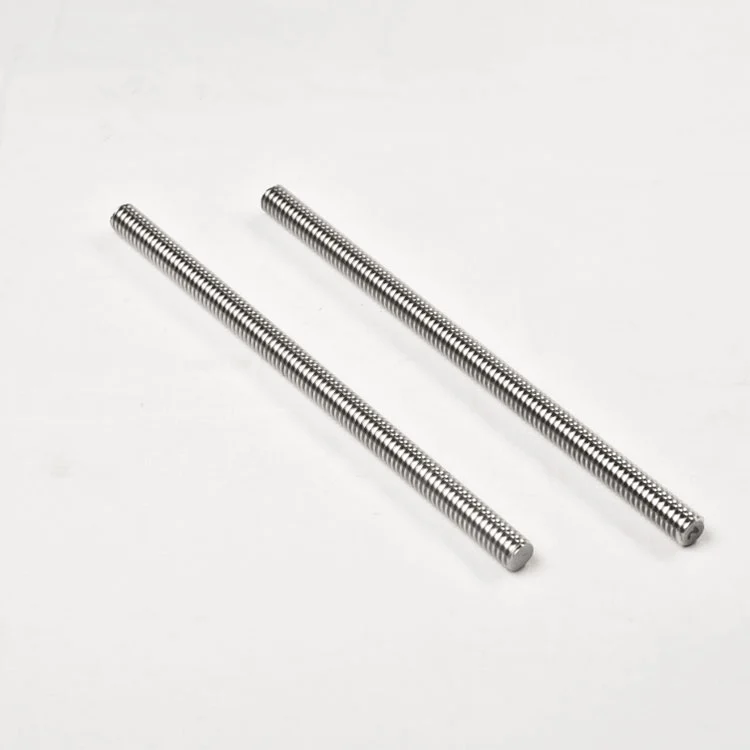
Metric screw studs are standardized fastening components designed to create secure, permanent, or semi-permanent connections between mechanical parts in metric-based systems. Commonly used in machinery manufacturing, automotive assembly, construction equipment, energy systems, and precision engineering, metric screw studs consist of a fully or partially threaded rod without a head, allowing nuts to be applied on one or both ends.
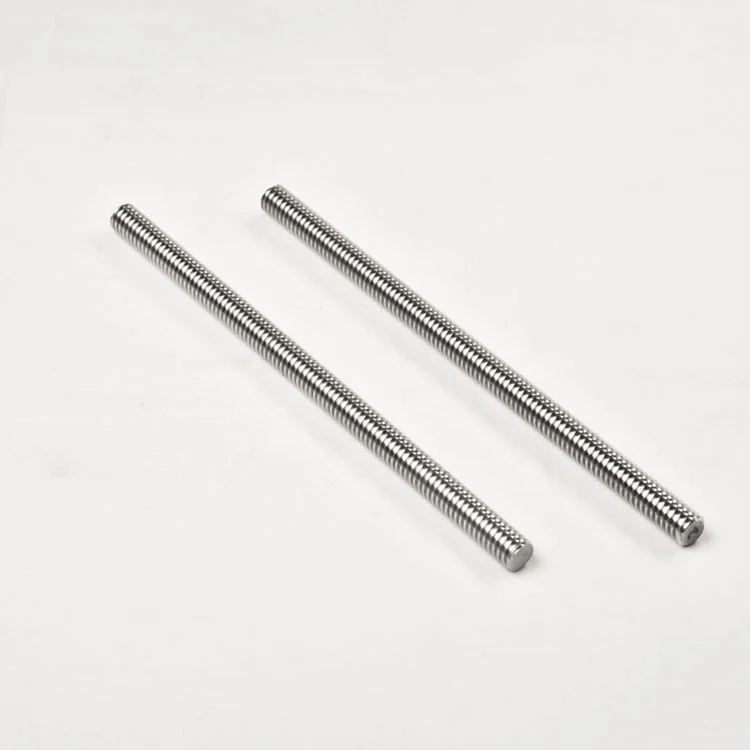
The central purpose of this article is to examine how metric screw studs are specified, applied, and evaluated in industrial environments, with particular attention to dimensional standards, material selection, mechanical performance, and installation considerations. By understanding how these components function within assemblies, procurement managers, engineers, and technical buyers can make informed decisions aligned with load requirements, environmental conditions, and international standards.
Metric screw studs are typically produced in accordance with ISO, DIN, or equivalent metric standards, ensuring compatibility with global equipment designs. Their widespread adoption is closely tied to their dimensional consistency, adaptability across assemblies, and suitability for both static and dynamic load conditions.
How Are Metric Screw Stud Parameters Defined and Selected?
Selecting the correct metric screw stud begins with a detailed understanding of its technical parameters. These parameters directly affect assembly integrity, service life, and maintenance efficiency.
Below is a structured overview of the most relevant specifications used in professional sourcing and engineering evaluation:
| Parameter Category | Common Specifications |
|---|---|
| Thread Standard | ISO Metric (coarse or fine thread) |
| Nominal Diameter | M4 – M42 (custom sizes available) |
| Thread Pitch | Standard or fine pitch per ISO |
| Length Range | 10 mm – 300 mm or customized |
| Material Options | Carbon steel, alloy steel, stainless steel |
| Strength Grade | 4.8, 8.8, 10.9, 12.9 |
| Surface Treatment | Zinc plated, black oxide, hot-dip galvanized |
| Tolerance Class | 6g or per customer requirement |
| Operating Temperature | Based on material selection |
Material selection plays a decisive role in determining suitability for corrosive environments, high-temperature operations, or heavy-load applications. Carbon steel metric screw studs are frequently used in general machinery, while stainless steel variants are preferred in chemical processing, food equipment, and marine environments. Alloy steel studs with higher strength grades are commonly specified for structural or high-vibration applications.
Thread engagement length is another critical parameter. Insufficient engagement may result in thread stripping, while excessive engagement can complicate assembly or disassembly. Engineering calculations often consider base material hardness and applied torque to determine optimal engagement.
How Are Metric Screw Studs Applied and Installed in Practice?
Metric screw studs are valued for their flexibility in assembly design. They can be installed into tapped holes or used in through-hole configurations with nuts applied on both ends. Installation methods vary depending on application requirements and production volume.
Common installation approaches include:
-
Hand installation using double-nut methods for low-volume assembly
-
Stud drivers or sockets for controlled torque application
-
Automated installation systems in mass production environments
Proper torque control during installation is essential. Over-torquing may lead to material fatigue or thread damage, while under-torquing can compromise joint integrity. In high-vibration environments, supplementary locking methods such as thread-locking compounds or prevailing torque nuts are often specified.
Environmental exposure must also be considered. In outdoor or corrosive settings, surface treatments and material compatibility with mating components are evaluated to mitigate galvanic corrosion and premature failure.
Common Questions About Metric Screw Studs
Q: How is the correct metric screw stud length determined for an assembly?
A: Length selection is based on the combined thickness of clamped components, required thread engagement in the base material, and allowance for washers and nuts. Engineering standards typically recommend thread engagement equal to 1–1.5 times the nominal diameter for steel base materials.
Q: How do coarse and fine metric threads differ in application?
A: Coarse threads are generally preferred for faster assembly and improved resistance to damage in softer materials. Fine threads offer greater tensile strength and improved adjustment accuracy, making them suitable for precision assemblies and high-load conditions.
How Do Metric Screw Studs Align With Evolving Industrial Requirements?
As industrial manufacturing continues to emphasize modular design, global standardization, and maintenance efficiency, metric screw studs remain a foundational fastening solution. Their compatibility with metric systems supports international equipment interchangeability and simplifies inventory management for multinational operations.
Advances in material processing and surface treatment technologies have expanded their usability across more demanding environments. Enhanced coatings improve resistance to corrosion and wear, while tighter dimensional tolerances support precision-driven industries such as automation, renewable energy, and advanced machinery.
Quality assurance has become increasingly important. Traceability, mechanical testing, and compliance documentation are now standard expectations among professional buyers. Manufacturers that provide consistent specifications and stable supply capabilities are better positioned to support long-term industrial projects.
Within this context, Suzhou Maitu supplies metric screw studs engineered to meet international standards and application-specific requirements. With a focus on controlled manufacturing processes, material consistency, and dimensional accuracy, Suzhou Maitu supports a wide range of industrial fastening needs across global markets.
For technical inquiries, specification confirmation, or project-based sourcing discussions, interested parties are encouraged to contact us to explore suitable metric screw stud solutions tailored to specific operational requirements.
Related News
- Can PEEK Trapezoidal Screw Nuts Withstand Regular Disinfection in Pharmaceutical Cleanrooms?
- How To Maintain PEEK Trapezoidal Screw Nuts On Textile Production Equipment?
- How Does PEEK Trapezoidal Screw Nut Reduce Textile Machine Downtime?
- How Can a C7 Large Lead Ball Screw for Material Handling Improve Speed, Precision, and Heavy-Duty Performance
- How Can Ultra Precision Linear Guides Improve Accuracy, Stability, and Reliability in Modern Motion Systems
- Why Is the C7 High Speed Large Lead Rolled Ball Screw for Robots a Smart Choice for Fast and Reliable Automation
Leave me a message